

Five Technion Researchers Receive Israel Cancer Research Fund Grants
Five Technion faculty members have been awarded grants from the Israel Cancer Research Fund (ICRF). The Foundation supports outstanding Israeli cancer researchers and their groundbreaking work with the goal of “making cancer a manageable chronic disease until it is ultimately eradicated.
“The ICRF was founded with the vision of preserving and nurturing Israel’s leading cancer researchers and ensuring that the State of Israel remains at the forefront of global cancer research,” said ICRF Israel Chairman, Adv. Tamir Gilat. “The Foundation has supported – and continues to support – many Technion researchers, including Nobel Laureates and Distinguished Research Professors Aaron Ciechanover and Avram Hershko. This support reflects the strength of Israeli research and the importance of sustained investment in outstanding scientists. For five decades, the Foundation has harnessed philanthropy to enable groundbreaking cancer research to flourish in Israel.”
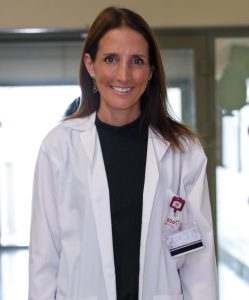
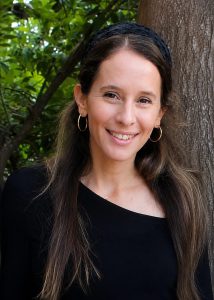
Prof. Irit Ben-Aharon has been awarded an ICRF Research Professorship, which supports senior investigators who lead active laboratories and demonstrate exceptional achievements in cancer research. Prof. Ben-Aharon is a faculty member in the Rappaport Faculty of Medicine at the Technion, Director of the Fishman Oncology Center at Rambam Health Care Campus, and Head of the Gastrointestinal Cancer Unit at Rambam. Her grant will support research into the effects of chemotherapy administered during pregnancy on offspring.
According to Prof. Ben-Aharon, “Cancer during pregnancy is relatively rare, but its incidence is increasing as cancer rates rise among younger adults and the average age of childbirth continues to increase. Until now, the effects of cancer and chemotherapy during pregnancy have been examined mainly in limited clinical studies that followed children only through childhood. Our research maps both the short-term and long-term effects using a preclinical model. So far, our findings show that in some offspring, the impact follows a latent pattern, becoming apparent only in adulthood rather than during childhood or adolescence, something not reported in the existing clinical literature. We are investigating these late-onset conditions and exploring whether it is possible to identify offspring who may be at risk of developing them.”
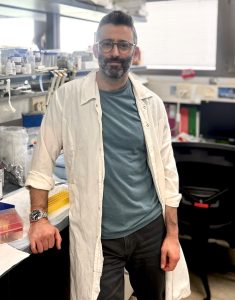
Dr. Ido Livneh has received an ICRF Project Grant, awarded to established investigators conducting focused cancer research projects. Dr. Livneh is a faculty member in the Rappaport Faculty of Medicine, a graduate of the Faculty’s MD/PhD program, and a resident in diagnostic pathology at Rambam Health Care Campus. His grant will support research into the cellular “backup systems” that enable cancer cells to persist over time.
According to Dr. Livneh, “Despite significant advances in cancer treatment, many malignancies remain incurable. Many patients initially respond well to therapy, only to experience disease recurrence later on. Our current research is based on the hypothesis that malignant cells activate secondary survival strategies—essentially backup systems—that allow them to persist for months or even years before developing resistance to treatment. To investigate these mechanisms, we combine interventional laboratory experiments with analyses of patient samples from a range of cancer types. Our goal is to uncover shared survival strategies that would not emerge from studying each cancer type separately.”
Dr. Shira Landau has been awarded an ICRF Career Development Award (CDA), which supports promising early-career investigators who have recently established independent laboratories and are on track to develop outstanding research careers. Dr. Landau is a new faculty member in the Faculty of Biomedical Engineering at the Technion and an alumna of the Faculty. Her grant will support research into the shared mechanisms linking cardiovascular disease and cancer, and the interactions between them.
According to Dr. Landau, “Heart disease and cancer are the two leading causes of death worldwide. In recent years, however, it has become increasingly clear that these diseases engage in a reciprocal biological dialogue. As part of this research, we will develop an innovative human heart-and-cancer-on-a-chip (Organ-on-a-Chip) model that will enable us to study the two-way communication between the heart and tumors in a controlled environment. The project will focus on the role of macrophages—key immune cells—and examine how they influence the interactions between the heart and cancer, to uncover new mechanisms that could lead to safer and more precise treatments for cancer patients.”
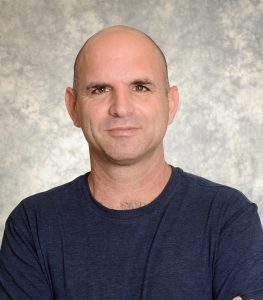
Prof. David (Dedi) Meiri received a Project Grant, awarded to established researchers conducting a specific, focused cancer research project. Prof. Meiri is a faculty member in the Faculty of Biology whose research explores the therapeutic potential of metabolites derived from a wide range of plant, algae, and fungal species to understand how they affect different types of cancer, inflammatory diseases, and neurodegenerative disorders. His research group discovered 373.15b, a novel molecule from the cannabis plant that reduces levels of the estrogen receptor—a hormone involved in cancer development, particularly in women. By lowering estrogen receptor levels, the molecule makes estrogen-dependent cancer cells more responsive to standard treatments. In preclinical studies, 373.15b inhibited tumor growth, and its effect was even greater when combined with existing therapies. The current research aims to elucidate the molecule’s mechanism of action, evaluate its effectiveness in additional estrogen-dependent cancers, and assess its potential as a safe and effective adjunct to existing treatments, to improve treatment outcomes and patients’ quality of life.
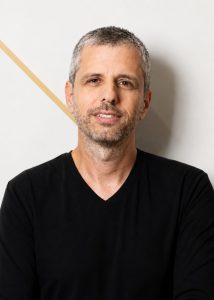
Prof. Tomer Shlomi of the Henry and Marilyn Taub Faculty of Computer Science received a grant for research aimed at identifying metabolic vulnerabilities and new therapeutic targets in gastrointestinal cancers. According to Prof. Shlomi, “Cancer cells undergo profound metabolic changes that enable them to support rapid growth, survive under harsh conditions, and resist treatment. In this project, we will combine metabolomics and proteomics—large-scale measurements of metabolites and proteins in the same cells—to screen thousands of drug-like molecules and identify compounds that selectively disrupt pathways essential for cancer cell survival. Using artificial intelligence and mass spectrometry, we will investigate the compounds’ mechanisms of action, identify the proteins they bind to, and understand why disrupting these targets inhibits tumor growth. Finally, we will evaluate the most promising candidates in patient-derived tumor models, including organoids and mouse models, to lay the groundwork for the development of new, more precise therapies for gastrointestinal cancers.”
ICRF, the oldest international organization dedicated exclusively to supporting cancer research in Israel, was founded in 1975. Since then, it has awarded nearly 3,000 research grants, totaling approximately $100 million, to researchers at Israel’s leading academic and medical institutions.