About the Technion

100 Years of Research and Education

Since opening its doors in 1924, the Technion has awarded approximately 92,500 bachelor’s degrees in Engineering, Science, Architecture, and Education. In addition, more than 27,000 master’s degrees and 6,700 doctoral degrees have been conferred since the Technion’s graduate school was founded in 1956, and more than 3,500 MDs have been trained since the establishment of its Medical School in 1969.

Today, the Technion is one of the world’s leading universities for training scientists and engineers. Its alumni fill central positions in the Israeli and global economies and spearhead basic and applied research both in academia and knowledge-rich technology industries. Technion alumni are prevalent in the management of industrial plants and construction companies, as well as in the fields of urban and regional planning, infrastructure and energy sources, and medicine. They are groundbreakers at the helm of Israel’s high-tech revolution and played a key role in shaping the famous Start-Up Nation. Indeed, since it was founded 100 years ago, the Technion has proudly stood at the forefront of the national mission of training a highly skilled and knowledgeable workforce capable of boosting Israel’s economic and physical security.

More than 10,200 undergraduate students are currently enrolled at the Technion in about 50 different programs, as well as about 4,400 graduate students in more than 80 programs. Although the Technion is academically rigorous and requires immense dedication, many students pursue two different degree programs simultaneously.

The Technion devotes extensive efforts and resources to its graduate programs,  placing great importance on advanced studies and the acquisition of research skills. Half of the master’s students are in programs requiring a thesis. Most of the doctoral students benefit from generous fellowships that enable them to fully devote their time to their studies and research.

Many Technion students work in industry and elsewhere during their studies. The university attaches great importance to this work-study combination, which contributes significantly to the students’ training and experience and promotes a two-way communication channel between the local ecosystem and the Technion.

Graduates
0
Faculties
0
Research Centers
0
Companies
0

Established or Managed by Technion Graduates

Technion Objectives

To disseminate knowledge through teaching and the advancement of research in pure and applied Science, Engineering, Architecture, Technology, Medicine and related activities including the Humanities, Social Science and Education.
To impart to its students a broad general education;
To serve the State of Israel and its economy with counsel, research and other appropriate means, and to serve the people of Israel by the provision of sets of courses and lectures, the publication of books and by similar activities in the areas specified above.
The Institute shall pursue these objectives without discrimination against any person on the grounds of race, religion, nationality or gender.

From the constitution and bylaws of the Technion – Israel Institute of Technology

The History of the Technion

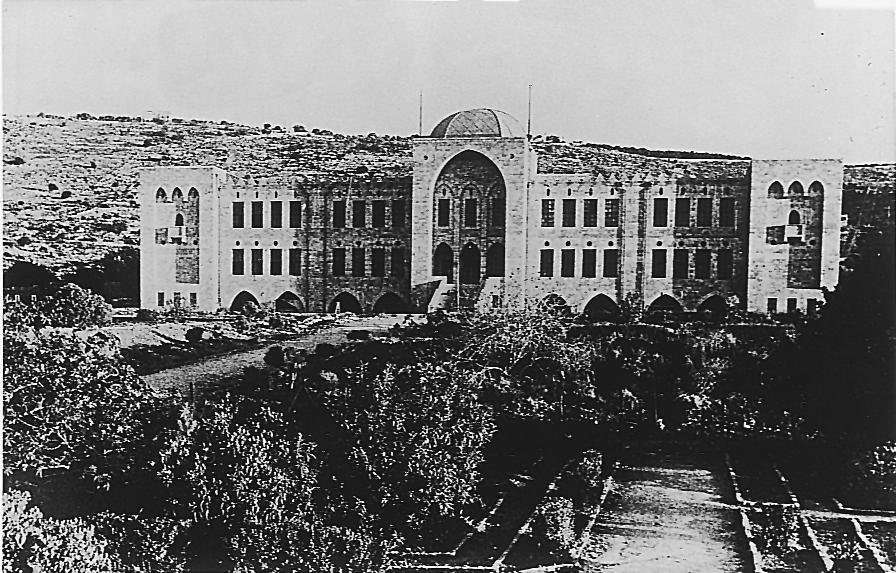
When the doors of the Technion, previously known as the Technikum, opened to students in the winter of 1924/1925 – a dozen years after the first cornerstone was laid on Mount Carmel – no one could have fathomed the impact that the Institute would have on Israel’s social and economic development and global intellectual and scientific advancement.

Technion graduates, researchers, professors, and students have played pivotal roles in the enrichment of knowledge and the human condition on both local and global scales, accounting for more than 50% of the startup founders in Israel’s wildly successful high-tech sector and at least 50% of the nation’s engineers.

The history of the Technion begins in 1901, half a century before the establishment of the State of Israel, in the halls of the Stadtcasino Basel, where the Fifth Zionist Congress was unfolding. There, three Jewish intellectuals – philosopher Martin Buber, biochemist and the future first president of Israel Chaim Weizmann, and journalist Berthold Feiwel – brought to the attendees’ attention the necessity of adopting a program of Hebrew culture, including the establishment of an educational institute for engineers to support the development of the future state. In 1908, the German-Jewish organization Ezrah Association, headed by Dr. Paul Nathan, set out to raise funds toward establishing what is known today as the Technion – Israel Institute of Technology.