

“Artificial Intelligence Does Not Relieve Humans of Responsibility”
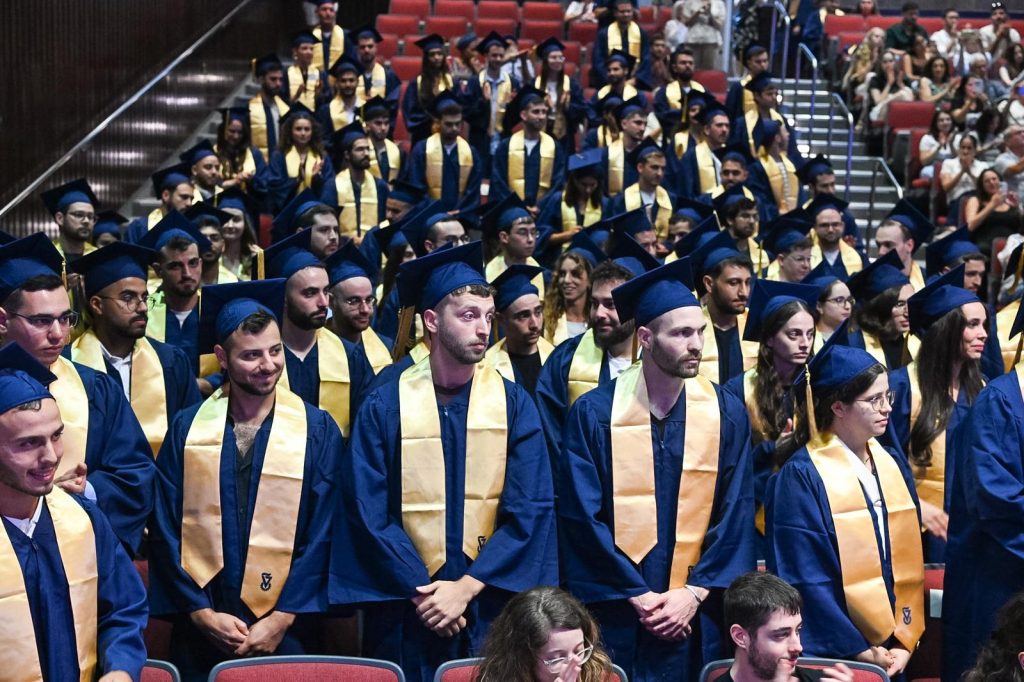
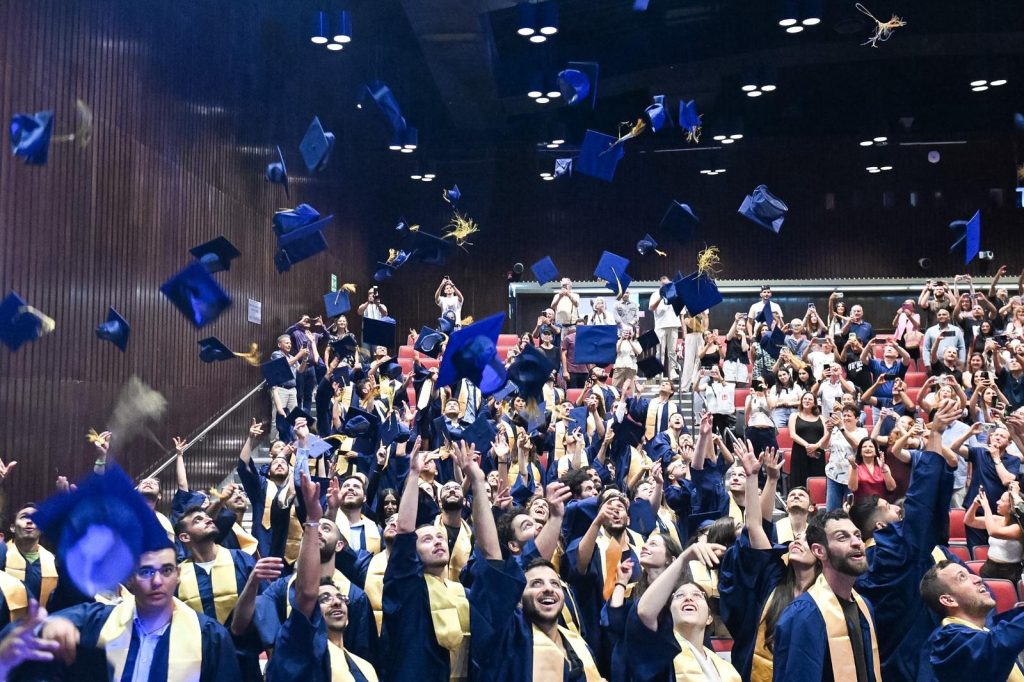
Yesterday, the Technion held a festive ceremony at which 2,008 members of the 97th graduating class received their Technion bachelor’s degrees. Among them were Yuval and Liran Redl, father and son, who received their diplomas together
Yesterday, September 9, the Technion held its traditional graduation ceremony, at which 2,008 members of the Class of 2026 received their Technion bachelor’s degrees. The youngest graduate in the Class of 2026 was born in 2005 and is 21 years old, while the oldest was born in 1949 and is 77. Approximately 41% of the graduates are women. Ninety-five students graduated summa cum laude, and seven completed dual-degree programs. The leading countries of origin, after Israel, are the United States, France, and Ukraine.
The degree marks a significant milestone in the lives of these graduates, symbolizing years of hard work, determination, and perseverance in the face of challenges. Prof. Danny Raz, Senior Executive Vice President of the Technion, congratulated the graduates and said: “You are now entering a world that is changing rapidly in the wake of artificial intelligence. AI-based systems are already helping to write code, analyze information, plan, and generate answers within seconds.
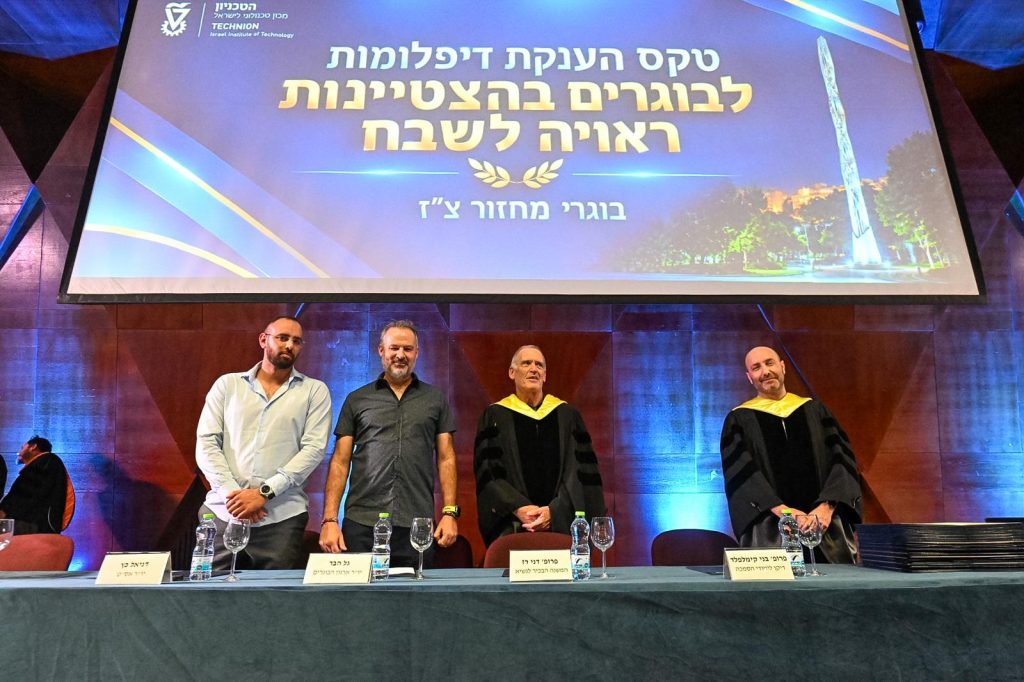
“But precisely because these tools are so powerful, your deep knowledge is more important, not less. Artificial intelligence can suggest possibilities – you will choose the goals. It can accelerate the path to a solution – you will decide which problem is worth solving. It can greatly expand human capabilities. But it does not, in any way, relieve humans of responsibility. This is the meaning of human leadership in the age of artificial intelligence, and it is also the Technion’s way: scientific excellence connected to social responsibility; innovation grounded in knowledge, professionalism, and integrity; and the advancement of science and technology for the benefit of the State of Israel and humanity.”
Prof. Benny Kimelfeld, Dean of Undergraduate Studies, thanked the graduates and said: “Years of classes, laboratories, projects, and exams have reached the finish line. It was not easy. Earning a degree at the Technion is a challenge, as everyone knows, and you faced challenges beyond that.
“Reality changed around us again and again, sometimes within days or even hours, and we were all required to continue learning, teaching, and working in the shadow of war, concern, and uncertainty. But there was one thing on which we always agreed: the purpose for which we are here. The Technion has a mission: to train those who will be able to address the major challenges facing society and the country – with excellence, responsibility, and leadership. You embody that mission.”
The youngest graduate in the 97th graduating class was born in 2005 and is 21, while the oldest was born in 1949 and is 77. Around 40% of the graduates are women. Ninety-five students graduated with the highest honors. Apart from Israel, the leading countries of origin are the United States, France, and Ukraine. The graduating class includes 33 medical students in the American program, 118 Doctor of Medicine graduates, and 145 Chinese graduates.
A Family Legacy
Two of the graduates are Liran Redl, who completed his studies at the Henry and Marilyn Taub Faculty of Computer Science, and his father, Yuval Redl, who earned a bachelor’s degree from the same faculty 25 years ago and yesterday received an additional bachelor’s degree from the Faculty of Education in Science and Technology.
Yuval Redl, 58, completed his studies at the Taub Faculty of Computer Science more than 30 years ago. “Before studying at the Technion, I worked as a practical engineer at Intel. At a certain point, Mooly Eden – who served as president of Intel Israel and senior vice president at Intel Corporation – sent several of us to the Technion to complete a bachelor’s degree. This was all coordinated with Prof. Avinoam Kolodny of the Andrew and Erna Viterbi Faculty of Electrical and Computer Engineering. We began the degree through the Technion’s continuing education program, and those who achieved an average grade of 85 or above continued at the Technion as regular students.”
It was not easy. “I worked at Intel at 60% of a full-time position while beginning my degree at the Technion, and most importantly, Liran was born. Despite the challenges, every time I drove up from Intel in MATAM Park to the Technion campus, I felt uplifted. I had a very clear sense that my studies were empowering me.”
Yuval speaks of his late father, David, who was born in Hungary, and his mother, Miriam, who was born in Egypt, as “very intelligent people who did not have academic degrees, and who did everything they could to ensure that the next generation received a good basic education. We lived in Nahariya, and they sent my brother and me to the Technion-affiliated Bosmat school in Haifa, an hour’s journey in each direction. For me, that was the turning point, and the natural next step was the Technion.”
Yuval completed a degree in computer engineering and went on to spend another three decades at Intel before deciding to enroll in the Views (“Mabatim”) program, a pioneering Technion initiative designed to help address the shortage of teachers, particularly in science, technology, engineering, and mathematics. Supported by a scholarship from the Technion President, the program trains high-tech professionals, military veterans, and university graduates for careers in teaching while also awarding them an additional bachelor’s degree from the Faculty of Education in Science and Technology.
Yuval is now beginning his second year as a mathematics teacher at the Shaked Middle School at Kiryat Haim Comprehensive High School. He vividly remembers last summer, his first as a teacher-in-training. “From my very first conversation with Chen, the middle school principal, when we discussed expectations, it was made clear to me that I was embarking on a challenging journey. At the end of the school year, in June 2026, I told the principal, ‘You were absolutely right about the challenges, and it was very important in terms of setting expectations.’”
He is keen to add that just as he received tremendous support at the Faculty of Education in Science and Technology from Dr. Iris Zodik, Dr. Ortal Nitzan, Prof. Zahavit Kohen, Faculty Dean Prof. Miri Barak, and others, he was equally embraced by the school in Kiryat Haim. “The entire management team, the coordinators, and all the teachers supported me. Every time I walked into the teachers’ lounge, it felt like a huge embrace. Without that kind of support, it is very difficult to meet major challenges such as teaching, and teaching truly is an enormous challenge and an important mission.”
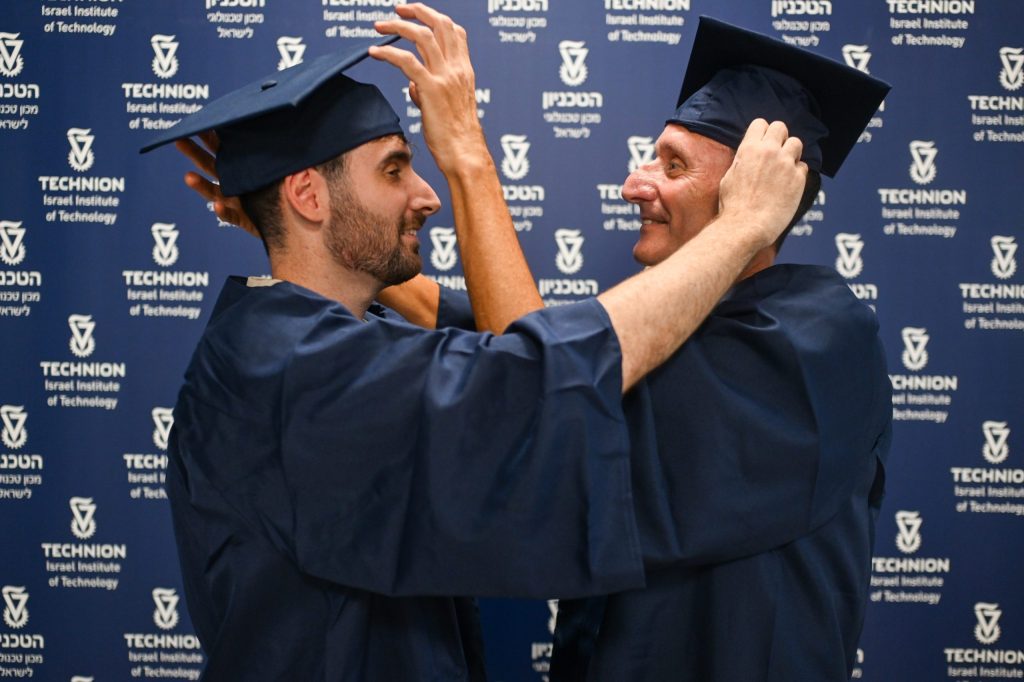
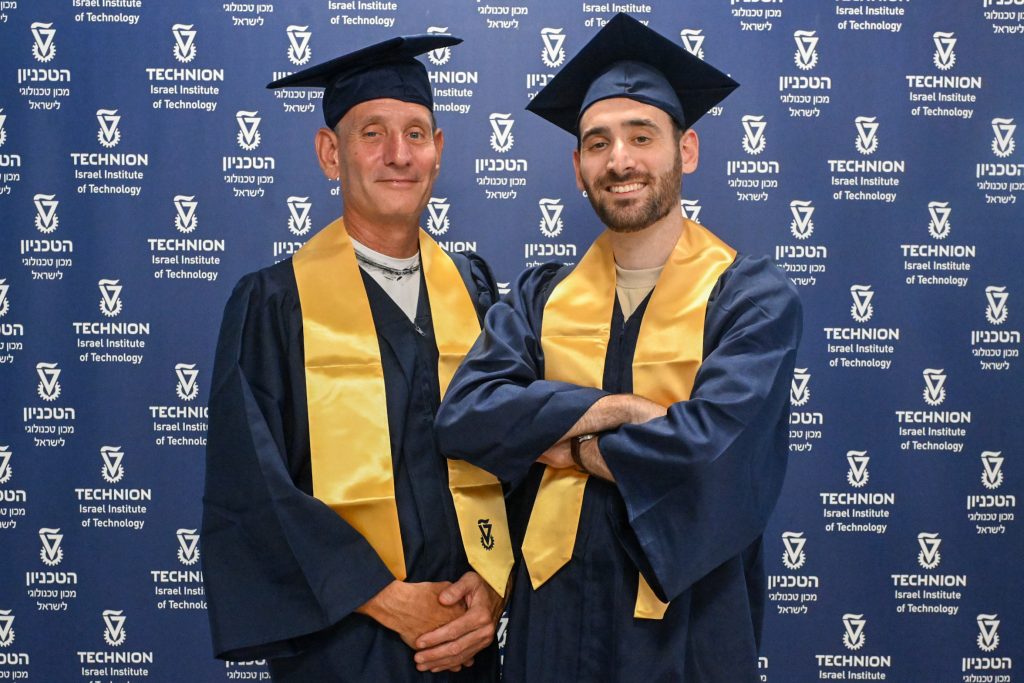
Liran Redl, now 30, came to the Technion at around the age of 26 and also chose the Henry and Marilyn Taub Faculty of Computer Science. “It took me a few years to decide on an academic direction. I was first introduced to the Technion through the ‘Ort-Technion’ program in middle school. Later, at around 24, after exploring different directions in my life, I decided to enroll in computer science at the Open University of Israel. That was where I discovered the world of software and felt that I had found a direction that genuinely interested me. I transferred from the Open University to the Technion through a transfer-track program, and last year I completed my degree successfully.”
Why the Technion? “Our home was very Technion-oriented. My father is a Technion alumnus, many of my friends studied here, and we live in the Krayot, so it was a natural choice. I knew that academically, and in terms of future employment, it was the best place to study, but I had no idea how rich the social and cultural life here would be. I made many friends at the Technion. I was very involved in the faculty student committee and enjoyed it tremendously. And if I’m considering a master’s degree, the social aspect is as much a reason as the academic one.”
There were, of course, difficulties, challenges, sleepless nights, and ups and downs throughout his studies, but looking back, Liran sums it up simply: “There’s no doubt that it was the best period of my life. Yes, I already miss it.”
The war brought additional challenges, of course. “It affected me both as a student and as a teaching assistant, particularly the disruption to interpersonal communication and the many changes to exam dates. But this is the reality here, and we have to know how to deal with it.”
And how was entering the job market during such a challenging period? “Many of us began working while we were students and transitioned to full-time positions after graduation, and all my friends from the degree program found jobs – some even at major companies and in significant positions. There’s no doubt that a Technion degree opens many doors. Even now, when we discuss candidates at work, it’s clear that having a Technion degree is a major advantage.”
And finally, there were the experiences father and son shared at the Technion. “Now and then, we would meet for a meal at the Student Union Building, and that was very moving,” Yuval recalls. “The Technion changed enormously during the three decades I was away. We went from blackboards and chalk to presentations, and teaching methods have changed, beginning with the registration process itself. I was happy to help Liran at the start of his degree, particularly with the more theoretical and mathematical courses, and I was just as happy when the situation was reversed, and he began helping me.
“I think of our lives as a series of cycles lasting three to six years: kindergarten, middle school, high school, the army, and academia. Liran completed his degree in computer science and has just embarked on a career in high-tech, while I, after a long career in high-tech, am receiving my teaching qualification and beginning a journey in the opposite direction.
“I think this is one of those moments when you look at your child and suddenly realize just how far he has come. For me, at that moment, at the distinguished ceremony, I’m not a Technion graduate, or a teacher, or a former high-tech professional. I’m simply a very proud father, sitting in the audience and watching my son receive his degree.”