Technion President at the opening plenary of the 2017 Board of Governors events:
“Technion is becoming increasingly global and intensifying its presence around the world; the task that we now face is to increase the number of ultra-Orthodox students at Technion”
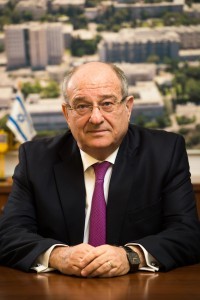
“Technion is becoming increasingly global,” said Technion President Prof. Peretz Lavie at the opening session of the 2017 Technion Board of Governors meeting. “Today, the world of research requires cooperation between fields and universities. In order to maintain Technion’s position at the forefront of scientific research, we must be a part of the globalization of higher education. This has been one of my main tasks since I became President of Technion eight years ago.”
In recent years, Technion has indeed been working on many fronts towards this purpose, and the two flagships are its extensions in New York and China, which will be inaugurated this year: the permanent campus of the Jacobs Technion-Cornell Institute (JTCI) for applied engineering-scientific research will be inaugurated in the heart of Manhattan in September 2017, and Guangdong Technion Israel Institute of Technology (GTIIT), near the city of Shantou in China, will be inaugurated in December 2017. Technion is also strengthening its international reputation through strategic cooperation with leading universities around the world. The International School at Technion, which welcomes students from a variety of countries, has significantly expanded its activities and grown from 39 students in 2009 to 700 in 2016.
Prof. Lavie said that these international projects place Technion at the forefront of global research and constitute an important milestone in its progress towards achieving the Technion vision: “Becoming one of the world’s ten leading scientific-technological research universities in the development of human capital, leadership, and knowledge, which works to advance the State of Israel and humanity.” He also noted the success of the MOOC (Massive Open Online Course) masterminded by Prof. Hossam Haick of the Wolfson Faculty of Chemical Engineering at the Technion: an online course in Arabic and English, which has already brought Technion to around 118,000 men and women from 87 countries, 23 of them in the Middle East.
Prof. Lavie emphasized another important challenge pertaining to the demographic changes in the State of Israel. “Israeli society is changing before our eyes. According to projections, by 2059 the ultra-Orthodox will make up 27% of Israel’s population, and this requires us to increase the number of ultra-Orthodox students in academia in order to help them integrate into the work force. In recent years, Technion has been working to increase the number of Arab students, whose percentage in the student body is now similar to the percentage of Arabs in Israel’s population, and we are now working to increase the number of ultra-Orthodox students at Technion. This is being done through special pre-academic programs and close support during their years of study.”
Technion representatives and friends from around the world arrived for this morning’s meeting of the Board of Governors and will participate in events until Wednesday. Lawrence (Larry) Jackier, Chairman of the Board of Governors, said, “Technion is at the forefront of the globalization of higher education, enabling the dissemination of its successes in science, technology, and medicine. We must continue this effort to expand Technion’s global exposure and positive impact. This is also the bridge that will enable the younger generation of diaspora Jews to reestablish contact with the State of Israel.”
“Only through the Technion model will we be able to catch up with the Western world in the fields of science and technology”
This statement was made yesterday at the Technion by Mr Hu Chunhua, Secretary of the Guangdong Provincial Party and one of China’s top leaders.
Mr Hu Chunhua, secretary of the Guangdong Provincial Party and one of China’s top leaders, visited the Technion yesterday at the head of a delegation of senior Chinese academics and government officials. The visit is a milestone in the establishment of GTIIT, the Guangdong Technion Israel Institute of Technology, which will be inaugurated this coming December in the city of Shantou. Other senior officials who took part in the visit were Party Secretary of Shantou, Mr Chen Liangxian and China’s Ambassador to Israel, Mr Zhan Yongxin.
“We are pleased and excited to be here at the Technion, after you visited us in Guangdong in December 2015 to lay the foundation stone for GTIIT,” said Secretary Hu Chunhua. “Guangdong is the leading province in China in terms of gross domestic product (GDP), but in the fields of science and technology we have not yet caught up with the Western world. We have no doubt that only by adopting a model like that of the Technion will we be able to succeed, and this is the idea that led to the establishment of GTIIT. We thank Technion President Prof. Lavie and the team leading the establishment of GTIIT, which does everything with dedication and talent.”
Technion President Prof. Peretz Lavie congratulated Party Secretary Hu Chunhua on his visit to the Technion and said that “The GTIITInstitute, which was only a dream two years ago, will be inaugurated this year. Only China can realize such a large project in such a short time, and we at the Technion feel that we are your true partners. Together with the team leading this important cooperation on behalf of the Technion, we are in the process of recruiting the Institute’s future faculty members, who are chosen according to the Technion’s criteria, so that the level of instruction at the new institute will not fall below that of the Technion.” At the end of his speech, paraphrasing Confucius’s famous saying, the Technion President said, “The Technion is your partner in a journey of a thousand miles, in which we have already taken much more than a single step.”
Deputy Mayor and Acting Mayor of Haifa, Hedva Almog, said: “The establishment of GTIITis part of a series of cooperations between Israel and Guangdong Province and between Haifa and its twin city, Shantou.” She added that an innovation center will be built near GTIITto help Israeli companies penetrate the Chinese market and cooperate with local companies.
The Council for Higher Education (CHE) was represented by Prof. Ido Perlman, a faculty member at the Technion’s Rappaport Faculty of Medicine and Deputy Chairman of the CHE. He said: “The Council for Higher Education is actively promoting the globalization of Israeli academia on behalf of international cooperation, and the success of the Technion and Guangdong Province in the establishment of GTIITis a source of pride and a model for other universities in Israel.”
Hi-tech entrepreneur Dr. Yossi Vardi, who graduated from the Technion 50 years ago this month, said that “the secret of the Technion lies in the fact that it does not make do with scientific excellence alone, but also aspires to bridge the existing gap between basic science, technology and entrepreneurship. Thanks to this aspiration, the Technion has been a critical factor in the development of the Israeli hi-tech industry.”
The official ceremony held at the Senate Hall at the Technion was hosted by Prof. Boaz Golani, Technion Vice President for External Relations and Resource Development. At the end of the ceremony, Professors Moris Eisen, Alex Furman, and Eran Friedler presented the environmental studies that they have carried out in China: monitoring of ground-based mineral contamination, innovative membranes for water filtration, and runoff recycling in Guangdong Province. Environmental issues are drawing considerable public attention in China and will be one of the core subjects at the new technology institute under construction in China.
In addition, the Party Secretary toured the campus and visited the Center for Electronic Microscopy at the Department of Materials Science and Engineering. He received an explanation of the Titan microscope, which enables the observation of substances at the atomic level. Dr. Yaron Kauffmann demonstrated the microscope’s capabilities to the Party Secretary and the Technion President, and described the advanced studies carried out with it.
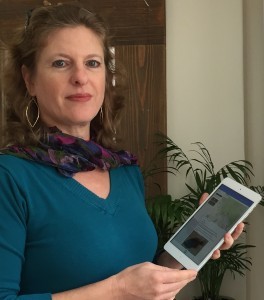
Assistant Professor Miri Barak of the Technion presents AugmentedWorld: an innovative location-based platform based on the wisdom of the crowd
Assistant Professor Barak, head of the Learning Technologies group at the Technion, is a leading expert in the fields of mobile learning, massive open online courses (MOOC) and cloud applications. In her research studies in collaboration with Prof. Richard Larson and Dr. Elizabeth Murray of MIT, she examines the cognitive and socio-cultural aspects of collaborative distance learning, motivation for learning, innovative thinking, and cognitive flexibility.
Assistant Prof. Miri Barak
According to Assistant Professor Barak, the process of globalization and the accelerated technological development require a rethinking of teaching and learning processes in the 21st century.
“In the past, only the lecturers had access to new information, but today it’s at the students’ fingertips – on their smartphones, tablets and laptops. Web and cloud technologies connect the students to a pipeline of infinite information and they can share knowledge with people from all over the world. Classroom lectures are perceived as anachronistic by the students, therefore, we must find new ways to promote meaningful learning.”
In light of the new reality, Assistant Professor Barak is leading the development of AugmentedWorld – an open web platform based on geographic information system technology (GIS) and the wisdom of the crowd. The platform implements innovative design principles for online learning with an open and adaptive system that enables users to create contents and add layers of information through the use of text, images and videos. One important feature of the system is that it is the learners who formulate questions and answer research and multimedia questions in the various fields of science and engineering. Since the system was launched, more than 850 users from Israel, China, and the United States have registered, posting scientific questions, geographic information points and data that contributes to solving scientific questions.
In collaboration with Prof. Richard Larson of MIT, Assistant Professor Barak is promoting the development of a methodology for project-based learning using two complementary technologies: AugmentedWorldand BLOSSOMS. This joint project examines an integrative approach that combines technology-based learning and assessment, inside and outside the classroom. The project, which is funded by the MISTI program, is designed to promote scientific thinking and 21st century skills among learners of all ages from different parts of the world.
“The ramifications of accelerated technological development are widespread and deep,” says Assistant Professor Barak, “and one of them is the ‘generation gap’ between lecturers and college students.” Advanced technologies, which are now a vital resource for students, are very rarely used in the teaching process. Web technologies, satellite-based systems, mobile devices, social media, collaborative writing documents, computer simulations, and more – all of these have yet to fully realize their potential in academic instruction.”
The Harvey Prize 2016: For the Discovery of Gravitational Waves and the Development of Optogenetics
Technion will award the prestigious prize to five world-renowned researchers in the fields of technology, science, and health
On Sunday, June 11, Technion will award the prestigious Harvey Prize to five world-renowned researchers. The prize is awarded annually to men and women who have made a significant contribution to humanity. The prize, named after the late Leo M. Harvey, is considered a Nobel predictor – about 20% of those who have won it were later awarded the Nobel Prize.
In the field of science and technology, the prize will be awarded to Professor Emeritus Rainer Weiss of MIT, and Professors Emeritus Ronald Drever* and Kip Stephen Thorne of the California Institute of Technology (Caltech). The three scientists, who led the LIGO experiment, will receive the prize for the discovery of gravitational waves, which confirmed a central prediction of Einstein’s general theory of relativity and opened a new window to the universe.
In the field of human health, the prize will be awarded to Professor Karl Deisseroth of Stanford University and Professor Peter Hegemann of the Humboldt University of Berlin. They will receive the prize for the discovery of the opsin molecules involved in sensing light in microorganism cells and their digitalization in the development of optogenetics. This innovative and original approach has revolutionized the field of neurobiology and enables us to learn about the functioning of nerve cells and the connection between neural networks and animal behavior.
The Harvey Ceremony will take place at the Heller Cinema, Zielony Student Union Building, on Sunday, June 11, at 12:30 pm.
*awarded posthumously
For further details: Technion Spokesperson Doron Shaham – 050-310-9088
Sensing the nanoscale with visible light, and the fundamentals of disordered waves
A general rule in optics is that light is insensitive to features which are much smaller than the optical wavelength. In fact, the whole concept of “index of refraction” arises from the fact that light experiences a medium as a whole, not responding to the individual atoms. However, a new experiment at the Technion-Israel Institute of Technology shows that even features that are more than 100 times smaller than the wavelength can still be sensed by light.
Published last Thursday in Science, the work – conducted by Hanan Herzig Sheinfux and Dr. Yaakov Lumer from the group of Distinguished Professor Mordechai (Moti) Segev from the Technion, in collaboration with Dr. Guy Ankonina and Prof. Guy Bartal (Technion), and Prof. Azriel Genack (City University of New York), examines a stack of nanometrically thin layers – each layer is on average 20,000 times thinner than a sheet of paper. The exact thickness of the layers is purposely random. Ordinarily, this nanometric disorder should bear no physical importance: light just experiences the average properties, as if this were a homogeneous medium. But, in this experiment, a 2nm (~6 atoms) thickness increase to one single layer somewhere inside the structure is enough to change the amount of light reflected at a specific angle of incidence. Furthermore, the combined effect of all the random variations in all the layers manifests an important physical phenomenon called Anderson localization, but in a regime where it was believed to have vanishingly small effects.
Wave localization was first discovered in 1958 by Philip W. Anderson, who was awarded the Nobel Prize for it in 1977. Anderson localization is a notoriously difficult effect to demonstrate in the lab. In particular, when the random features of a sample are much smaller than the wavelength, Anderson localization has practically no effect. Indeed, the random arrangement of the atoms in a material such as glass is not observable with visible light: the glass looks completely homogeneous, even under the best optical microscope. But the localization effect seen in this recent experiment is surprisingly potent.
How is this possible? Imagine being pushed by a mosquito. Normally, mosquitos are too weak to push anything as heavy as a grown person. However, if you happen to be walking on a tightrope, even a relatively small shove can have a large effect – all the other forces are balanced and the effect of the mosquito is still effectively amplified (technically, a mosquito’s shove is so weak, that this amplification would likely be ineffective, but the principle remains). In a crude analogue, while nanometric disorder is very weak, this experiment was conducted near the threshold of total internal reflection – a point of fragile stability, analogous to standing on the tight-rope – and the influence of disorder was effectively amplified.
These findings are a proof-of-concept which may pave the way for major new applications in sensing. This approach may allow the use of optical methods to make measurements of nanometric defects in computer chips and photonic devices. Since such an optical approach is expected to be faster and less expensive than measurements using electrons or X-rays, these results have a significant potential impact for manufacturing technology and basic science.
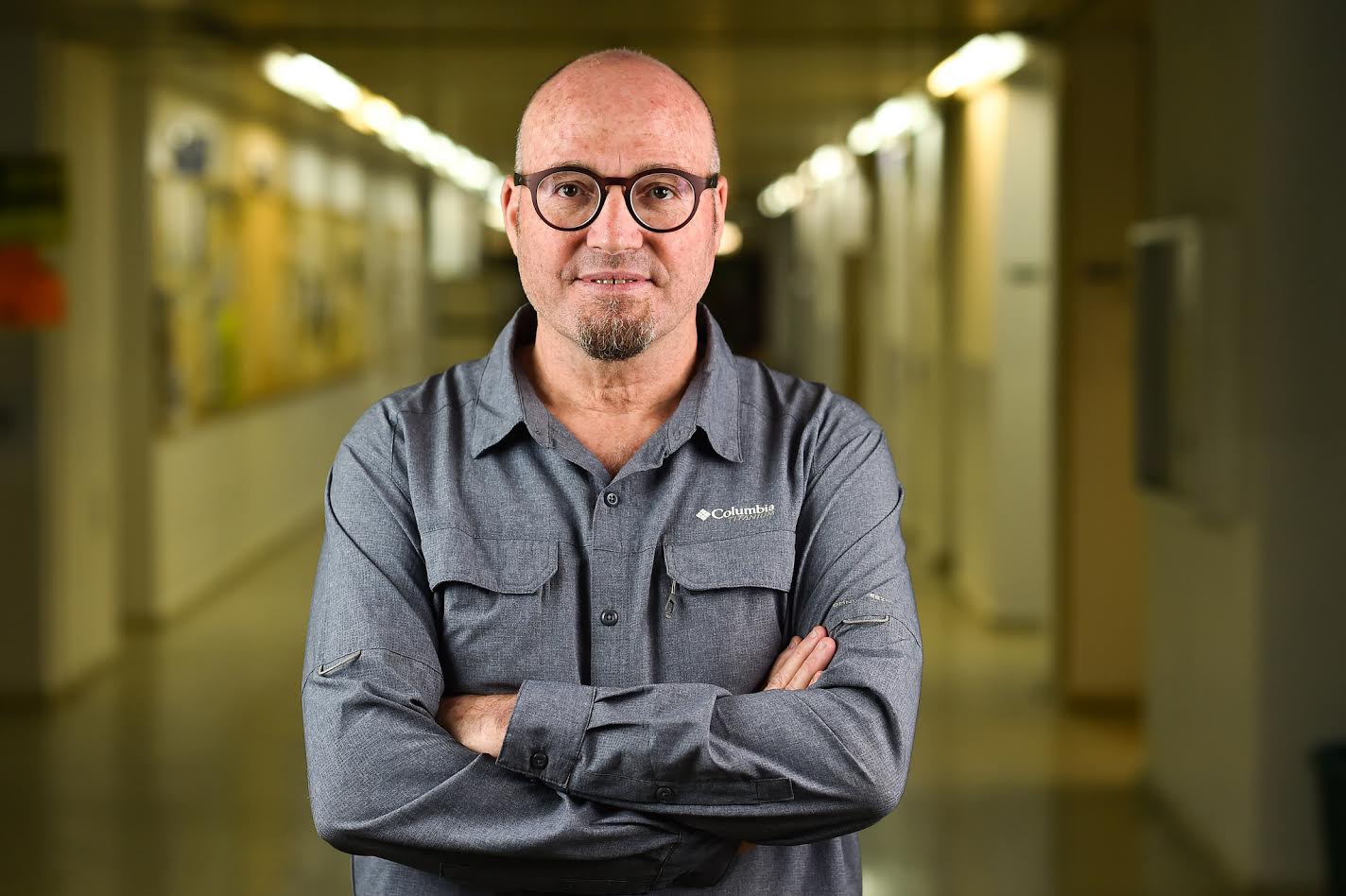
Higher View, an exhibition on the subject of Jerusalem by Prof. Ezri Tarazi from Technion Israel, will soon open in London. The exhibition, which has been displayed at the Tower of David Museum (2015) and the Milan Triennale in Italy (2016), expresses various aspects of Jerusalem’s history, culture and politics through a series of tables.
Prof. Ezri Tarazi
Prof. Tarazi, born in 1962, heads the Graduate Program in Industrial Design at the Technion Faculty of Architecture and Town Planning. He spent many years teaching at Bezalel Academy of Arts and Design, where he founded the Master’s Program in Industrial Design. In 2005, he founded the d-Vision post-academic program for the Keter Group, and was a member of the Council for Higher Education (CHE) for 10 years.
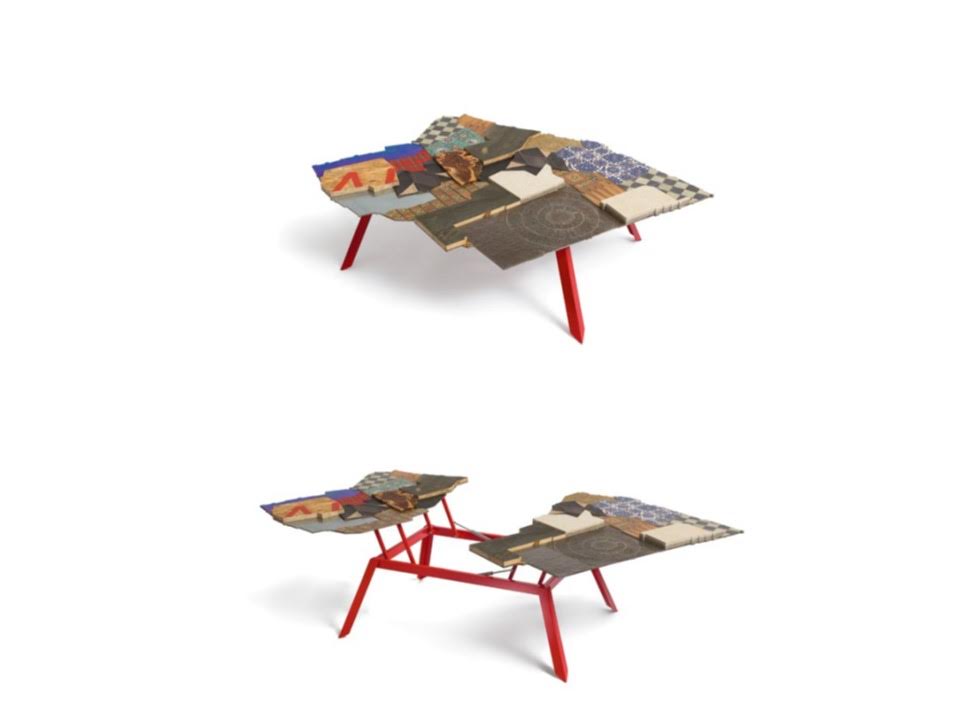
The Higher View exhibition consists of a series of separate tables, each of which expresses different aspects related to Jerusalem. The table in the picture expresses the geopolitical situation in the divided city of Jerusalem, and the table itself opens into two parts in order to illustrate the “injury” caused by the division of the city. The sections placed on the table, which actually form the table itself, were collected in the Old City and cut into sections. Another table in the exhibition presents a dystopia in which the archeological excavations in the city become an end in itself, and Jerusalem becomes an empty crater symbolizing a city that has been emptied of all its assets. Another table makes it possible to produce music by placing glasses at street intersections, with each intersection activating a different musical instrument.
The exhibition will open at the Jewish Community Center in London (JW3) on June 5, 2017.
Researchers at the Technion and Weizmann Institute present a new model describing biological adaptation to unforeseen challenges
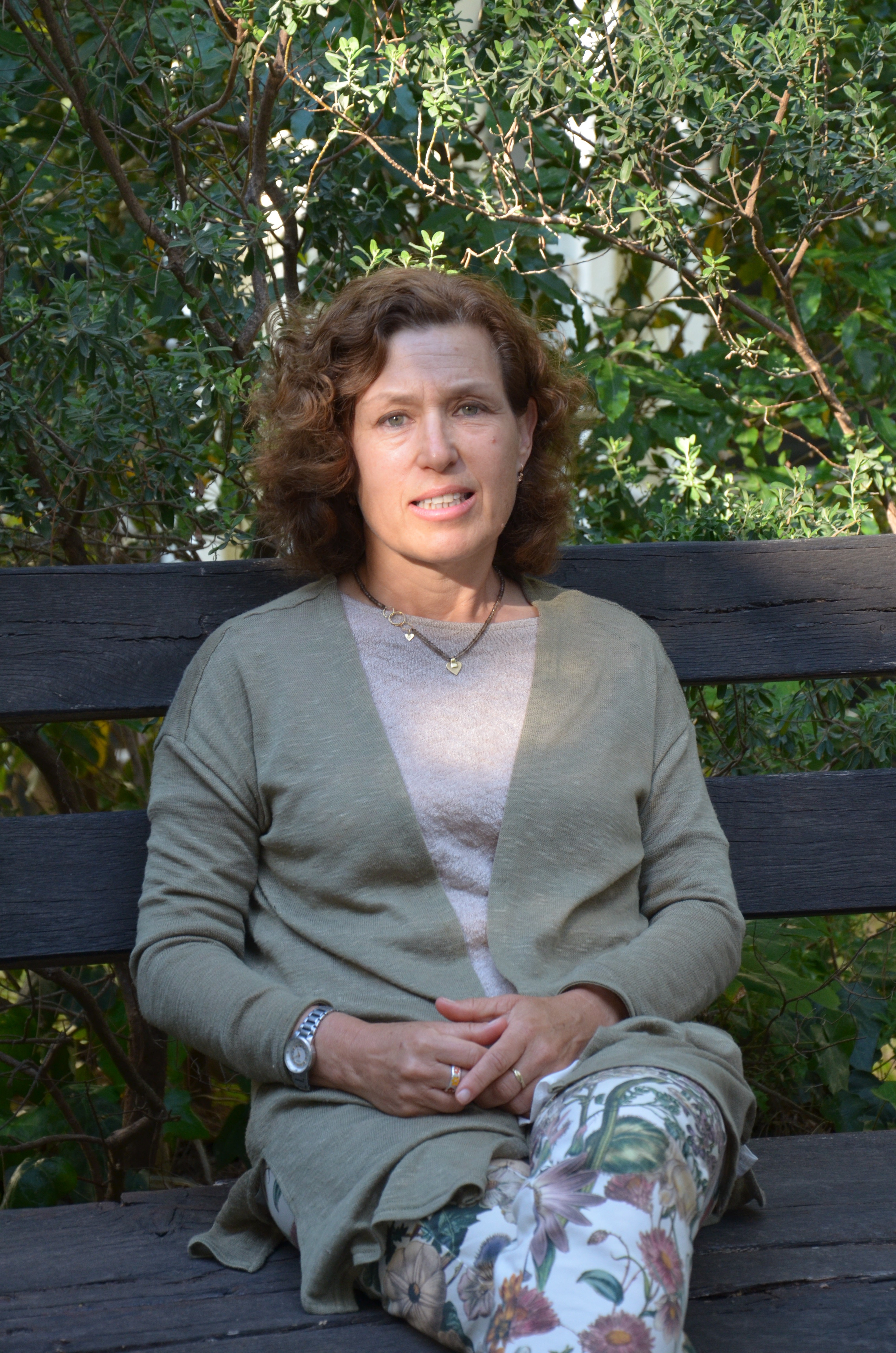
Prof. Naama Brenner from the Technion Department of Chemical Engineering
A study published in the journal Nature Communications presents a new model of how cells and organisms adapt to the environment: improvising new responses in the face of unforeseen challenges.
The authors, researchers from the Technion and Weizmann Institute, based their study on an original gene regulatory network model.
“Biological systems can cope not only with routine events but also with unforeseen ones,” explains Prof. Naama Brenner from the Technion Department of Chemical Engineering. “The capacity to adapt to unexpected challenges and changes indicates that beyond the “toolbox” that it has developed in the course of evolution, the organism is also equipped with the ability to improvise; in other words, the organism is a learning system capable of providing an ad hoc response to new situations.”
Prof. Brenner studied this learning ability at the microscopic level with doctoral student Hallel I. Schreier from the Interdisciplinary Program of Applied Mathematics at the Technion and Prof. Yoav Soen from Weizmann Institute. According to Prof. Brenner, “The basis for our calculations is a network model that describes the organism’s capacity to adapt to the changing environment.”
Biological systems, unlike engineering systems, are the product of evolution and are capable of repairing themselves and evolving. They are not planned in advance but develop on the fly in response to new challenges and changes. According to Prof. Brenner, “the biological cell has a huge number of degrees of freedom with which it improvises, and it is capable of initiating processes of self-organization in response to new and unfamiliar situations.”
Insisting on basic science
Doctoral student Hallel I. Schreier from the Interdisciplinary Program of Applied Mathematics
Prof. Brenner heads one of the Network Biology Research Laboratories at the Lorry I. Lokey Interdisciplinary Center for Life Sciences & Engineering. “Our goal is to promote interdisciplinary science that explores the various biological systems and phenomena: synapses, neural networks, genetic networks, multi-cellular organism development, populations, evolution, and more. We are living in a fascinating era – life science and research technologies are developing rapidly. In fact these technologies, such as genome sequencing, are more advanced than our ability to understand the information that they provide. Therefore, we have a lot of work to do: to develop theories and conceptual frameworks to understand the experimental results. It is difficult and challenging to acquire an in-depth understanding beyond statistical correlations that might be of applied value. We, as scientists in academia, have the right and the responsibility to insist on basic science.”
Prof. Brenner completed her BSc at Hebrew University (Physics, Mathematics and Computer Science) and went on to earn her PhD at the Technion Faculty of Physics, under the guidance of Prof. Shmuel Fishman. After her doctorate she decided to switch to the life sciences and did her postdoc out under Professors Bill Bialek and de Ruyter van Steveninck at NEC Laboratories – a private research institute located in Princeton, New Jersey. There she entered the field of Computational Neuroscience. She subsequently worked for three years in InSightec, an Israeli company that has developed a noninvasive surgery technology – tumor removal using a beam of focused ultrasound waves. In 2001, she was invited by the Technion Department of Chemical Engineering to take part in a joint undergraduate program with the Faculty of Biology. “Here I began to study genetic regulatory networks in yeast with Prof. Erez Braun, my former teacher in a biophysics course, who had originally initiated my interest in the biology. This was an amazing time – we made a new discovery every week. My work with Professor Braun, and the experiments on flies conducted by Prof. Soen, revealed the ability of cells and organisms to adapt to the changing environment through improvisation. These experiments provided the inspiration for the current theoretical work on adaptation in regulatory networks.
At the same time, Prof. Brenner participates in a project for studying the evolution of microbial communities using a new technology – growing bacteria in micro-droplets. In this project, the researchers are trying to develop an “evolution machine” that would allow them to monitor in the lab evolutionary processes involving interactions between cells within a droplet and between populations growing in adjacent droplets. This project is carried out in collaboration with three other research groups in Europe and New Zealand, and funded by the Human Frontier Science Program (HFSP).
Prof. Yoav Soen from Weizmann InstituteNetworks with homogeneous (A) and heterogeneous (B) structure used in the study on exploratory adaptation. In homogeneous networks, each node affects several others and no coherence is achieved, therefore exploration does not converge. In heterogeneous networks, a few large “hubs” (larger sized circles) dominate the dynamics and lead the network towards convergence in exploration.
2017 GRADUATES OF THE JACOBS TECHNION-CORNELL INSTITUTE
Students to Receive Dual Degrees from the Technion and Cornell,
A New Milestone in the Technion’s Continued Expansion in New York City
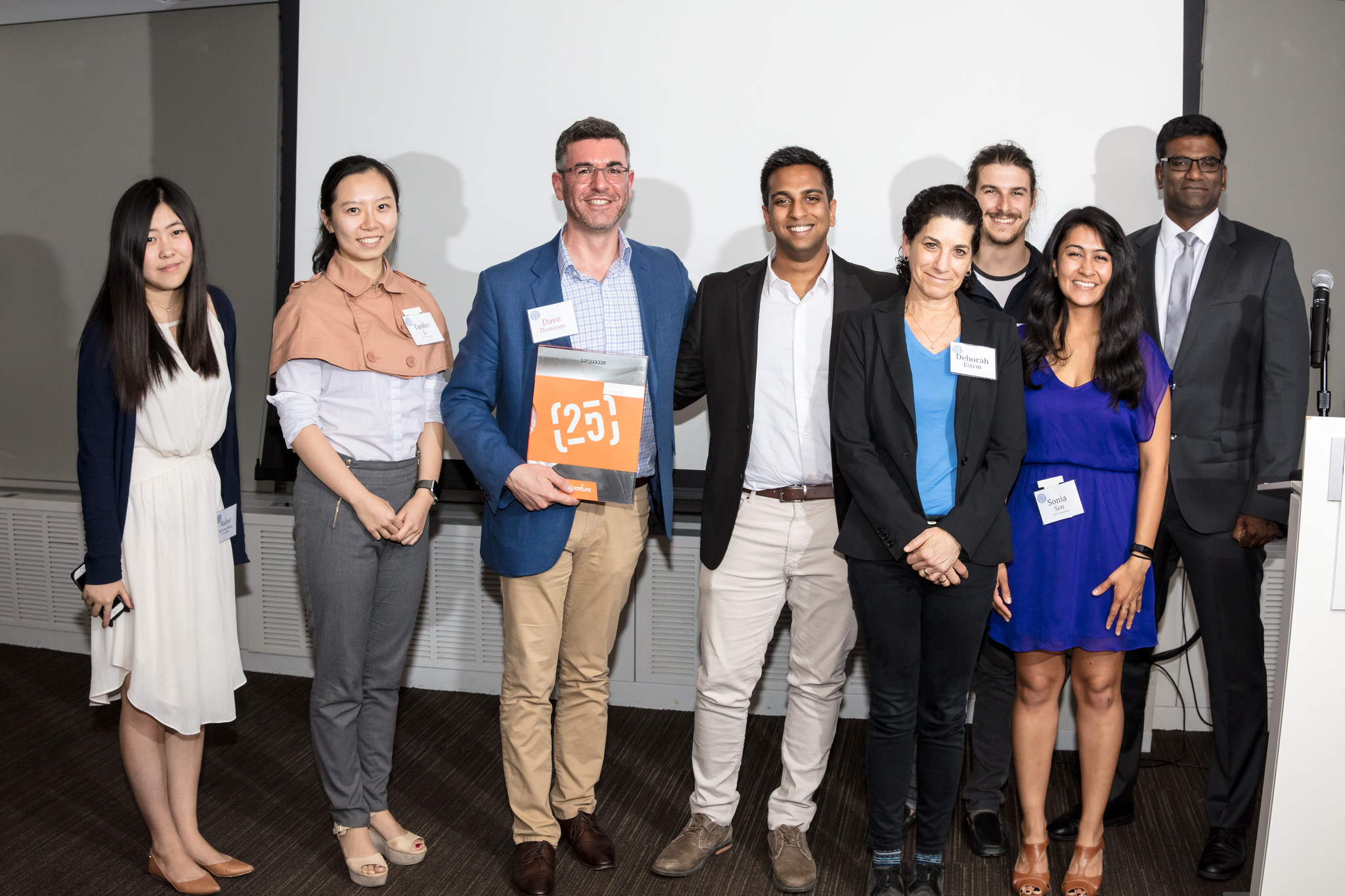
NEW YORK, NY (May 17, 2017): On Tuesday, the Technion-Israel Institute of Technology and Cornell University honored the 2017 graduates of the Joan & Irwin Jacobs Technion-Cornell Institute at Cornell Tech – including the first-ever graduating class of Health Tech students and the second graduating class of Connective Media students. This will be the last class graduating from Cornell Tech’s temporary home in the Google building in Chelsea as the new Cornell Tech campus (home of the Jacobs Technion-Cornell Institute) opens on Roosevelt Island in September.
The pre-graduation event in Manhattan recognized the accomplishments of the 27 graduates of this year’s class, 21 of whom will receive Technion-Cornell Dual Master’s Degrees in Connective Media for their studies in the technologies driving digital media (and the social and business forces at play). The other six graduates will receive Dual Master’s Degrees in Health Tech, where students study both health and technology, learning to create applications to promote healthier living for individuals.
“The 2017 graduates of the Jacobs Technion-Cornell Institute now join the ecosystem of New York – a developing ecosystem of technology, entrepreneurship and innovation,” said Prof. Peretz Lavie, President of the Technion Israel-Institute of Technology. “I have been inspired by these students’ work, and I look forward to following their journeys as they launch start-ups, develop game-changing innovations and join some of the world’s leading companies. I know their contributions to societies throughout the world will be immense.”
“The Jacobs Technion-Cornell Institute was created to improve the strength of the New York tech ecosystem while also using deep science thinking to make a difference for real people and improve the common good,” said Ron Brachman, Director of the Jacobs Technion-Cornell Institute at Cornell Tech. “The Connective Media and Health Tech graduates of 2017 truly exemplify this mission, and we could not be more proud of what they have accomplished.”
The Jacobs Technion-Cornell Institute embodies the academic partnership and shared commitment to impact between the Technion and Cornell University. The partnership also brings the Technion’s game-changing brand of science and technology education – and Israeli innovation – to New York.
The Connective Media graduate program, the first degree of its kind in the world, was designed with input from some of the world’s leading technology and media companies, including Twitter, Facebook and The New York Times. Its hands-on, two-year curriculum is centered on computer science and engineering, the human and social impacts of technology, and entrepreneurship.
“I chose to come to Cornell Tech because I wanted to learn how to create technology that makes an impact on the world, and I chose the Connective Media program in the Jacobs Technion-Cornell Institute because I wanted to make sure that impact is a positive one,” said Harrison Gregg, Connective Media ’17. “The Jacobs Institute, at the intersection of academia and industry, offers the best of both worlds – giving us, as students, the freedom to develop ideas for making the world a better place and the power to make them happen.”
The Health Tech graduate program, on the cutting edge of transforming how healthcare is delivered and experienced, was designed with input from leading hospitals, insurance companies, medical schools and health organizations. Its rigorous, interdisciplinary curriculum combines exceptional technical education with the industry-specific knowledge needed to develop innovative new products and services that address real healthcare needs.
“What you’re doing in the real world after you graduate, you actually practice everyday at the Jacobs Technion-Cornell Institute,” said Sonia Sen, Health Tech ’17. “There’s no other program where you’re continuously building products and finding solutions through technology for the people that need them the most.”
The Jacobs Technion-Cornell Institute was established in 2013 with a $133 million gift from Dr. Irwin Mark Jacobs, founding chairman and CEO emeritus of Qualcomm, and his wife, Joan Klein Jacobs. It has quickly become a catalyst for global entrepreneurship and a driver of New York’s emerging tech ecosystem and local economy. The Jacobs Institute combines professors, research and resources from the Technion, a leading global research university, that was a vital factor in Israel’s emergence as the “Startup Nation,” and Cornell University, a longtime leader in engineering and computer science, with a strong presence in New York City. The Jacobs Institute’s dual-degree program — accredited through the Technion in Israel and Cornell in the U.S. — provides graduates with an international advantage and greater recognition in an increasingly global workforce.
History at Technion: President Prof. Peretz Lavie Elected To Third Term
Confirmed by the Executive Committee of the academic institution
Technion’s Academic Committee, comprised of all full professors, approved the continuation of President Prof. Peretz Lavie’s term in office by a large majority. The decision, which extends his office to a third term, was unanimously approved yesterday by the Technion Executive Committee. The decision must also be ratified by the Board of Governors, which will convene next month.
Technion President Prof. Peretz Lavie. Photo credit: Nitzan Zohar, Technion spokesperson’s office
Prof. Lavie will be the first President in the history of Technion to be elected to a third term and will serve for more than eight years (with the exception of Amos Horev’s third term, which lasted for one year). Prof. Lavie, who took up the post in 2009, assented to a request by the Technion Executive Committee to extend his term in office by another two years. He did so out of a desire to complete a number of strategic development projects at the Technion campus in Haifa and the need to establish Technion’s branches in New York and China.
“I see the position of Technion President as the most important mission in my academic life,” said Prof. Lavie. “I will continue to work with all my might so that the glorious institution we are all so proud of will develop and thrive.”
During Prof. Lavie’s current term in office (2009-2017), Technion recorded impressive achievements led by the recruitment of more than 200 new faculty members. “Outstanding faculty members are the most important asset of any university,” said Prof. Lavie. “The quality of Technion and its future status will be determined first and foremost by the quality of its faculty members.”
The new faculty members, whose recruitment involved the extensive recruitment of resources, are mostly young and were selected based on excellence in research. The increase in the number of faculty members was accompanied by a significant increase in the number of publications in the world’s leading scientific journals. In 2016, Technion was ranked 26th in the world in the list of Rising Stars, published by the leading scientific journal Nature, following a 40% increase in Technion’s publications in leading scientific journals. In the Shanghai ranking, the world’s leading index of academic institutions, within eight years Technion shot up from rank 101-152 worldwide to 69th place in 2016: the top of Israel’s universities. These rankings, along with a significant increase in the awarding of research grants, attest to Technion’s academic excellence and the research achievements of its faculty members.
The Jacobs Technion-Cornell Institute – photo simulation – Credit: Morphosis [Thom Mayne]
The research world, in Prof. Lavie’s view, is changing. In the past, a scientist could carry out research and achieve breakthroughs on his own, but now significant research requires interdisciplinary cooperation. “The walls between disciplines, faculties, and fields of research are collapsing,” explains Prof. Lavie. “Future achievements in science and engineering will require cooperation between laboratories and researchers from different fields. In order to achieve significant scientific and engineering breakthroughs, enormous knowledge is now required — knowledge that an individual scientist does not possess.” For this reason, Technion has worked to establish interdisciplinary centers where researchers from different faculties work together. These centers include research institutes such as the Technion Integrated Cancer Center (TICC), the Quantum Engineering Center, the Cyber Security Research Center, and the Technion Computer Engineering Center (TCE), in addition to the Excellence Centers of the Council for Higher Education that have been established at Technion.
The number of students at Technion is growing steadily. In the past eight years, the number of students has increased from 12,665 (2009-2010) to 14,121 (2016-2017). In addition, there has been a 30% increase in the number of graduate students (master’s and doctoral).
Since taking office as President, Prof. Lavie has worked to change the atmosphere at Technion and its image as a rigid institution that is not sufficiently considerate of its students. Under his leadership, a committee was established to examine the structure of studies and academic load at Technion, headed by Prof. Yachin Cohen of the Faculty of Chemical Engineering. The committee’s recommendations, which were implemented in conjunction with the Technion Student Association (TSA), included many changes aimed at improving teaching at Technion. In addition, in 2012 Prof. Lavie instituted the Yanai Prize for Excellence in Academic Education, with the generous donation of Technion alumnus Moshe Yanai. The prize, which is awarded in recognition and appreciation of faculty members who set an example by their contributions to teaching and learning, has already become synonymous with excellence in teaching at Technion and has been awarded to 62 faculty members and three faculties.
The Technion-Guangdong Institute in China
Along with improvements in teaching, Technion is also investing heavily in developing the infrastructure that serves students on campus. The boom includes the construction of dorms, classrooms, and study halls, and spaces designated for social, cultural, and sports activities. Thanks to the enormous investment in building student dorms and renovating existing ones, Technion now the leading academic institution in Israel in terms of housing solutions (beds) offered to its students.
Another impressive achievement recorded by Technion during Prof. Lavie’s term in office was the strengthening of its global standing. This achievement is reflected in the establishment of Technion branches in New York and China and in strategic partnerships with leading universities around the world. In September 2017, the permanent campus of the Jacobs Technion-Cornell Institute for applied engineering-scientific research will be inaugurated in the heart of Manhattan. The Institute was established after Cornell University and Technion jointly won the City of New York’s international competition, in which more than 50 leading universities from the US and around the world participated. Technion is the first non-American university in the world to award its own academic degree on American soil.
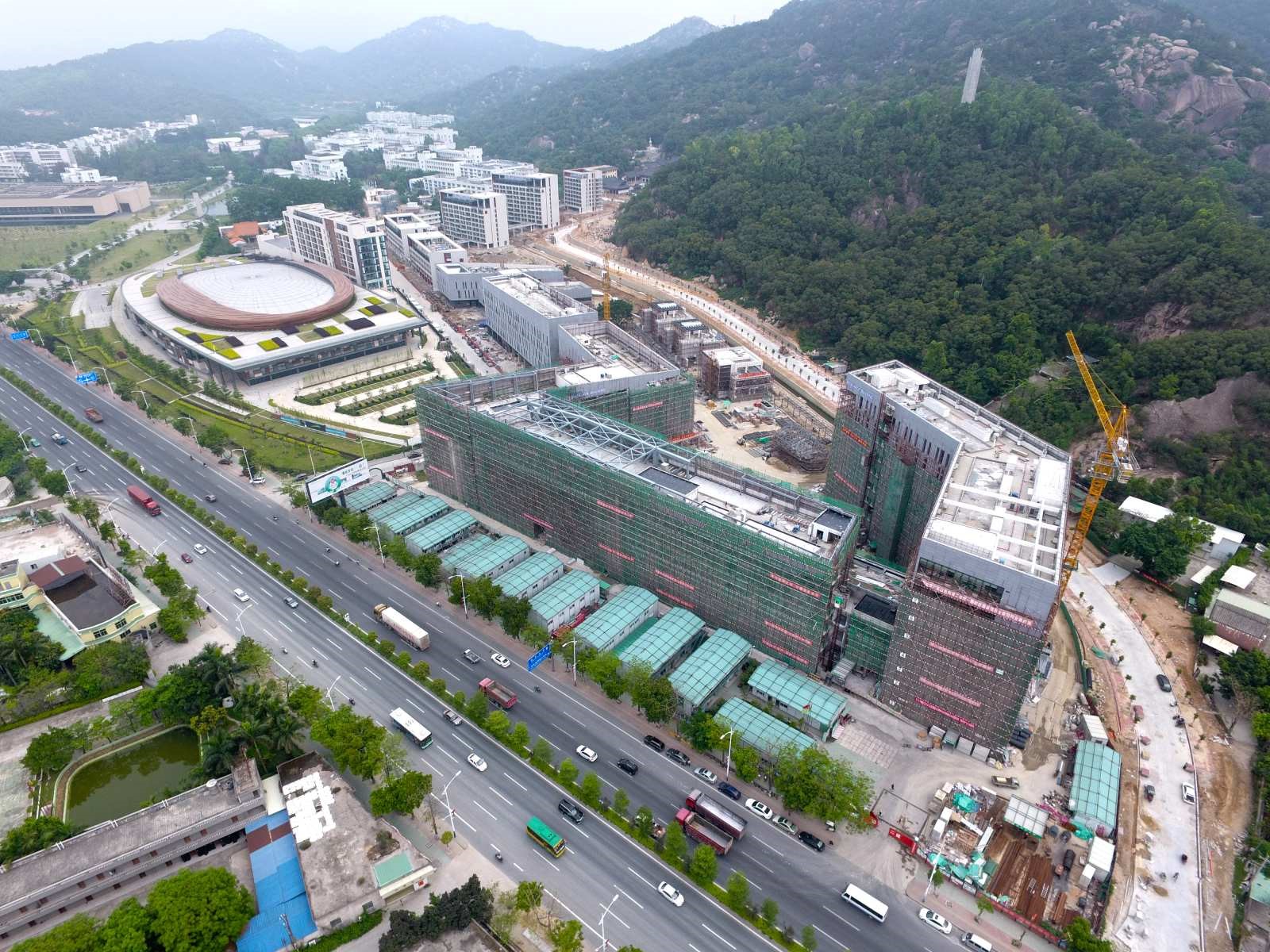
Construction of the Technion-Guangdong Institute, which will be inaugurated in China in December 2017, is nearing completion. The Institute, located near the Shantou University campus in the province of Guangdong in southeastern China, will be a quality research university, teaching and research programs in its initial years focusing on environmental protection.
Technion is also strengthening its international reputation through cooperation with leading universities around the world. Technion’s International School accepts students from a variety of countries, and has significantly expanded its activities; the number of students has increased from 39 in 2009 to 700 in 2016.
These international projects place Technion at the forefront of global research and constitute an important milestone in its progress toward achieving the Technion vision: becoming one of the world’s ten leading scientific-technological research universities in the development of human capital, leadership, and knowledge creation, which works to advance the State of Israel and humanity.
As stated, Prof. Lavie’s next term in office is intended to enable him to complete and strengthen these processes, which will advance Technion in realizing its vision.
Japan’s Minister of Science, Technology and space Yosuke Tsuruho was at Technion on 11/5/17 as part of his first ever visit to Israel.
“Israel and Japan share a common vision of developing advanced technology for the benefit of humanity,” said Minister Yosuke Tsuruho, on meeting Technion President Prof. Peretz Lavie and Vice President Prof. Boaz Golany. Accompanied by a large delegation of businessmen and academics, Tsuruho also met with Itai Levinson of ReWalk Robotics Ltd and Prof. Pini Gurfil, Director of the Asher Space Research Institute (ASRI).
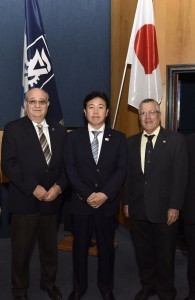
l-r: Prof. Peretz Lavie, Minister Yosuke Tsuruho, Prof. Boaz Golany
“Technion graduates have always been a key factor in the technological development of the State of Israel, and the startup nation was born here,” said the Prof. Lavie. “Within just 20 years, Technion graduates were involved in establishing and managing more than 1,600 companies in Israel. These companies generated revenues of more than $30 billion and created 95,500 jobs in Israel.” Prof. Lavie highlighted Technion’s groundbreaking global initiatives in New York and China, as well as the expansion of the Technion’s network of global academic collaborations.
Prof. Boaz Golany, Technion Vice President for External Relations and Resource Development, referred to Technion’s cooperation with Japanese companies and academic institutes. “About two years ago, the Technion established an association of friends in Japan, and since then, the ties have been expanding,” he said. “This includes support for the Technion’s cyber center by the Internet Research Institute (IRI) in Tokyo; Inchia’s support for photonics and chemistry; collaboration in the field of robotics; and more. Recently, a meeting of Israeli and Japanese researchers on regenerative medicine and medical applications for stem cells took place Technion. Held at the Rappaport Faculty of Medicine, this meeting will further strengthen ties between the Technion and Kyoto University.”
Minister Tsuruho thanked the Technion for its hospitality and said: “We want to understand and learn from you the secret of success and how you did it. Thank you for sharing your information and experience in order to help us achieve scientific and technological breakthroughs.”
Three teams of researchers will be the recipients of the Kavli Microbiome Ideas Challenge that supports novel, cross-cutting tools and methods in the field of microbiome research. The selected proposals include research on genetic switches to study microbial ecosystems, tools for deciphering multi-kingdom communication molecules, and a novel approach to map interactions between bacteria species.
“The Kavli Microbiome Ideas Challenge is an exciting opportunity to support high risk, interdisciplinary research that does not normally receive traditional funding,” said Tim Donohue, Chair of the Scientific Advisory board for the Kavli Challenge. “The grants selected for funding demonstrated great potential for the generation of novel tools and methods that will be broadly applicable across the many environments and move the field forward in the causal understanding of microbial and community function. The Kavli Foundation is to be commended for investing in this rapidly emerging field with this program.”
“The Kavli Foundation is delighted with the partnership of ASM, ACS, and APS in the Kavli Microbiome Ideas Challenge, to catalyze collaborations at the intersection of fields,” said Miyoung Chun, Executive Vice President of Science Programs at The Kavli Foundation. “We would like to congratulate the award recipients, whose expertise spans physics, chemistry, and biology, and we wish them all the best in their efforts to accelerate understanding of microbial function.”
A team of researchers led by Raghuveer Parthasarathy, Professor of Physics, from the University of Oregon, will use their grant to create genetic switches. The team will create DNA-based circuits that turn on and off particular genes, and simultaneously activate fluorescent beacons. These tools will enable new, experimental approaches for studying animal-associated microbial communities as ecosystems of interacting colonized hosts, and colonizing microbes.
Researchers from the University of Washington will use their Kavli grant to develop a tool for deciphering multi-kingdom communication molecules using engineer cellular traps. The team, led by Ashleigh Theberge, Assistant Professor, Department of Chemistry, will create new analytical chemistry and engineering tools that pull out key molecules from a mix of molecular noise in order to selectively “listen” to molecular signals produced by specific fungi, bacteria, or human cells.
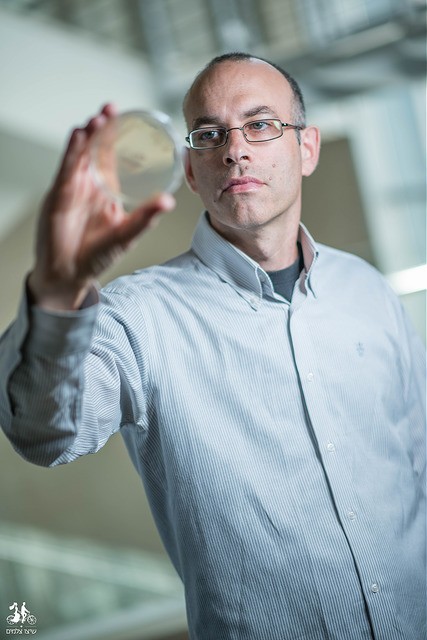
The third team’s grant will support research on measuring species interactions in situ using micro-droplet co-localization. The research, led by Roy Kishony, Professor of Biology and Computer Science from the Technion – Israel Institute of Technology, will introduce a novel approach of comprehensive mapping of interactions between bacterial species within their natural communities. Their research will uncover which species support and inhibit the growth of others, and it will serve as a basis for discovering natural mediators of species interactions.
“Three major life sciences organizations, ASM, ACS and APS, came together to provide scientists with the unique opportunity of bringing together experts from different research areas to move this very exciting field forward,” said Stefano Bertuzzi, CEO, ASM, “The Kavli Ideas Challenge allowed for the collaboration between different scientific communities that span computational biology, physics and analytical chemistry to develop important new research tools.”
Asst. Prof. Asya Rolls of the Ruth and Baruch Rappaport Faculty of Medicine at Technion has been named a Howard Hughes Medical Institute (HHMI)-Wellcome International Research Scholar, a prestigious award for promising researchers outside the United States poised to advance biomedical research across the globe.
The focus of Rolls’s research is the effect of experiences in the brain on the immune system. “All emotions, all thoughts, affect specific brain regions,” she explains. “We will be able to manipulate the potential embedded in the brain to cure disease, by activating the reward system and potentially also many other systems.” Rolls adds, “Technion, one of few technological institutes with a medical school, offers the unique opportunity to harness technological capabilities along with medical developments.” Her research could reveal new ways to exploit the body’s inherent disease-fighting potential.
Five other Israeli researchers were also selected: Drs. Yosef Buganim and Idan Efroni of the Hebrew University of Jerusalem; and Drs. Eran Elinav and Shalev Itzkovitz, and Prof. Ido Amit of the Weizmann Institute of Science
HHMI has teamed up with the Bill & Melinda Gates Foundation, the Wellcome Trust, and the Calouste Gulbenkian Foundation to develop scientific talent around the world, and will award a total of nearly $26.7 million to 41 early-career scientists from 16 countries. Each researcher will receive a total of $650,000 over five years. The award is a big boon for scientists early in their careers, and offers the freedom to pursue new research directions and creative projects that could develop into top-notch scientific programs.
“This is an outstanding group of scientists who will push biomedical research forward worldwide, and we are thrilled to support them alongside our philanthropic partners,” said David Clapham, HHMI’s Vice President and Chief Scientific Officer.
The scientists selected as International Research Scholars represent a diverse array of scientific disciplines and geographic locations. Scholars hail from research organizations and institutions from across the world, from Tanzania to Cambodia to Chile to Austria. Their research covers a broad variety of biological and medical research areas including neuroscience, genetics, biophysics, computational biology, and parasitology.
“We are excited to join with our partners in supporting these superb scientists. We look to them to bring transformative innovation to priority global health problems,” said Chris Karp, Director of Global Health Discovery & Translational Sciences at the Bill & Melinda Gates Foundation.
These researchers’ goals are innovative, wide-ranging, and forward-thinking. They seek to understand diverse topics, from how immune cells function to how pathogenic bacteria jump from the environment to humans, and are even investigating ways to watch genes switch on and off in living brains.
“We are delighted to be a partner in supporting this outstanding community of international researchers. Their expertise and thirst for knowledge will enhance our understanding of how life works and the causes and consequences of disease,” said Anne-Marie Coriat, Head of Research Careers at Wellcome Trust.
A panel of distinguished scientists reviewed more than 1,400 applications and evaluated both the impact of past work, including doctoral and postdoctoral achievements, and the promise of work to come. It’s a researcher-focused approach that emphasizes the skills and talents of the individual, rather than solely the projects proposed.
“We are proud to partner with HHMI, the Bill & Melinda Gates Foundation, and the Wellcome Trust to support this truly exceptional group of young biomedical scientists. Biomedical research is increasingly at the core of the work of our research institute, the Instituto Gulbenkian de Ciência,” said Gulbenkian Institute Director Jonathan Howard.
The 2017 International Research Scholars competition was announced in March 2016 and was open to early-career scientists who held a full-time position at a research-oriented university, medical school, or nonprofit institution, and had been running their own labs for less than seven years. Candidates also had to work in an eligible country, and have received training in the United States or the United Kingdom for at least one year.