

Category: Uncategorized
A Life-Saving Exercise
לכבוד יום דרווין החל היום:
A Life-Saving Exercise
Technion researchers show an improvement in predicting immunotherapy success
Researchers at the Technion’s Ruth and Bruce Rappaport Faculty of Medicine and the Rap-paport Family Institute for Research in the Medical Sciences have discovered a subset of blood cells that predict the success of immunotherapy treatment. These findings are expected to streamline the process of matching an immunotherapy treatment to a specific patient, since it is
very important to identify in advance those patients who will react to a given treatment
The research published in Cancer Cell was led by doctoral student Madeleine Benguigui and post-doctoral fellow Dr. Tim J. Cooper, under the supervision of Professor Yuval Shaked of the Rappaport Faculty of Medicine. They contributed equally to the research and to the article. The translational research is based on RNA sequencing (scRNA-seq), analysis of existing data, pre-clinical models of cancer, and the corroboration of the findings in humans.
Background
Immunotherapy, which is considered one of the most important breakthroughs in the treatment of cancer, is based on the understanding that the natural immune system excels at attacking cancer cells in a selective and precise manner. The problem is that, in many cases, the cancer-ous tumor tricks the immune system and prevents it from identifying the cells as enemies. Im-munotherapy is based on the concept that, instead of attacking the cancer with chemotherapy drugs that also harm healthy tissue, it is preferable to boost the immune system with the goal to identify cancer cells as enemies and let it do the rest of the work on its own.
Despite the remarkable success of the immunotherapy approach for treating cancer, its effec-tiveness is still limited to around 40% of all patients. This means that many patients receive this harsh treatment without positive results. Consequently, it is crucial to attain a deep understanding of biological reactions to these treatments and to identify biomarkers that can predict the treat-ment’s future success.
Biomarkers are an important component of personalized medicine, which help physicians make educated medical decisions and formulate optimal treatment protocols adapted to the specific patient and their medical profile. Biomarkers are already being used for immunotherapy treat-ments, but they are obtained through biopsies – an invasive procedure that can endanger the patient. Moreover, this approach fails to sufficiently take into account the specific patient’s im-mune profile and its predictive capability is limited. For this reason, a great deal of research in this field – both in industry and in academia – strives to find new ways to predict which patients will respond to immunotherapy treatments.
The research itself
Technion researchers who focused on antibody-based immunotherapy discovered biomarkers that predict a specific patient’s response to the treatment. Since these biomarkers are in the bloodstream, they don’t require taking biopsies from the tumor – an invasive procedure that is not always feasible and, as mentioned, can sometimes endanger the patient.
In brief, the researchers discovered that a protein called STING, that activates the immune sys-tem, is triggered by cancerous growths, and is especially pronounced in cancer cells that will re-spond to immunotherapy treatment. This protein is manifested in interferon protein, which in turn stimulates neutrophils to be differentiated to a specific type (which expresses the protein Ly6Ehi). These neutrophils act directly on the immune system and stimulate it to target the cancerous tu-mor. Indeed, the researchers discovered that, these neutrophils may help the actual treatment, as their presence in the tumor prompts greater sensitivity to immunotherapy treatment.
The researchers inferred that testing the levels of Ly6Ehi neutrophils in the patient’s blood could serve as an efficient biomarker for predicting the response to immunotherapy treatment. The researchers tested these findings, which were based on pre-clinical studies, on patients with lung cancer and melanoma. These findings are consistent with the analysis of existing data on 1,237 cancer patients who underwent antibody-based immunotherapy treatments. Therefore, they demonstrated the neutrophils’ ability to predict with a high degree of precision, response to im-munotherapy in humans.
..
The technology developed by Prof. Yuval Shaked’s research group was registered as a patent and it is currently in the midst of a tech transfer process with the company OncoHost, in order to continue its development. Prof. Shaked points out that the technology can be used with the ubiq-uitous flow cytometry device, which can be found in almost every hospital and is approved by the regulatory agencies.
Various research groups from Israel and around the world took part in the research, including physicians and researchers from the Hadassah, Rambam, and Sheba Medical Centers, as well as from the University of Haifa, Heidelberg University (Germany), and Yale University (USA).
The research was supported by a European Research Council (ERC) grant, the Bruce & Ruth Rappaport Cancer Research Center, Israel Science Foundation, National Institutes of Health (USA), Ariane de Rothschild Foundation (Ariane de Rothschild Women’s Doctoral Program scholarship), and the Rappaport Technion Integrated Cancer Center (RTICC) as part of the Ste-ven & Beverly Rubenstein Charitable Foundation Fellowship Fund for Cancer Research.
Technion researchers show an improvement in predicting immunotherapy success
Researchers at the Technion’s Ruth and Bruce Rappaport Faculty of Medicine and the Rappaport Family Institute for Research in the Medical Sciences have discovered a subset of blood cells that predict the success of immunotherapy treatment. These findings are expected to streamline the process of matching an immunotherapy treatment to a specific patient, since it is very important to identify in advance those patients who will react to a given treatment. The research published in Cancer Cell was led by doctoral student Madeleine Benguigui and post-doctoral fellow Dr. Tim J. Cooper, under the supervision of Professor Yuval Shaked of the Rappaport Faculty of Medicine. They contributed equally to the research and to the article. The translational research is based on RNA sequencing (scRNA-seq), analysis of existing data, pre-clinical models of cancer, and the corroboration of the findings in humans.
Background
Immunotherapy, which is considered one of the most important breakthroughs in the treatment of cancer, is based on the understanding that the natural immune system excels at attacking cancer cells in a selective and precise manner. The problem is that, in many cases, the cancerous tumor tricks the immune system and prevents it from identifying the cells as enemies. Immunotherapy is based on the concept that, instead of attacking the cancer with chemotherapy drugs that also harm healthy tissue, it is preferable to boost the immune system with the goal to identify cancer cells as enemies and let it do the rest of the work on its own. Despite the remarkable success of the immunotherapy approach for treating cancer, its effectiveness is still limited to around 40% of all patients. This means that many patients receive this harsh treatment without positive results. Consequently, it is crucial to attain a deep understanding of biological reactions to these treatments and to identify biomarkers that can predict the treatment’s future success.
Biomarkers are an important component of personalized medicine, which help physicians make educated medical decisions and formulate optimal treatment protocols adapted to the specific patient and their medical profile. Biomarkers are already being used for immunotherapy treat-ments, but they are obtained through biopsies – an invasive procedure that can endanger the patient. Moreover, this approach fails to sufficiently take into account the specific patient’s im-mune profile and its predictive capability is limited. For this reason, a great deal of research in this field – both in industry and in academia – strives to find new ways to predict which patients will respond to immunotherapy treatments.
The research itself
Technion researchers who focused on antibody-based immunotherapy discovered biomarkers that predict a specific patient’s response to the treatment. Since these biomarkers are in the bloodstream, they don’t require taking biopsies from the tumor – an invasive procedure that is not always feasible and, as mentioned, can sometimes endanger the patient.
In brief, the researchers discovered that a protein called STING, that activates the immune sys-tem, is triggered by cancerous growths, and is especially pronounced in cancer cells that will re-spond to immunotherapy treatment. This protein is manifested in interferon protein, which in turn stimulates neutrophils to be differentiated to a specific type (which expresses the protein Ly6Ehi). These neutrophils act directly on the immune system and stimulate it to target the cancerous tu-mor. Indeed, the researchers discovered that, these neutrophils may help the actual treatment, as their presence in the tumor prompts greater sensitivity to immunotherapy treatment. The researchers inferred that testing the levels of Ly6Ehi neutrophils in the patient’s blood could serve as an efficient biomarker for predicting the response to immunotherapy treatment. The researchers tested these findings, which were based on pre-clinical studies, on patients with lung cancer and melanoma. These findings are consistent with the analysis of existing data on 1,237 cancer patients who underwent antibody-based immunotherapy treatments. Therefore, they demonstrated the neutrophils’ ability to predict with a high degree of precision, response to immunotherapy in humans.
The technology developed by Prof. Yuval Shaked’s research group was registered as a patent and it is currently in the midst of a tech transfer process with the company OncoHost, in order to continue its development. Prof. Shaked points out that the technology can be used with the ubiquitous flow cytometry device, which can be found in almost every hospital and is approved by the regulatory agencies. Various research groups from Israel and around the world took part in the research, including physicians and researchers from the Hadassah, Rambam, and Sheba Medical Centers, as well as from the University of Haifa, Heidelberg University (Germany), and Yale University (USA). The research was supported by a European Research Council (ERC) grant, the Bruce & Ruth Rappaport Cancer Research Center, Israel Science Foundation, National Institutes of Health (USA), Ariane de Rothschild Foundation (Ariane de Rothschild Women’s Doctoral Program scholarship), and the Rappaport Technion Integrated Cancer Center (RTICC) as part of the Steven & Beverly Rubenstein Charitable Foundation Fellowship Fund for Cancer Research.
Four Technion PIs Receive ERC Starting Grants
Four principal investigators from the Technion were recently awarded the ERC Starting Grant: Dr. Yonatan Belinkov from the Henry and Marilyn Taub Faculty of Computer Science, Dr. Yaniv Romano from the Henry and Marilyn Taub Faculty of Computer Science and the Andrew and Erna Viterbi Faculty of Electrical Engineering, Dr. Ari Glasner from the Ruth and Bruce Rappaport Faculty of Medicine, and Dr. Menahem (Hemi) Rotenberg from the Faculty of Biomedical Engineering. In 2024, the European Commission will fund 494 ERC Starting grants, with a success rate of 11%. The overall funding for these grants is €780 million.
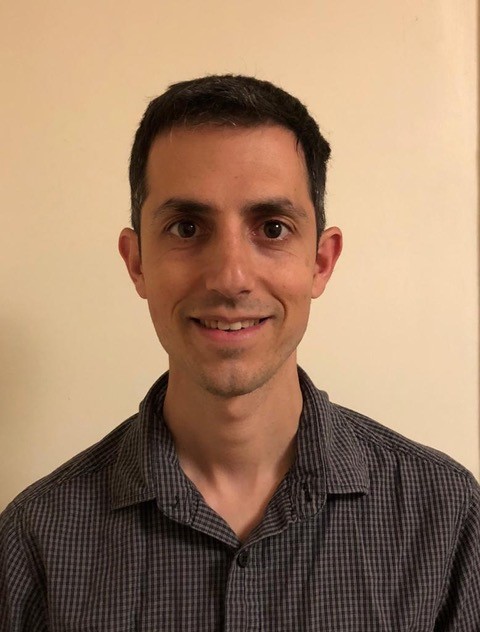
Dr. Yonatan Belinkov was awarded the ERC for developing novel methods for elucidating the internal mechanisms of large language models (LLMs) to allow controlling LLMs in an efficient, interpretable, and safe manner. LLMs play a central role in many artificial intelligence (AI) systems, yet they operate like a black box – we do not understand their inner workings. The project aims to overcome the flaws of LLMs, such as biased behavior, out-of-date information, confabulations, flawed reasoning, and more.
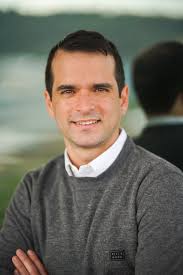
Dr. Yaniv Romano was awarded the ERC for developing protective ecosystems that can be seamlessly plugged into any black-box machine learning (ML) model to monitor and guarantee its safety. Using statistical tools, Dr. Romano aims to put precise, interpretable, and robust error bounds on ML predictions, communicating what can be honestly inferred from data. In other words – he seeks to build trust in black-box predictions that affect people’s lives, opportunities, and science.

Dr. Ari Glasner from the Ruth and Bruce Rappaport Faculty of Medicine aims to better understand the interactions between the tumor microenvironment and immune cells. The project will comprehensively map interactions between stromal (connective, supporting tissue) cells and immune cells in the tissue microenvironment to elucidate the roles and programs carried out by each cell type. The findings will lay the foundations for identifying novel therapeutic candidates and strategies.

Dr. Hemi Rotenberg from the Faculty of Biomedical Engineering aims to develop an electro-mechanical bio-interface for neuronal tissue engineering. The interface will combine leadless electrical biomodulation induced via optical illumination of semiconducting silicon micro- and nanostructures, and mechanical perturbation using spatially defined iron microstructures manipulated via spatially homogenous magnetic fields. The new interface will allow researchers to apply electrical and/or mechanical modulation with high precision so that different parts of the same cell can be addressed simultaneously. This new tool has applications ranging from fundamental brain research to future translational clinical interventions.
Technion researchers show an improvement in predicting immunotherapy success
Researchers at the Technion’s Ruth and Bruce Rappaport Faculty of Medicine and the Rappaport Family Institute for Research in the Medical Sciences have discovered a subset of blood cells that predict the success of immunotherapy treatment. These findings are expected to streamline the process of matching an immunotherapy treatment to a specific patient, since it is very important to identify in advance those patients who will react to a given treatment.
The research published in Cancer Cell was led by doctoral student Madeleine Benguigui and post-doctoral fellow Dr. Tim J. Cooper, under the supervision of Professor Yuval Shaked of the Rappaport Faculty of Medicine. They contributed equally to the research and to the article. The translational research is based on RNA sequencing (scRNA-seq), analysis of existing data, pre-clinical models of cancer, and the corroboration of the findings in humans.
Background
Immunotherapy, which is considered one of the most important breakthroughs in the treatment of cancer, is based on the understanding that the natural immune system excels at attacking cancer cells in a selective and precise manner. The problem is that, in many cases, the cancerous tumor tricks the immune system and prevents it from identifying the cells as enemies. Immunotherapy is based on the concept that, instead of attacking the cancer with chemotherapy drugs that also harm healthy tissue, it is preferable to boost the immune system with the goal to identify cancer cells as enemies and let it do the rest of the work on its own.
Despite the remarkable success of the immunotherapy approach for treating cancer, its effectiveness is still limited to around 40% of all patients. This means that many patients receive this harsh treatment without positive results. Consequently, it is crucial to attain a deep understanding of biological reactions to these treatments and to identify biomarkers that can predict the treatment’s future success.
Biomarkers are an important component of personalized medicine, which help physicians make educated medical decisions and formulate optimal treatment protocols adapted to the specific patient and their medical profile. Biomarkers are already being used for immunotherapy treatments, but they are obtained through biopsies – an invasive procedure that can endanger the patient. Moreover, this approach fails to sufficiently take into account the specific patient’s immune profile and its predictive capability is limited. For this reason, a great deal of research in this field – both in industry and in academia – strives to find new ways to predict which patients will respond to immunotherapy treatments.
The research itself
Technion researchers who focused on antibody-based immunotherapy discovered biomarkers that predict a specific patient’s response to the treatment. Since these biomarkers are in the bloodstream, they don’t require taking biopsies from the tumor – an invasive procedure that is not always feasible and, as mentioned, can sometimes endanger the patient.
In brief, the researchers discovered that a protein called STING, that activates the immune system, is triggered by cancerous growths, and is especially pronounced in cancer cells that will respond to immunotherapy treatment. This protein is manifested in interferon protein, which in turn stimulates neutrophils to be differentiated to a specific type (which expresses the protein Ly6Ehi). These neutrophils act directly on the immune system and stimulate it to target the cancerous tumor. Indeed, the researchers discovered that, these neutrophils may help the actual treatment, as their presence in the tumor prompts greater sensitivity to immunotherapy treatment.
The researchers inferred that testing the levels of Ly6Ehi neutrophils in the patient’s blood could serve as an efficient biomarker for predicting the response to immunotherapy treatment. The researchers tested these findings, which were based on pre-clinical studies, on patients with lung cancer and melanoma. These findings are consistent with the analysis of existing data on 1,237 cancer patients who underwent antibody-based immunotherapy treatments. Therefore, they demonstrated the neutrophils’ ability to predict with a high degree of precision, response to immunotherapy in humans.
The technology developed by Prof. Yuval Shaked’s research group was registered as a patent and it is currently in the midst of a tech transfer process with the company OncoHost, in order to continue its development. Prof. Shaked points out that the technology can be used with the ubiquitous flow cytometry device, which can be found in almost every hospital and is approved by the regulatory agencies.
Various research groups from Israel and around the world took part in the research, including physicians and researchers from the Hadassah, Rambam, and Sheba Medical Centers, as well as from the University of Haifa, Heidelberg University (Germany), and Yale University (USA).
The research was supported by a European Research Council (ERC) grant, the Bruce & Ruth Rappaport Cancer Research Center, Israel Science Foundation, National Institutes of Health (USA), Ariane de Rothschild Foundation (Ariane de Rothschild Women’s Doctoral Program scholarship), and the Rappaport Technion Integrated Cancer Center (RTICC) as part of the Steven & Beverly Rubenstein Charitable Foundation Fellowship Fund for Cancer Research.
Click here for the full article: https://www.cell.com/cancer-cell/pdf/S1535-6108(23)00433-6.pdf
Physical Review Letters reports: Technion researchers discover a new mechanism for contact formation between crystalline nanoparticles in nanopowders
 Nanopowders are the basis of many nanotechnologies; Technion researchers coin a new term in the field of nanomechanics: “pseudo-elasticity”
 Nanopowders are the basis of many nanotechnologies; Technion researchers coin a new term in the field of nanomechanics: “pseudo-elasticity”
Technion researchers have discovered a new mechanism for adhesive contact formation between crystalline nanoparticles, and have thus shed light on a long-standing mystery surrounding the adhesion between nanocrystals. The report appears in the prestigious scientific journal, Physical Review Letters.
“In the scientific world today, there are two central schools of thought regarding the way nanocrystals come into contact,” says Prof. Eugene Rabkin of the Faculty of Materials Engineering at the Technion. “One school asserts that the crystals homogenously stretch in order to stick together (elastic deformation), but once they adhere, they return to their original shape. According to the other school of thought, as they approach, the inter-atom forces are strong enough to overcome the individual nanocrystals’ strength and compel them to change shape irreversibly (plastic deformation).”
Metallic nanocrystals have an orderly atomic structure, and the way in which they can undergo plastic deformation is by creating a linear “defect” in the orderly atomic structure. These linear defects, which are called “dislocations”, were first observed under a microscope in the mid-1950s and since then they have served as an important basis for understanding the mechanical characteristics of materials. Because of the size of nanocrystals, they generally have a perfect atomic structure and do not have dislocations.
“Justification for both schools of thought has been offered, yet without a way to resolve the contradiction between them,” adds Prof. Rabkin. “On the one hand, analytical models have shown that the stresses that are created in nanocrystals during the contact formation are large enough to create a large number of dislocations; on the other hand, in experimental observations, only isolated dislocations were observed in the nanocrystalline clusters, in contradiction to the models.”
In order to resolve the contradiction, the Technion researchers used advanced simulation tools that run on high-performance parallel computer located on campus. “The calculation is performed at the atomic level,” relates Dr. Dan Mordehai who today is a member of the Faculty of Mechanical Engineering at the Technion, but who was a post-doctoral fellow in Prof. Rabkin’s group when the research was conducted. “We describe the nanocrystals using the atoms that comprise them and the forces between these atoms, and thus, we actually allow the atoms to choose their preferred “path”. These calculations include several hundreds of thousands of atoms and we have to execute them on parallel computer – that is, execute the calculation on a number of computers simultaneously.”
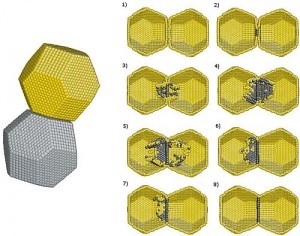
The Technion researchers found, for all intents and purposes, that neither of the schools of thought described the process in its entirety. In their simulation they showed that when the nanocrystals approach each other, the force of their interaction rises to become as great as that which creates many dislocations (as predicted by the second school of thought). Nevertheless, during the adhering process between the nanocrystals, additional dislocations are created, which “repair” the defects, and by the end of the adhering process, they no longer have any dislocations, as observed during experiments.
Thus the new nanomechanical term, coined by the Technion researchers, “pseudo-elasticity” was born. This mechanism enables nanocrystals to retain their original shape, despite the forces acting upon them, which are large enough to overcome their own strength limit. This mechanism may have great importance in many additional fields in contact mechanics for each pair of bodies that gets within a few nanometers of each other.
Prof. David Srolovitz, who is the head of the Institute of High Performance Computing in Singapore, participated in this research.
Above: Pictures of the simulations that were performed in the Technion show the process of contact formation between two nanocrystals. (Left) The atomic structure of nanocrystals before contact. (Right) The pseudo-elastic mechanism in action (1 to 8). In order to demonstrate the mechanism, only some of the atoms necessary for the process are shown. One can see that during the process of adhering, many defects are created (the atoms appear in dark grey in pictures 3-7), but at the end, the nanocrystals do not exhibit any defects (8). Illustration: Technion Spokesman.
The latest Shanghai rankings just published: Computer Science at the Technion – ranked 15th among the 500 leading universities in the world
The Technion is in 42nd place in Engineering and Technology
Computer science at the Technion was ranked as 15th in the world (among 500 universities) by the respected Shanghai Ranking published this week. Shanghai Jiaotong University published its list of university rankings – considered especially prestigious and reliable – http://www.shanghairanking.com/index.html. Harvard University tops the list, with MIT heading the engineering and technology rankings.
The Technion is ranked 42nd in the world in engineering and technology and among the 75 leading universities in life sciences, mathematics and chemistry.
The Shanghai Ranking debuted in 2003 and is intended to improve the level of Chinese universities by comparing them to the top 500 universities in the world. The ranking is based on objective criteria and numerous data. Among the criteria – the number of Nobel Prize and other prestigious award winners, the number of scientific papers published in the leading journals – Nature and Science and other performance relative to the size of the university. The comprehensive Chinese research examines 1000 universities, including the top 500 ones.
Technion President, Prof. Peretz Lavie, said that the high ranking of the Technion in the computer field explains high position of the state of Israel in global high tech. “Research that is now being completed shows that Technion graduates do indeed lead the high tech sector that is moving Israel’s economy forward,” he said. “It turns out that 76% of Technion graduates in the last two decades work in the country’s high tech industry, which is responsible for 51% of the state of Israel’s industrial exports. Of these graduates, 25% are CEOs or deputy general managers, 21% hold other types of management positions, 10% are team leaders and 12.6% are involved in R&D. 59 out of 121 Israeli companies whose shares are traded on NASDAQ were established or are managed by Technion graduates.”
About 700 students this summer participated in the Technion’s science workshops and “SciTech” youth summer camp
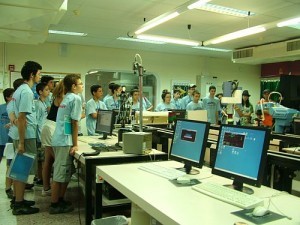 Approximately 700 students, from all over the north of the country, from 5th grade through to 12th grade, participated in two summer sessions given by the Science Programs for Youth division of the Technion. In addition, 44 young people participated in the international science camp, “SciTech 2011”.
This year the Science Programs for Youth division offered a range of programs in the areas of medicine, genetic engineering, developing mathematical thinking, aviation sciences, architecture, robotics, nano worlds and more. About 40 different classes were run and the most popular classes, by far, were the ones in robotics and architecture.
Classes were given in three different areas: natural sciences and engineering, basic skills and engineering and technology.
The classes are given by Technion students studying in different faculties who believe that in science and teaching, they are also conveying an important message to the young participants. In addition to the classes, the participants in the Science Programs for Youth also received a discount on entry fees to the Technion swimming pool and thus were able to enjoy the summer to the fullest.
The “SciTech” summer camp is an international science camp that takes place every summer at the Technion. This year’s camp marks its 18th year. About 44 young men and women from Europe, Asia, the U.S. and Israel came to the Technion camp, which is aimed at youth aged 16-18 with a proven aptitude in science and technology who strive for academic excellence at the highest level. The camp is about four weeks long and combines scientific research with cultural and social activities. Afternoons and evenings are devoted to social activities and on certain days, the participants are taken on outings to see the country. This year’s tours were to Jerusalem, Caesarea, Kfar Blum, the Baha’i Gardens in Haifa and many other places.
The main objective of the camp is to expose young talented people to scientific and technological activity and research, as well as allow them an opportunity to work under the supervision of professional staff from the Technion, to build a bridge between science and the different cultures, to create relationships among students from all over world and to expose them to different aspects of Israeli society and history.
During the camp, the students work in pairs on projects at the cutting edge of Technion research, using the Technion’s equipment and labs. Toward the end of the camp, participants present their research projects by submitting a comprehensive report, a scientific poster presentation and a visual presentation.
The audience at these presentations is made up of the camp participants, the mentors, the academic staff and guests. The audience participates in choosing the best presentation in every scientific field.
The posters are displayed at a special exhibition during the camp’s closing ceremony. They are judged by a committee comprising senior scientists from the Technion as well as experts. The committee members select the best poster in each scientific field, with each winner getting a prize. The reports and posters appear in the annual “SciTech” review.