2,185 new students began their studies at Technion this week. They will be enjoying a unique learning experience as well as an upgraded and extended network of Technion City dorms.
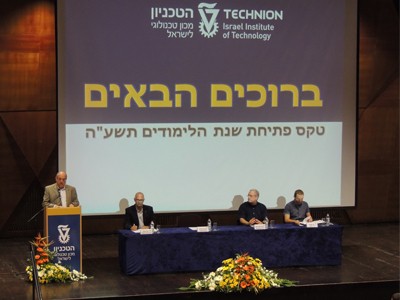
נשיא הטכניון פרופסור פרץ לביא ולצדו (יושבים) דיקן לימודי הסמכה-פרופסור יכין כהן, דיקן הסטודנטים-פרופסור מוריס אייזן ויו”ר אגודת הסטודנטים-דני מגנר
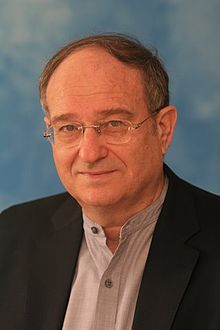
“Continued cuts in higher education poses a real threat to Israel’s future strength,” said Technion President Prof. Peretz Lavie to Technion’s new students. “A reversal of the trend and an increase in budgets would help Israel to become stronger and more secure, both economically and socially, for generations to come. It is very easy to cut and hurt, yet much harder and more expensive to rebuild.”
This year offers several new and unique courses of study at Technion, addressing the growing need for innovative experts in the fields of science, engineering and architecture. The new curriculum at the Faculty of Architecture, which was adapted to the needs of tomorrow, includes two separate titles – “BA in Architecture” (B.Sc) and the title of “Master of Architecture” (M.Arch) with a practical orientation and specialization. The Program in Robotics and Autonomous Systems (Masters and PhD) is focussing on the next generation of technological systems: systems that manipulate themselves independently – without a human operator – in medicine, space and more. The Faculty of Medicine Sciences opened a new, graduate degree in medical science, designed for students with an in depth knowledge in life sciences and medicine.
First classes at the Technion began exactly 90 years ago, in 1924, with 17 students. Today, there are more than 13,000 students, and the number of Technion graduates passed the bar this summer of 100,000.
In view of the constant increase in the number of students, construction is underway of dormitories for 500 additional students. The new dormitory building was made possible with a donation from the Chinese philanthropist Li Ka-shing.
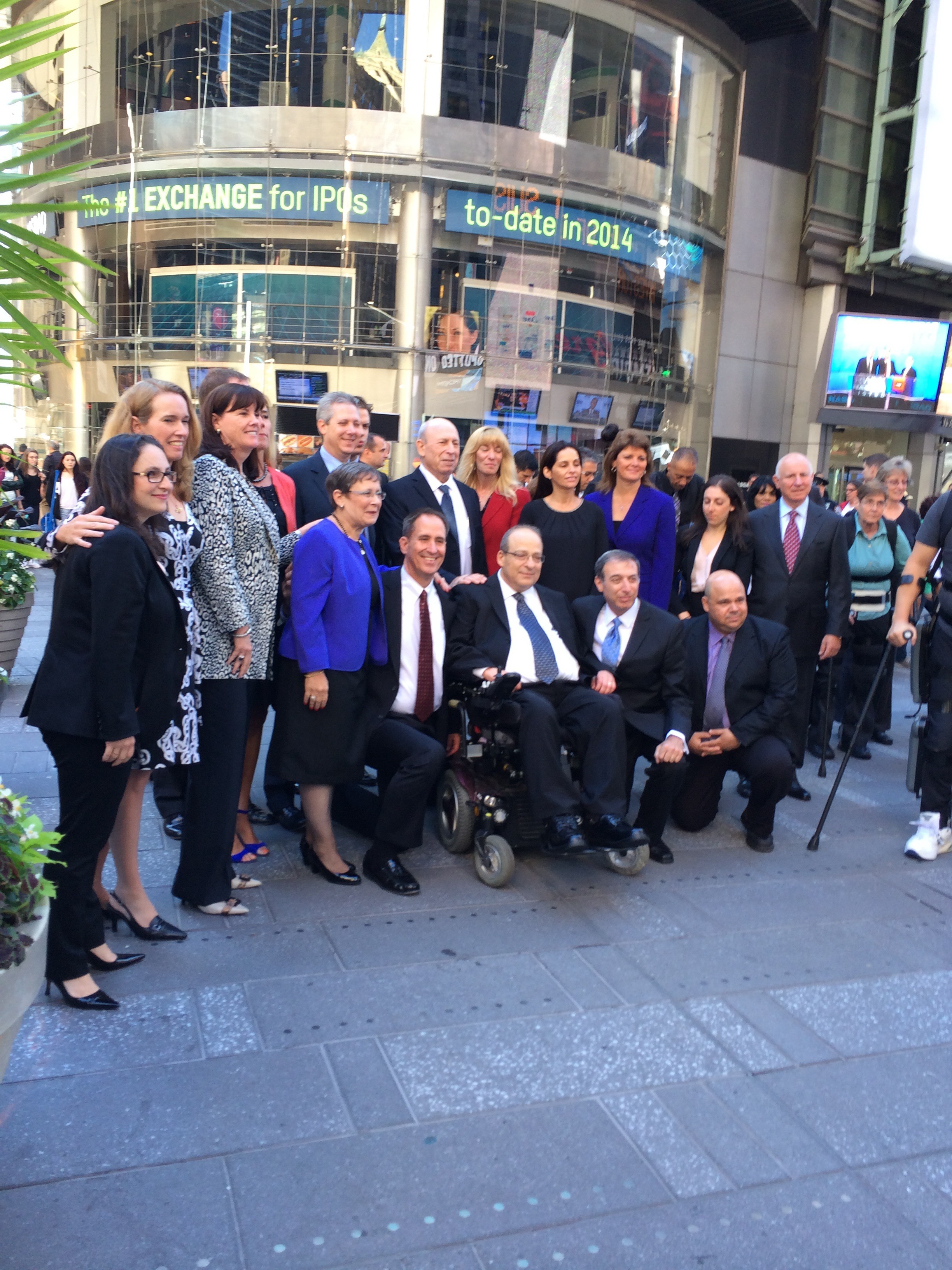
(Sept. 17, 2014) A contingent of “ReWalkers” led by Technion graduate Dr. Amit Goffer, stopped traffic in New York’s Times Square today as photographers rushed to capture the jubilation surrounding the Initial Public Offering (IPO) of ReWalk Robotics Ltd., the company that makes the ReWalk device. Invented by Dr. Goffer, the Founder and President of ReWalk Robotics, the ReWalk allows paraplegics to stand upright, walk and in some cases climb stairs.
ReWalk rings the bell at the Nasdaq
Listed on the NASDAQ exchange under the symbol RWLK, ReWalk Robotics (formerly Argo Medical Technologies) went public Friday, September 12, offering 3 million shares at a price of $12 per share. By the end of the first day of trading, shares soared — more than doubling in price to close at $26.50. The price has continued to rise. As of this morning, when ReWalk CEO Larry Jasinski had the honor of ringing the Opening Bell at the NASDAQ MarketSite in Times Square, ReWalk was anointed the best performing IPO of the year, having gained more than 230% since the offering.
The IPO came just months after ReWalk, headquartered in Yokneam, Israel and Marlborough, MA., received U.S. Food and Drug Administration (FDA) approval in June 2014, making it the first and only motorized exoskeleton available for personal use in the U.S. Prior to receiving approval, ReWalk was available in Europe and Israel for personal use, but was limited in the U.S. for use in rehabilitation and veteran’s clinics.
“Each time I meet with the “ReWalkers” (those who use the device), the same thing happens. I get tears in my eyes,” said Dr. Goffer, who is a quadriplegic and confined to a wheelchair. “The IPO is a great event. It’s very exciting, but the acknowledgment I get from the people using the device, saying how it’s changed their lives, being hugged by their families … makes me more than happy.”
Speaking outside of the exchange after the Bell Ringing ceremony, CEO Jasinski said that about one third of the core ReWalk employees are Technion graduates. When asked what they bring to the table, he motioned to the dozen ReWalkers milling about Times Square and said: “now they can walk.” He also noted that all of ReWalk’s R&D is based in Israel and the devices are fabricated in Israel as well.
ReWalk captured global media attention in the spring of 2012 when it was used to participate in the London Marathon, and again the following year when it was used to participate in a portion of the Tel Aviv Marathon. The device earned a coveted spot on Time magazine’s “The 25 Best Inventions of the Year” for 2013.
Amit Goffer and the ReWalk team in NYC
On the heels of ReWalk’s tremendous success, Dr. Goffer and a fellow Technion alumnus Oren Tamari have recently launched start-up RehaMed Technologies to develop an innovative standing wheelchair called UPnRIDE.
Resembling a Segway or electric scooter, UPnRIDE is unlike other standing wheelchairs in that it allows users full mobility in both sitting and standing positions, and on any outdoor urban surface. Proprietary know-how gives UPnRIDE stability due to automatic balance, and releases safety arms to prevent falls. Users will be able to move independently between standing and sitting positions without needing assistance to rearrange the body.
Its Segway-like appearance is meant to remove the stigma often associated with being disabled. “When you see a person in a wheelchair you notice immediately that he is disabled. With the UPnRIDE, you won’t know if he is disabled or just enjoying a Segway-like ride,” says Dr. Goffer, who was left a quadriplegic after a tractor accident in 1997. While he is not able to use the ReWalk, he will be able to use UPnRIDE. “I can’t wait to use it myself,” says Dr. Goffer.
Dream it. Do it. Technion’s New Year’s greetings to the world for Rosh Hashanah.
Technion-Israel Institute of Technology is a global community.
In this video, students and President Prof. Peretz Lavie send you Shana Tova New Year greetings in 14 different languages.
Technion is the place where dreams come true.
In order of appearance:
Eric Yudin in English – Computer Science
Johanna Wallin in Swedish – Civil & Environmental Engineering
Tali Tazazo in Amharic – Electrical Engineering
Eshhar Tal in Hebrew – Civil & Environmental Engineering
Efrat Vitchevsky in Russian – Medicine
Micael Zollmann in Afrikaans – Civil & Environmental Engineering
Ahmad Omari in Arabic – Energy Program
Michal Brodeschi in Portuguese – Architecture & Town Planning
Rashmi Kothari in Hindi – Chemistry
Wen-Hui Hung in Chinese – Industrial Engineering & Management
Fred Xie in Chinese – Civil & Environmental Engineering
Hanqi He in Chinese – Civil & Environmental Engineering
Davide Schaumann in Italian – Architecture & Town Planning
Irene Alvarez-Sostres in Spanish – Architecture & Town Planning
Deborah Cohen in French – Electrical Engineering
Dr. “Bob” Shillman in English – A Man and a Cat Called Yitz
Prof. Peretz Lavie in English – Technion President
Valentin Garbe in German – Electrical Engineering
Water makes up 80% of our body mass and covers over two-thirds of the surface of the earth, but most of us still know very little about it. Do we know what the potential of Israel’s natural water sources is? How is seawater desalinated and how much desalination currently takes place in Israel? What are Israel’s water agreements with her neighbors? What does our drinking water contain? How are waves formed in the ocean and how do waves impact surfers and structures at sea and on the coast? How do submarines work?
Answers to these and many other science and technology questions were shared at the 2014 Researchers’ Night at Technion on September 18.
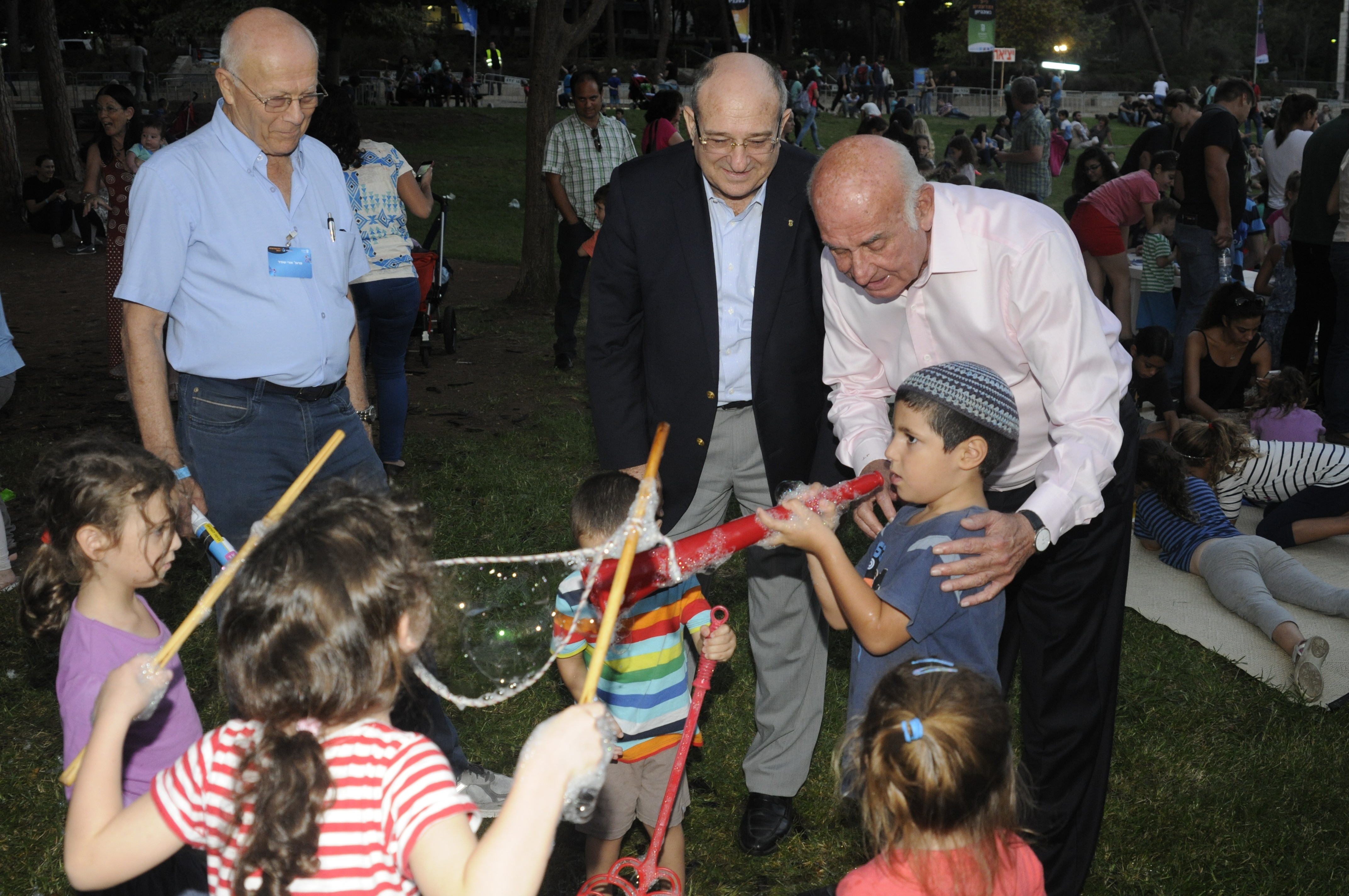
Each year, the Technion invites the public to participate in Researchers’ Night – a celebration of science and research for the whole family, sponsored by the Israeli Ministry of Science, Technology and Space and the European Union. Researchers’ Night also takes place in some 300 cities throughout Europe and Israel.
The 2014 Researchers’ Night at the Technion included various scientific exhibits and activities appropriate for all ages. Participants were able to taste seawater before and after desalination, build and sail a paper boat, closely examine how an underwater robot works, learn how submarines work, learn how to identify and handle water pollution, and enjoy a myriad of lectures, demonstrations and activities for the whole family. Activities were also provided for younger family members.
Researchers’ Night at the Technion is intended for children, youth and adults ages 9 to 99. Anyone who is curious about water science and technology is invited to participate and learn.
Technion’s Formula Student Team Competing in the 2014 Formula SAE Championship in Italy Awarded Special Prize
Technion Formula Team 2014
The Technion delegation to the International Formula Student Race returned to Israel last week after winning a special prize, awarded to them by the chief designer of the Fiat Group (Alpha Romeo, Maserati and Ferrari), for the best design and for showing the greatest improvement since the previous competition. In the overall rankings, the team came in 28th place out of 44.
The leaders of the team, which consists of some 40 students from different Technion faculties, are Doris Pitilon and Ahmad Omri.
Doris, who was born in the US and grew up in Holon, completed her undergraduate degree in mechanical engineering this summer within the Academic Reserves/Atuda framework (a program which enables youngsters who are intended to join the army as soldiers, to study academic studies prior to their military service); she will shortly be called up to the IDF’s Ordnance Corps.
Ahmad, who grew up in Germany and in Sandala Village near Afula, completed his undergraduate degree at the Technion through the NAM (an acronym in Hebrew for Outstanding Arab Youth) Program and is currently pursuing his master’s degree in mechanical engineering. Members on the student formula team emphasized the tremendous contribution of Prof. Reuven Katz’s, Head of the Center for Manufacturing Systems and Robotics at the Faculty of Mechnical Engineering, who helped them with the fundraising efforts of the project, supplied them with a lab to work in, and incorporated this program into the annual course under his guidance: “New Product Design.”
“The minute I heard about this project I wanted to be a part of it,” said Michael Kootzenko, a student from the Faculty of Aerospace, who was in charge of the car’s exterior surface; Kootzenko also drove the car in the competition. “Constructing the car for me was the fulfillment of a childhood dream. We built a car that was much stronger than what was required, and I’m extremely proud of the outcome.”
“I was attracted to this project because I wanted to do something practical during my studies,” adds Doris Pitilon, “And constructing the car is mechanical engineering at its best. It has been the main thing on my mind over these past two years, and what I gained in terms of management and engineering I would never have learned anywhere else. The competition itself was an amazing experience. Teams came from all over the world to compete. We all camped out together near the racetrack, and the atmosphere was truly great.”
The competition included a review of engineering aspects (“the immobile part of the competition”), followed by the various examinations evaluating acceleration, speed and performance. “We learned from our mistakes last year and came to this year’s competition well prepared with a stronger and faster car. We excelled in the acceleration heat (75m in 4.3 seconds), and also in the endurance heat.”
The Technion race car had four drivers from the team: Doris, Michael, Gilad Agam and David Amarilio. Over the past year, the drivers trained at “Dan Karting” in Haifa, where they were provided with access to a simulator and training free of charge. Other donors included Kanfit Ltd., which supplied the carbon composite materials for the car’s body, and “Plasko” that transported the car to and from Italy. Presently, the team is working on formulating the 2015 student formula team, which will represent the Technion in next year’s competition.
See how the team prepares for the championship race:
The SAE International has been organizing international events and competitions for engineering students for over thirty years. Its most prestigious competition is the Formula Student SAE Championship, in which students are required to design and manufacture a race car.
2014 Researchers’ Night: a series of events for the whole family at the Technion on September 18, from 4pm to 10pm. This year’s theme is water sciences. Entry is free.
Water makes up 80% of our body mass and covers over two-thirds of the surface of the earth, but most of us still know very little about it. Do we know what the potential of Israel’s natural water sources is? How is seawater desalinated and how much desalination currently takes place in Israel? What are Israel’s water agreements with her neighbors? What does our drinking water contain? How are waves formed in the ocean and how do waves impact surfers and structures at sea and on the coast? How do submarines work?
Answers to these and many other science and technology questions can be found at the 2014 Researchers’ Night, which will take place at the Technion on September 18, from 4pm to 10pm. The theme this year will be water sciences.
The Technion invites the public to participate in Researchers’ Night – a celebration of science and research for the whole family, sponsored by the Israeli Ministry of Science, Technology and Space and the European Union. Researchers’ Night will take place in some 300 cities throughout Europe and Israel.
The 2014 Researchers’ Night event will take place at the Technion and include various scientific exhibits and activities appropriate for all ages. Participants will be able to taste seawater before and after desalination, build and sail a paper boat, closely examine how an underwater robot works, learn how submarines work, learn how to identify and handle water pollution, and enjoy a myriad of lectures, demonstrations and activities for the whole family. Activities will also be provided for younger family members.
Researchers’ Night at the Technion is intended for children, youth and adults ages 9 to 99. Anyone who is curious about water science and technology is invited to participate and learn. Maybe you’ll discover your future here, and maybe you’ll simply satisfy your curiosity – either way, you won’t want to miss it! Whatever your age, you are invited to attend this science festival at the Technion, one of the world’s leading science and engineering institutions.
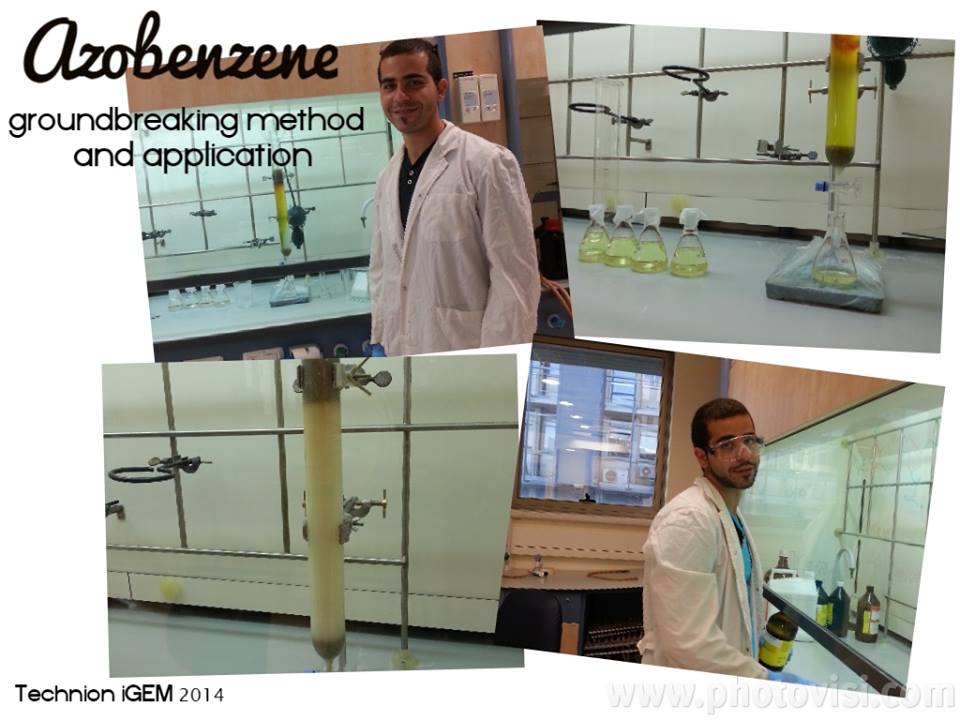
Two years after winning the gold medal: A team of Technion students once again enters the international iGEM Competition, with a novel technology capable of identifying toxins in food
A device developed by 11 students from the Technion and one student from the Wizo Haifa Academy of Design and Education will compete in the upcoming International Genetically Engineered Machine (iGEM) competition. Two years ago a group of Technion students entered the competition for the first time and won the European gold medal. The medal was awarded to the team for the development of the “Trojan Phage” technique for drug delivery via viruses.
The 2014 iGEM competition, to be held in October at The Massachusetts Institute of Technology (MIT), aims to encourage students to independently advance a whole research project in the area of synthetic biology.
Synthetic biology is an emerging field that combines knowledge from various disciplines in science and engineering, to develop genetically engineered systems that respond to their environment. About 250 teams from universities all over the world will take part in iGEM. Contenders are required to present their projects in its entirety – including concept development, economic model, proof of concept, and so on.
The system proposed by the Haifa-based group, “Safie”, is a bio-chemical mechanism that detects toxins or allergens in food, water and more. The device identifies the presence of toxins, mercury, gluten, nuts, and other contaminants even at low concentrations. The system uses genetically engineered E. coli bacteria to illuminate a green light that signals concentrations of toxins or allergens in the food or beverage tested. “The idea is to provide individuals a way to check for substances in their foods on their own,” explains Rebecca Feldman, an undergraduate student from the Faculty of Biotechnology and Food Engineering at the Technion, who heads up this team. “The device itself will resemble a kind of stick carrying the group of bacteria appropriate to the specified material, and we propose to engineer the bacteria so that even if one of them identifies the harmful material it will illuminate them all.”
Feldman, who heads up the student team, was born in the US and raised in England; she first came to Israel for a visit at 17 as part of a youth delegation. “I immediately realized that I want to live here (in Israel), and after two years I came back permanently,” she related. She volunteer for military service and served for two years in the Technological Division of the IDF, where she met many engineers and Technion graduates – including her future husband – and at the end of her military service she began to study at the Technion. She is currently completing her BSc in Biotechnology and Food Engineering and preparing for the iGEM competition (which is also part of her final project at the Technion).
She first heard of the competition in 2012, when the Technion delegation returned with a gold medal. Feldman was very excited about the winning and asked to become a part of the next delegation scheduled for 2014. “In early 2013 we began to learn about the competition, browse through past teams’ work, and think about ideas. Over the previous summer we went through a practical course in synthetic biology, and in January we started working in the laboratory, under the direction of Assistant Professor Roee Amit at the Faculty of Biotechnology and Food Engineering, alongside other faculty researchers.”
Till now the group raised partial funding for the project from various entities, including biotechnology companies, and opened a crowdfunding account (http://www.headstart.co.il/project.aspx?id=10603) to help pay for the flight and accommodation expenses while abroad. “We even solicited donations from family and friends,” added Feldman, “but we are still short about $12,000.”
In parallel with their preparations for the competition, members of the group are working on a project entitled “Synthetic Biology in 3-Languages.” This project, conducted in Hebrew, English and Arabic, is designed to provide common ground for conversation and collaboration work between Arabs and Jews through the world of synthetic biology and science. Within the framework of the project, team members conduct enrichment lectures and hands-on laboratory sessions, and act as visiting mentors at national science events. “Our emphasis is on encouraging mixed groups of Jewish and Arab youth, through the belief that science transcends boundaries of religion, culture and tradition.”
This summer, Israel is again compelled to defend itself against a barrage of missile attacks aimed at civilian populations. Once again, the Iron Dome defensive anti-missile system saves countless civilian lives. Iron Dome was developed by the excellent engineers at Rafael Advanced Defense Systems, most of whom are Technion graduates. In addition, a vast underground network of terror tunnels, many of them directly threatening Israeli children, women and men, was revealed and had to be neutralized. In this arena also, Technion scientists are helping lead the effort to harness scientific innovation to thwart this threat.
We deeply mourn the soldiers and civilians who lost their lives in this conflict, and wish for the speedy and full recovery of all the wounded.
Hundreds of Technion students were called for active reserve duty to help defend our nation, and we are making every possible effort to smooth their return to studies. We were also profoundly encouraged by the numerous expressions of support we received throughout the operation from the worldwide Technion family whose friendship never wavers, culminating in a solidarity delegation from the American Technion Society under the leadership of Larry Jackier the chairman of the Technion International Board of Governors.
We were also particularly moved by the many guests from the world’s four corners who came to celebrate the festive graduation of the 2014 class of the Technion International School. At the ceremony, it was clear to me that something new – truly global and extremely gifted – has taken form. Technion will continue to serve as an institution with a passion to work on behalf of all peoples.
Chairman of the first Technion Society Albert Einstein once said that: “We cannot solve our problems with the same thinking we used when we created them.” At Technion, we are proud of what has been called our ability to ‘think out of the box.’ The challenges and opportunities of tomorrow will depend on this Technion capacity for new thinking about old problems. In the issue of Technion Live, you will find a sample of this ingenuity in action. When we trust in this, a better future for all humanity is not a dream but a real possibility.
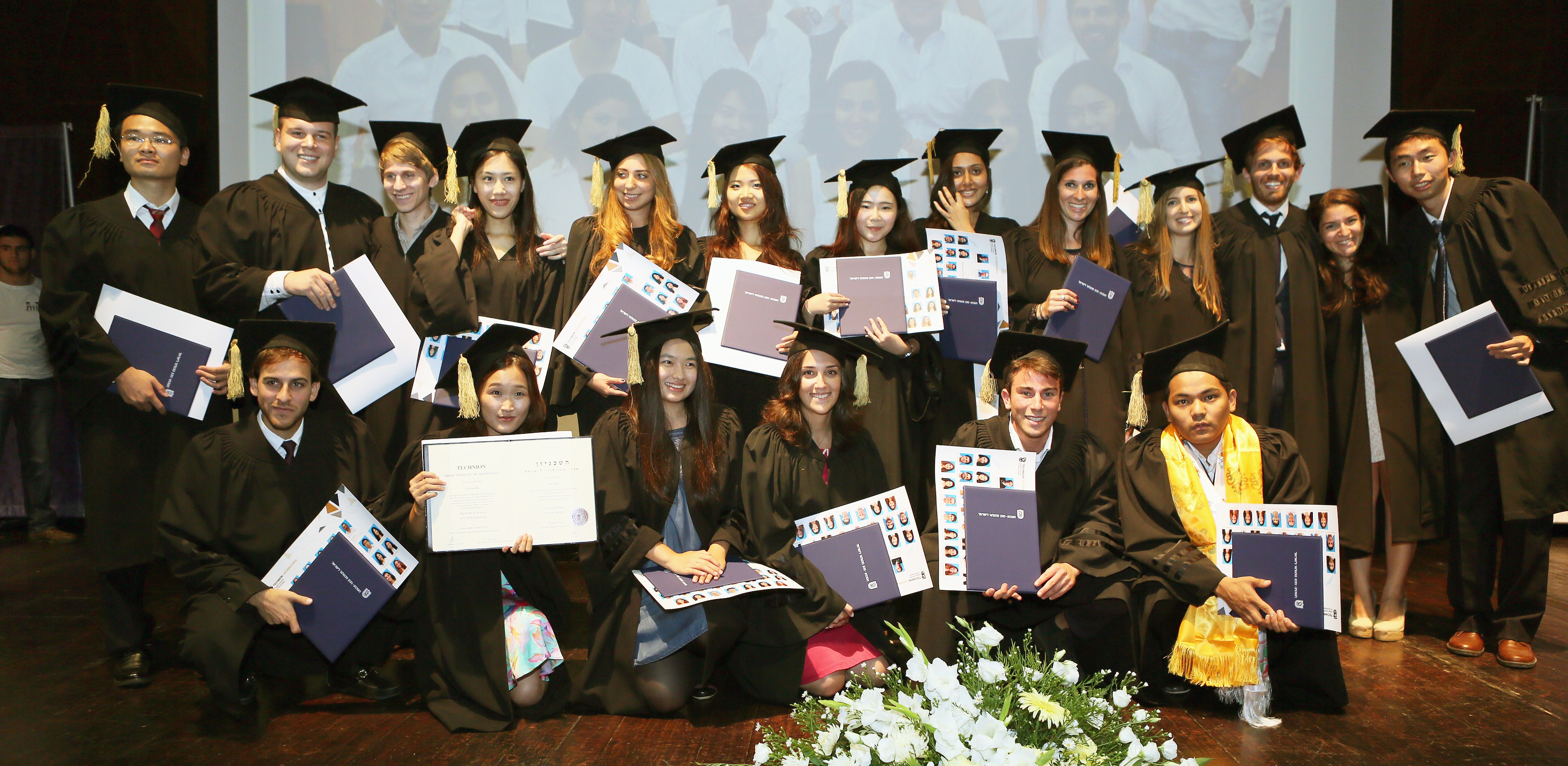
On August 7, 2014, Technion International celebrated the graduation of its second cohort of the BSc in Civil and Environmental Engineering, a four-year degree program taught entirely in English at the Technion. The talented group of 19 represent nearly all corners of the world, having come from Albania, Italy, Spain, Norway, India, and South Africa, and as far away as Venezuela, China, South Korea.
Students, families, distinguished faculty members, university staff and friends gathered at the Winston Churchill Auditorium last Thursday for the unique commencement ceremony. Cheerful and excited voices could be heard in nearly a dozen different languages all along the aisles.
Opening remarks were given by Prof. Anat Rafaeli, the current Head of Technion International, who greeted the graduates, their family members and distinguished guests, among them Technion President, Prof. Peretz Lavie, Prof. Moshe Sidi, Senior Executive VP of Technion, Prof. Arnon Bentur, founder and former head of Technion International, Prof. Oded Rabinovitch, Dean of the Civil & Environmental Engineering Faculty, Prof. Zvi-Pinhas Bar-Yoseph, Dean of the Mechanical Engineering Faculty, and Prof. Maxim Shoshany, from the Faculty of Civil & Environmental Engineering, and Academic Director of Technion International. Prof. Rafaeli showed the exponential growth of Technion International in numbers, from 19 undergraduate students beginning their English BSc studies in 2009 (its founding year) to 120 students enrolled in the program today, for example, and that these numbers are expected to grow to 400 by 2020. She also emphasized how proud the Technion is of the tremendous achievements of this graduating group and stressed the university’s commitment to educating the next generation of engineers and scientists who will make profound contributions to science and technology.
Addressing the graduating class she said, “You have really excelled – five of you have been accepted to graduate studies at leading schools in Canada, the US and Britain while four of you will continue your graduate studies here at the Technion and others of you have already found jobs in the field. We are all very proud of you.”
Technion President, Prof. Peretz Lavie told graduates, “Technion International is one of the Technion’s projects aimed at fulfilling its mission of being a world-class university, and you (speaking to the graduates) are proof of this. You have come from all over the world, as far away as China, South Korea , South America, and South Africa and from near (Europe), and have done extremely well. Many of you are on the President’s and Dean’s lists – it’s no wonder that you were accepted to graduate studies at great universities.”
Prof. Lavie also talked about the where do we go from here, “The feeling of accomplishment that you have now, after completing this engineering degree, may be compared to that of a mountaineer who has reached the summit after an exhausting climb. Once on the top he can look back down the slope and say to himself “I did it” – I made it through algebra, physics and earthquake engineering and fulfilled my dream. He may then look beyond the summit and try to predict how his professional life will look like 20 years from now. I predict that the world will continue to change in a ‘dizzying rate’ – the 21st century is a time for rapid change. The knowledge you acquired here at the Technion will provide you with the tools you will need to be able to adapt to the rapidly changing world.”
He also expressed his insights on the future of their field, “There is a great importance to this field today. As part of and at JTCII (Jacobs Technion Cornell Innovation Institute) – a joint partnership between Technion and Cornell in Manhattan, an advanced degree program on the “urban environment” will be offered. And next year TGIT (Technion Guangdong Institute of Technology), our jointly run university in China, will open and the first undergraduate program it will offer is civil and environmental engineering.”
Three musical performances were given at the ceremony, one by two of tonight’s graduating students, Yuting Wang from China, who played the clarinet on the Technion Orchestra, and Yunzhou Zhang on guitar, also from China. The “Black & White” band, made up of Technion students, sang two classic songs, one in French and the other in Hebrew.
Ariel Geva, the Director of Technion International, reiterated the rapid growth of Technion International’s English programs and said that “This may be the last class I and other members of the staff here will know each of the students by name.” Speaking to the graduates he said warmly, “I want you all to know that you will always be welcome at Technion, and I wish you all much success.”
Micaël Zollmann from South Africa was the class valedictorian. Here are some experts of his heartfelt speech: “It is an honor and privilege for me to represent this class who has become like family… We were all in it together and we succeeded and suffered together naturally as if we came from the same place… I couldn’t categorize you as a group, because you are all truly ‘remarkable’ – you were willing to embrace the unknown, coming to a country that for most of us was an 8 hour flight back home, and have done amazing things like building a canoe out of concrete and winning a national competition… I believe you’ll all go on to do great things and tonight I feel I’m surrounded by winners… We all benefited from being in each other’s lives and tonight may be the last night we are all here together as a group. Thank you to Technion International, you’ve done a fantastic job… I’d like to end with this quote from Dr. Seuss, ‘You have brains in your head. You have feet in your shoes. You can steer yourself in any direction you choose…’” To this he added “And so there is no need to worry about what the future holds, for you are all far too clever.”
Professors Oded Rabinovitch and Maxim Shoshany awarded the diplomas to the class of nineteen, made up of 11 female students and eight male students of which six came from China and five from Italy: Fjordi Bisha from Albania,Yunzhou Zhang (Cum Laude), QianLi Yu, Sifang Shan, Tianchen Yu (Cum Laude), Ke Ji, and Yuting Wang (Cum Laude) all from China, Tanya Ahuja, (Cum Laude) from India, Nathan Nacamulli, Hanna Levy (Cum Laude), Manuela Olga Vaturi (Cum Laude), Tamar Ottolenghi (Cum Laude), and Elisa Tagliacozzo (Summa Cum Laude) all from Italy, Jonathan Savosnick, (Summa Cum Laud) from Norway, Micaël Zollmann from South Africa, JiYeon Ha from South Korea, Paula Barmaimon, (Cum Laude) from Spain, Tenzin Lobsang from Tibet, and Isaac Gabay from Venezuela.
Technion Internationalwas founded in 2009, and its academic programs are taught entirely in English. It offers undergraduate studies, semester abroad, research internships, study tours, advanced summer school programs and a variety of graduate studies. To date there are some 720 students enrolled in these programs, not including the study tours organized in collaboration with leading universities around the world. Technion International is also the first point of contact with international postdocs.
Shanghai Ranking 2014: Technion consolidates its place among the world’s top universities
Ranked 18th in the world in computer science; moves up to 43rd place in engineering
The Technion has consolidated its position as one of the world’s 100 best universities, according to the 2014 Shanghai Academic Ranking of World Universities (ARWU) published last Friday (August 15, 2014). The ranking reveals a number of interesting facts about Technion’s position in the global academic elite:
In the field of computer science the Technion ranked 18th in the world for the third consecutive year. This is the highest ranking given to an Israeli institution in any field.
In the engineering field the Technion was ranked 43rd – a rise of three spots in comparison with last year’s ranking. The Technion is the only Israeli university in the top 50.
Technion ranked #78 overall, and with similar rankings for three consecutive years, it has consolidated its position among the top 80 universities in the world.
Reacting to the 2014 Shanghai rankings, Technion president Prof. Peretz Lavie said “Indexes and rankings should be regarded with caution, especially when a fraction of a point either way can alter a university’s rankings from year to year. Nonetheless, the Shanghai ARWU is the leading ranking of world universities and it continues to compliment Israeli science in general, and the Technion in particular. It is especially gratifying that the Technion has once again placed among the world’s leading academic institutes in engineering and computer science.”
Arriving at the Technion Faculty of Biology from Harvard Medical School, Prof. Roy Kishony is establishing his headquarters at the Lokey Center of Life Science & Engineeringin order to unveil the life-threatening mysteries of resistance to antibiotics.
Combining novel quantitative experimental techniques and clinical studies with mathematical modelling and advanced data analysis, the new Kishony lab is studying microbial evolution with a specific focus on antibiotic resistance.
The team aims at understanding how bacterial pathogens evolve resistance to antibiotics within the human body during infection and how combinations of drugs can be used to slow down and perhaps even reverse this process.
Technion researchers have successfully captured the working mechanism of tyrosinase on the molecular level using X-ray crystallography, Nature Communications reported this week.
The two faculties responsible for catching tyrosinase “in the act” are the Faculty of Biotechnology and Food Engineering and the Schulich Faculty of Chemistry. The laboratory of Assoc. Prof. Ayelet Fishman from the Department of Biotechnology and Food Engineering primarily studies the correlation between the structure and function of enzymes. One of these enzymes is tyrosinase, which is ubiquitous in all domains of life and can be found in microorganisms, plants, and animals. It is responsible for the first two steps in the synthesis of the dark pigment melanin.
In humans tyrosinase is localized in melanocyte cells in the epidermis, and the formed melanin determines the color of skin, hair and eyes, but more importantly protects against the hazardous UV light. Mutations in this enzyme are the main cause for albinism, a condition that causes impaired vision and sensitivity to light. In fruits and vegetables tyrosinase initiates browning, which results in economic losses to farmers. Prof. Adir’s lab uses X-ray crystallography to obtain high resolution three dimensional structures of biological macromolecules.
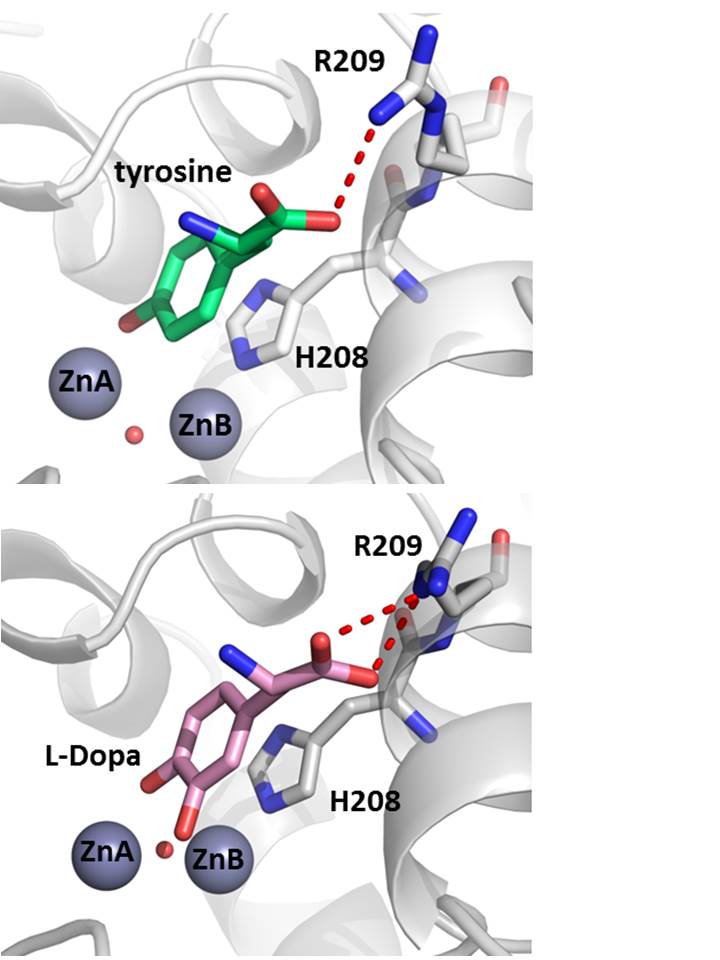
Tyrosinase performs two successive oxidation reactions: conversion of small organic molecules (such as the amino acid tyrosine) to a di-phenol, and oxidation of the di-phenol to quinone, subsequently turning into melanin. The enzyme requires two copper ions, and the prevailing belief in the scientific community is that each activity is performed on a different copper ion.
Mor Goldfeder, a joint PhD student in both labs, and Dr. Rita Kanteev from Prof. Fishman’s lab solved the structure of a bacterial tyrosinase in the presence of two substrates: the monophenol tyrosine, and the di-phenol L-Dopa. Additionally, they managed to solve a structure with another substrate, in which the catalytic product was directly observed during its formation. These are the first visualizations of the enzyme during the catalytic cycle, showing that the enzyme was in its active form in the crystal. Sivan Isaschar-Ovdat, a PhD student studying applications of tyrosinase in foods, also participated in the research. The structures prove unequivocally that all of the substrates are stabilized in the same orientation at the active site of the enzyme, and are positioned towards the same copper ion.
Understanding of the mechanism and structure of tyrosinase can help in developing inhibitors for treatment of hyperpigmentation and age spots, improving the sensitivity of melanoma cells towards radiation therapy, and prevention of browning of fruits and vegetables.
In the photo – the tyrosinase team. from left to right – Assoc. Prof. Ayelet Fishman, Sivan Isaschar-Ovdat, Mor Goldfeder, Dr. Rita Kanteev and Prof. Noam Adir