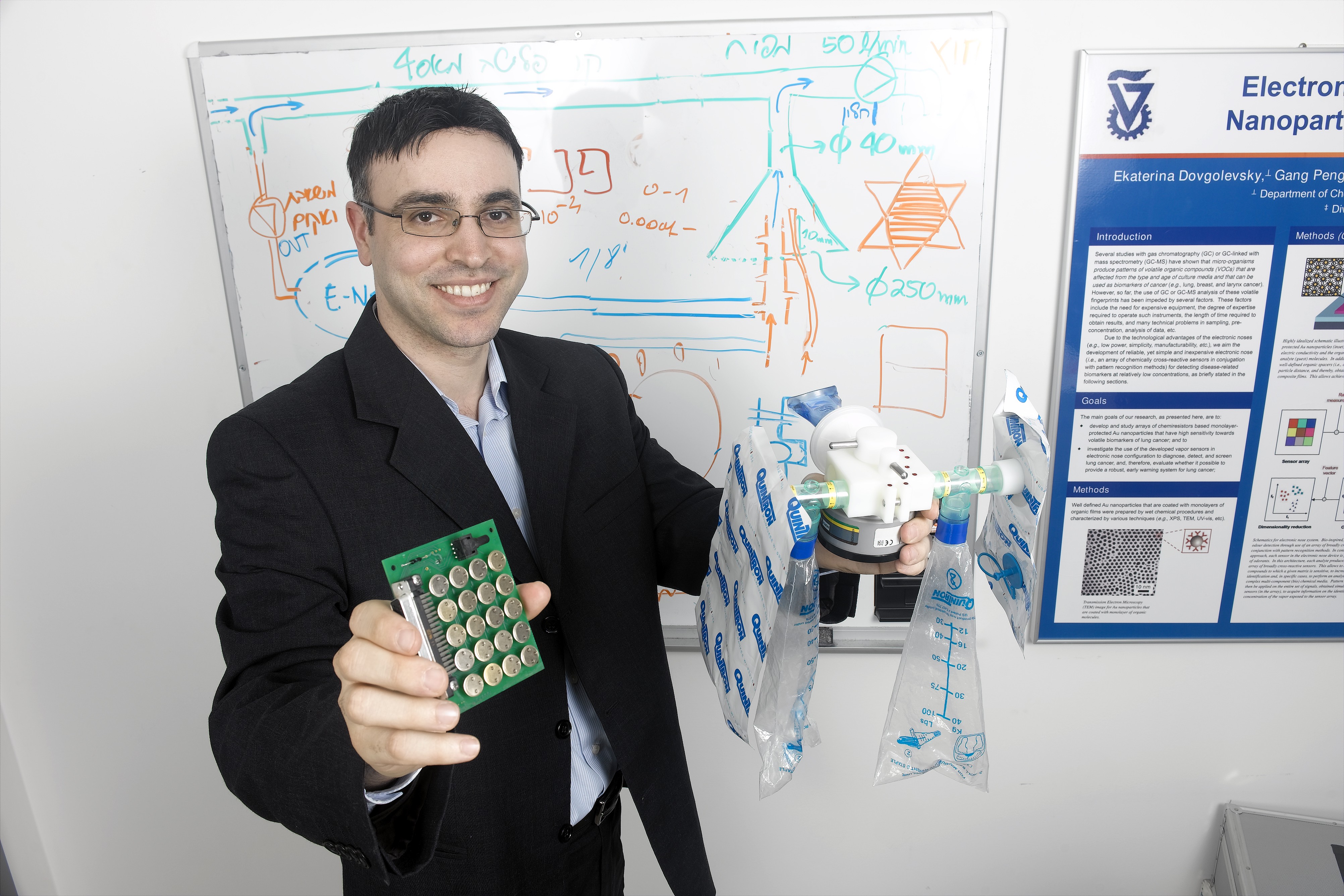
Prof. Hossam Haick of the Technion and the SniffPhone rapid medical diagnostics project have been selected for the 2015 Nominet Trust 100 list. In previous years, this list, which covers the most important digital developments from a social perspective, included Google, Bitcoin, Addex and Coursera.
Prof. Hossam Haick and the SniffPhone project – innovative technology for rapid and noninvasive medical diagnostics led by Prof. Haick – have been selected for the Nominet Trust 100 list, which includes the 100 digital developments that had the greatest effect on society in 2015. This list honors individuals and organizations for digital technologies that contribute to society.
The SniffPhone system is currently being developed by a team led by Prof. Haick, a faculty member of the Faculty of Chemical Engineering and the Russell Berrie Nanotechnology Institute at the Technion. This is a smartphone-linked technology aimed at rapid diagnosis of cancer and other diseases based on the subject’s exhaled breath. This system, which will be simple to operate and not prevent the user from functioning normally, will be equipped with minute sensor arrays that will “read” the exhaled breath. The data will be sent by the mobile phone to a data processing system which will interpret the data and determine whether the subject has the disease. If the answer is positive, it will provide the attending physician with further details using an advanced digital system.
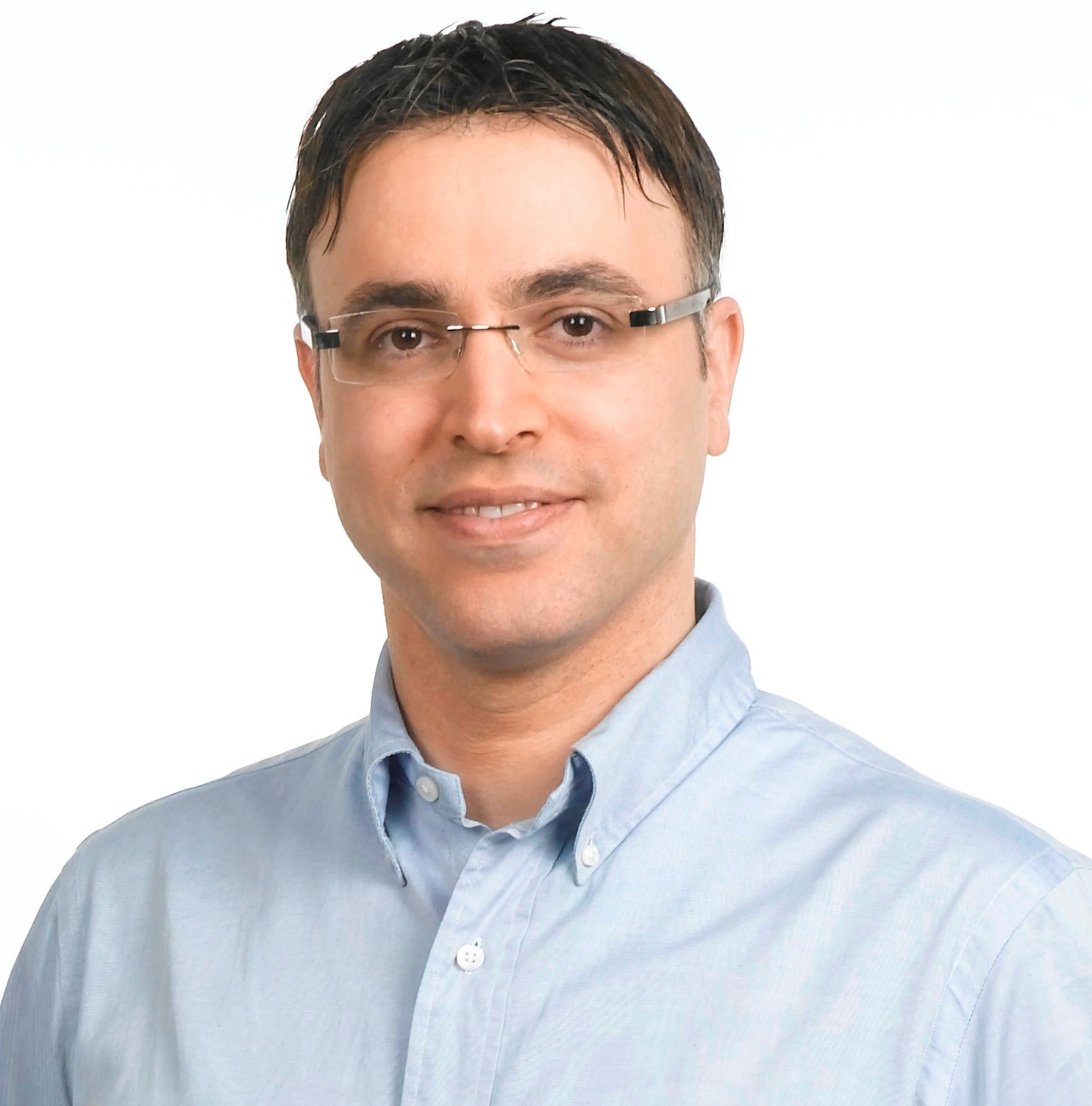
Prof. Hossam Haick
Prof. Haick is a full professor at the Technion and an expert in the field of nanotechnology and noninvasive disease diagnosis. He has received numerous prestigious awards and grants, including the Marie Curie Excellence Award, the European Research Council grant and grants from the Bill & Melinda Gates Foundation. In addition, Prof. Haick heads the three European consortia (LCAOS, Volgacore and SniffPhone), each comprising around ten universities and companies.
Prof. Haick has received numerous awards and honors, including MIT’s List of the World’s Top 35 Young Scientists, the Knight of the Order of Academic Palms (conferred by the French Government), the Hershel Rich Award (Technion), the Humboldt Award (Germany), the Tenne Prize for Excellence in the Science of Nanotechnology, the Harvey Prize for Applied Science and around 52 other awards and honors. He was selected for the following lists: 50 Sharpest Minds in Israel, Four Saluted Israeli Scientists, Ten Most Promising Young Israeli Scientists and more. He also received the highest teaching award granted by the Technion – the Yanai Prize for Academic Excellence. In 2014, on the initiative of the President of the Technion and with the pedagogical assistance of Assistant Prof. Miri Barak, Prof. Haick led a massive open online course (MOOC) on nanotechnology and nano-sensors, for which over 70,000 people registered.
The Technion Faculty of Electrical Engineering is now named for Prof. Andrew Viterbi and his late wife, Erna Viterbi, co-founder of Qualcomm, is the inventor of the Viterbi Algorithm, which is used in most smartphones today and in data terminals, digital satellite broadcast receivers, and deep space telemetry.
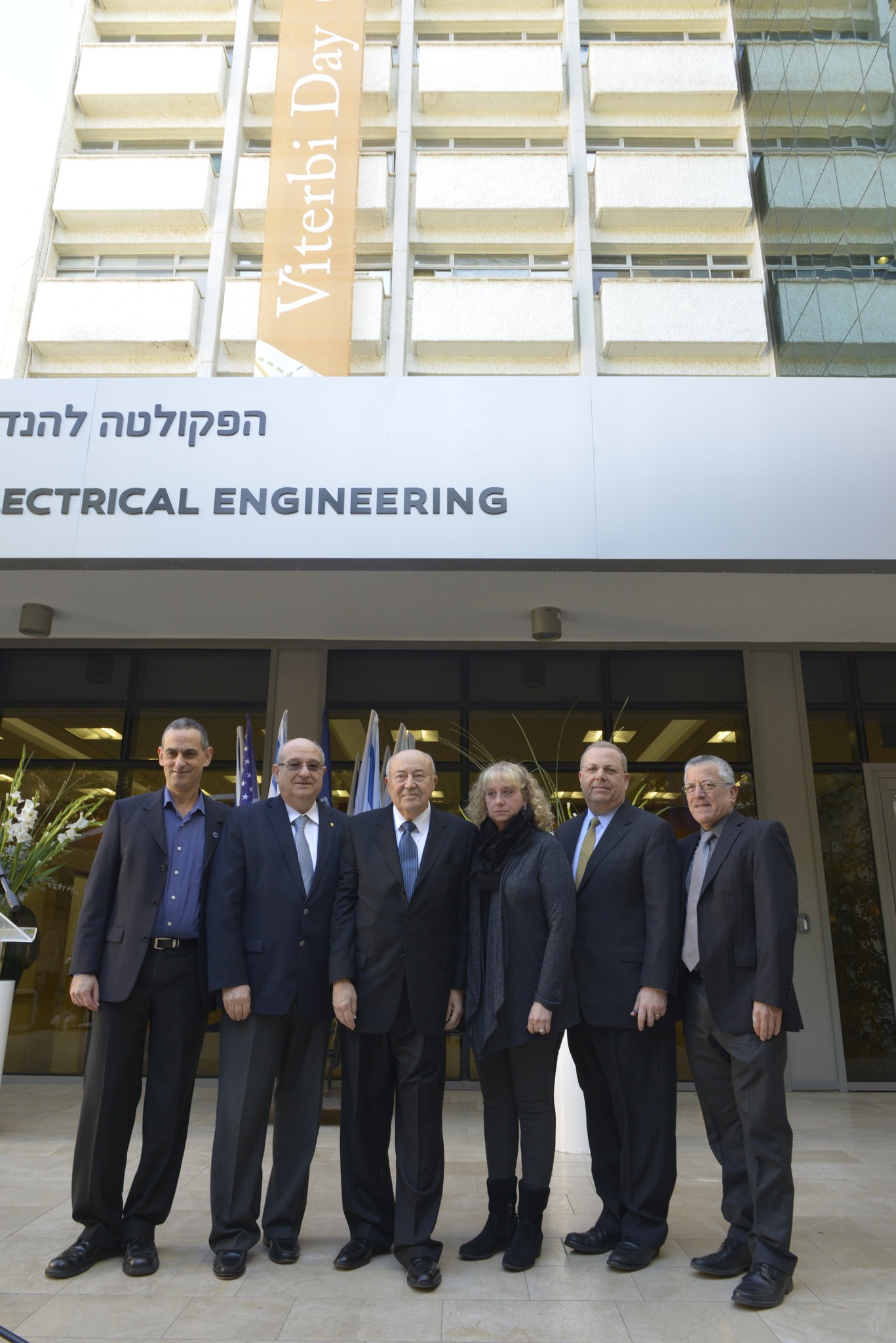
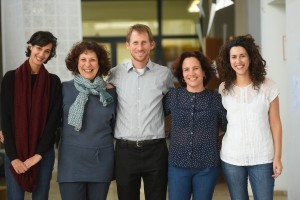
– Right to left: Prof. Boaz Golani, Alan and Caryn Viterbi, Professor Andrew Viterbi, Technion President Prof. Peretz Lavie and Dean of the Faculty of Electrical Engineering Prof. Ariel Orda.
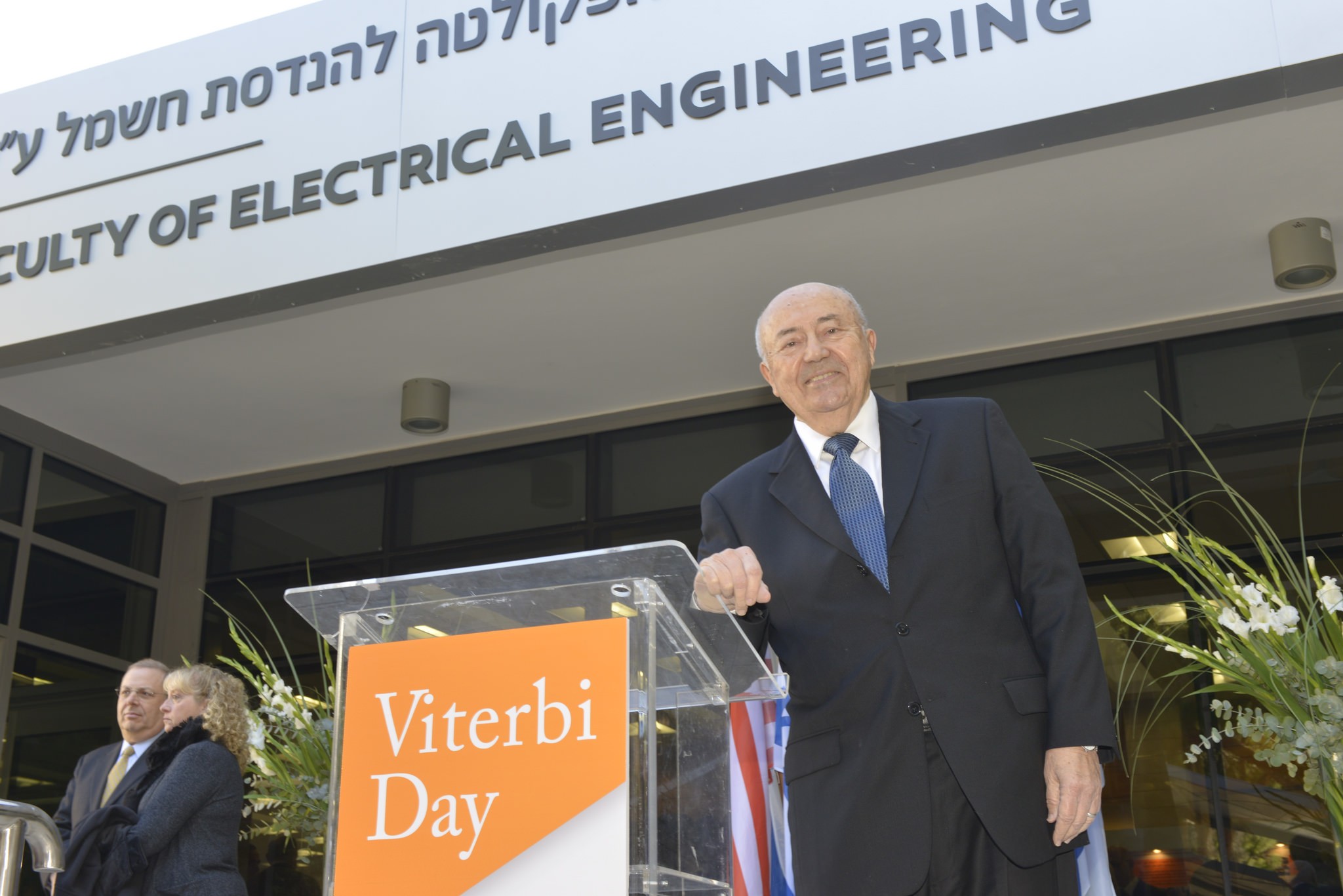
The Technion Faculty of Electrical Engineering (EE) has been named for Prof. Andrew Viterbi and his late wife, Erna. The plaque bearing the new name of the Faculty was unveiled December 8 at a festive ceremony held at the Technion with the participation of Prof. Viterbi, his son Alan and daughter-in-law Caryn, Technion President Prof. Peretz Lavie, the Technion management and EE alumni.
Andrew Viterbiis the inventor of the Viterbi algorithm – a mathematical formula underlying the operation of many of today’s mobile devices. The Viterbi algorithm enables quick and accurate decoding of many simultaneous signals and helps neutralize signal interference. The mathematical formula is used in all four international standards for digital mobile phones, as well as in data terminals, digital satellite broadcast receivers and deep space telemetry. The algorithm is also used in DNA analysis and identification software.
Prof. Andrew Viterbi, one of the most influential figures in the digital world and co-founder of Qualcomm, has made a significant and outstanding donation of $50 million to the Faculty of Electrical Engineering, with the aim of establishing the Technion’s status as a leading institution in the field of electrical engineering and computer engineering in Israel and around the world.Prof. Viterbi’s donation will enable the Technion to recruit and retain first-rate faculty, as well as outstanding graduate students in the fields of electrical and computer engineering, and to upgrade its teaching and research infrastructure.
“We are deeply grateful to Andrew Viterbi,” said Technion President Prof. Peretz Lavie. “His and his beloved late wife Erna’s longstanding involvement with the Technion and his understanding of the vital impact of electrical engineering on the State of Israel will help the Technion recruit the best and brightest students and faculty members. Prof. Andrew Viterbi is, first and foremost, a family man, and this is reflected throughout his lifetime, since he was a little boy who fled with his family from the terror of the fascist regime in Italy, through his career as a renowned professor to his being an inventor and a technology leader. Prof. Viterbi is part of the Technion family and the Faculty of Electrical Engineering family. Hannukah is a family holiday, and no time could be more suitable for celebrating the naming of the faculty after him and his late wife, Erna.”
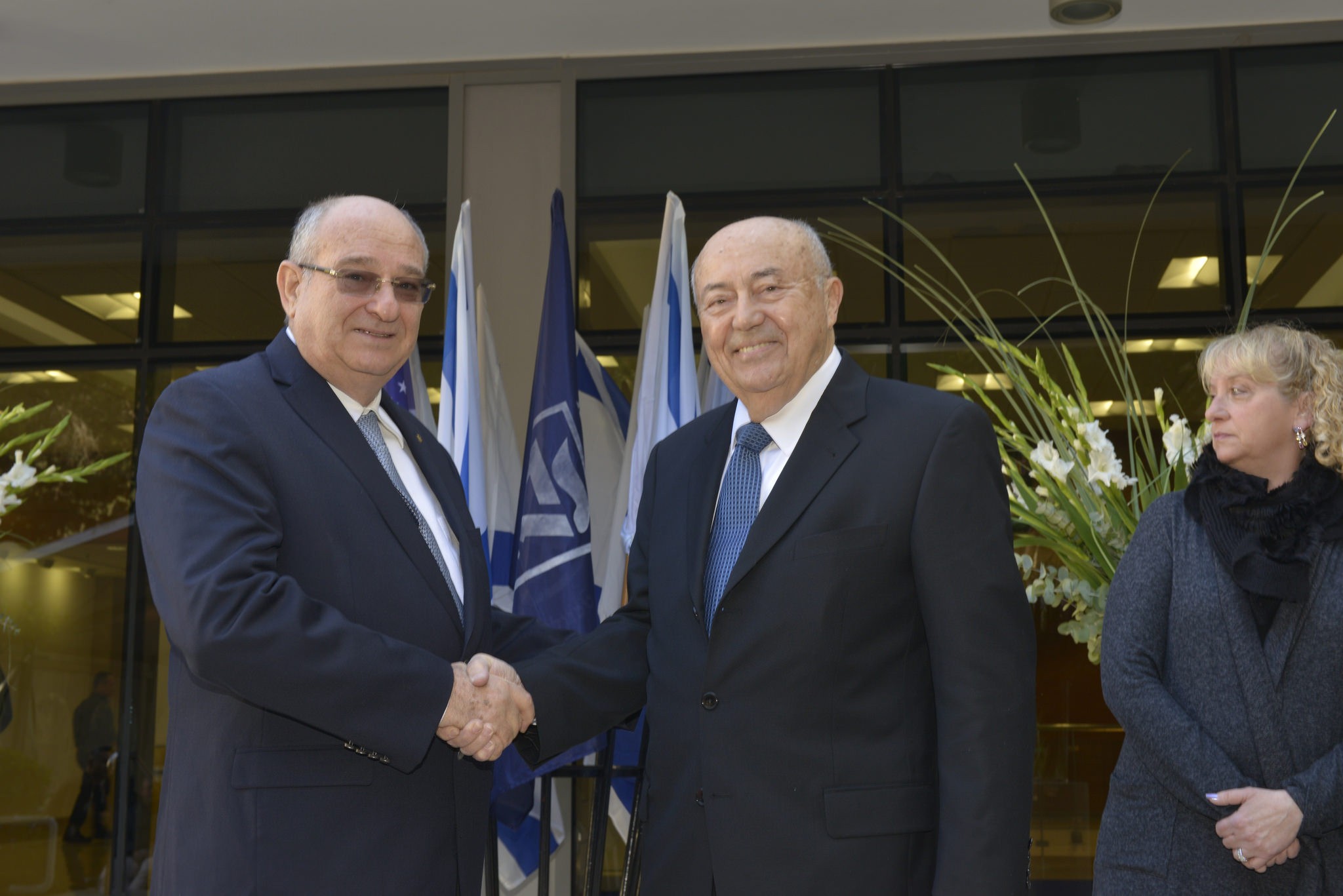
Prof. Andrew Viterbi (on the right, with Technion President Prof. Peretz Lavie)
“Viterbi and communications – these are synonyms.You can’t mention one without mentioning the other.”So said Distinguished Professor Emeritus Jacob Ziv who, together with Prof. Avraham Lempel, developed the Lempel-Ziv data compression algorithm, which played a key role in making the Internet a global communications medium.“Prof. Viterbi is a true pioneer in the fields of electrical engineering and computer engineering.The Viterbi algorithm underlies many of the technologies currently being developed in the fields of communications and information.We are very proud that the Faculty of Electrical Engineering will bear his name.”
“The Viterbi family’s donation guarantees that we will be able to continue to be a center of academic excellence and fulfill our role of advancing the State of Israel’s security and prosperity,” said Prof. Ariel Orda, Dean of the Faculty of Electrical Engineering. “Professor Viterbi gave us another gift, which is impossible to estimate in mere figures, but whose value is far greater. It is a rare combination for a Faculty to be affiliated with the name of a scientific and technological giant while teaching his scientific contributions in advanced courses of its curriculum.”
Prof. Andrew Viterbi
Prof. Viterbi’s ties with the Technion developed as long ago as 1967, when he delivered a series of lectures here during his sabbatical from the University of Southern California, Los Angeles. These roots have developed and deepened since then, and therefore Prof. Viterbi’s name is well known to engineering students at the Technion. In 2000, he was named a Technion Distinguished Visiting Professor of Electrical Engineering.
Together with his late wife, Erna Finci Viterbi, Prof. Viterbi has a long history of support for the Technion and the State of Israel. He has been named a Guardian of the Technion, a designation reserved for those who have reached the highest level of support of the Technion. The Viterbis’ gifts to the Technion have included the Andrew J. and Erna F. Viterbi Chair in Information Systems/Computer Science, held by Prof. Oded Shmueli; the Andrew and Erna Finci Viterbi Center for Advanced Studies in Computer Technology at the Faculty of Electrical Engineering; and the Andrew and Erna Finci Viterbi Fellowship Program.
Prof. Andrew Viterbi with his son Alan (left) and Technion President Prof. Peretz Lavie (right)
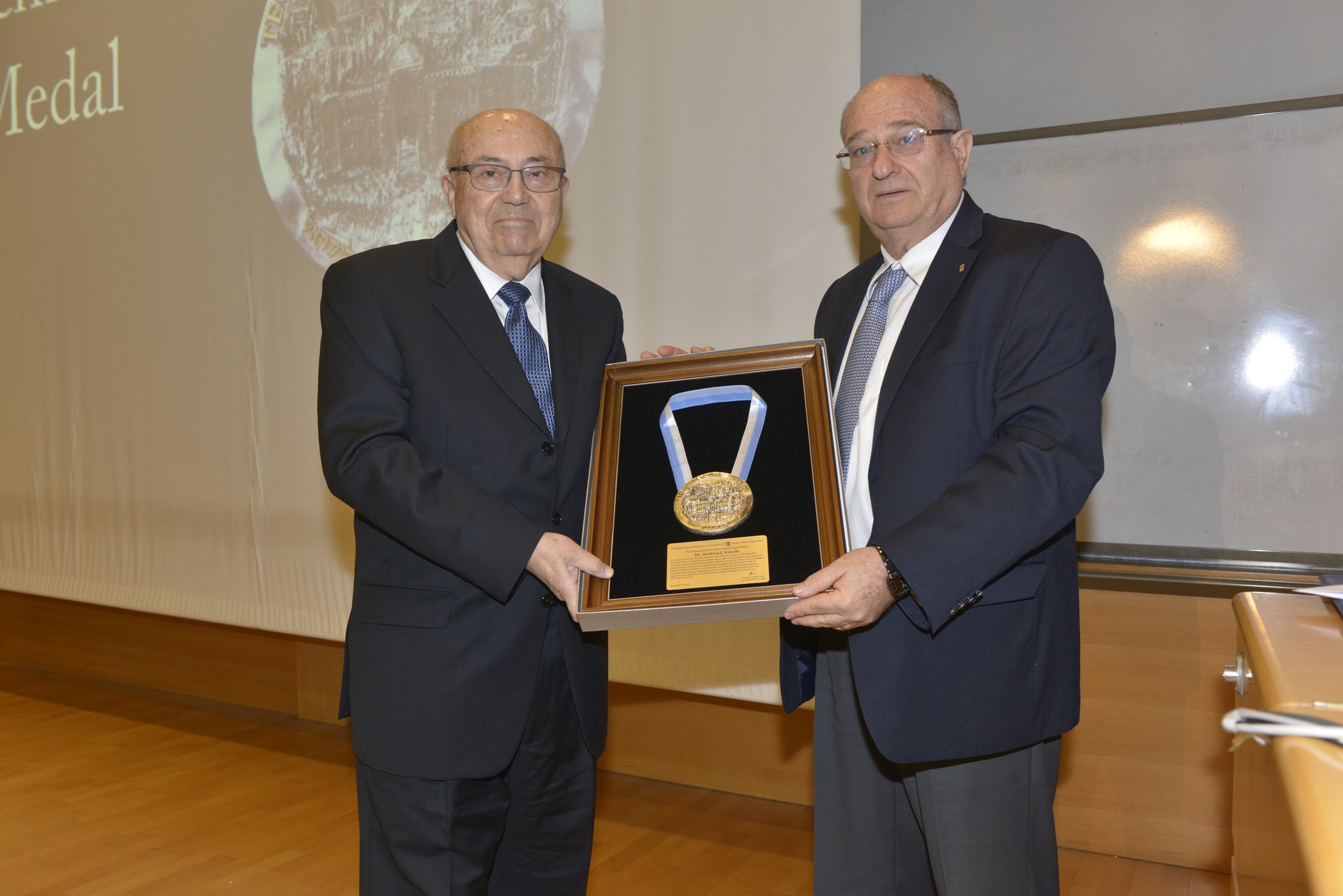
At the festive ceremony held at the Faculty of Electrical Engineering, Technion President Prof. Peretz Lavie awarded Prof. Andrew Viterbi the Technion Medal – the highest award granted by the Technion for lifetime achievement. The Medal was awarded to Prof. Viterbi for his “decades-long devotion to the Technion as a Distinguished Visiting Professorimparting his pioneering insights; in gratitude for his support of graduate students and postdoctoral scholars and the recruitment of new faculty; and with appreciation for his transformational gift to the Faculty of Electrical Engineering, that will secure and enhance the Technion’s leadership position in electrical and computer engineering in Israel and globally, and will ensure that the high-tech innovation that is vital to Israel’s economy and defense continues for generations to come.”
“I am extremely proud to have my name associated with the Technion, one of the world’s leading science and technology institutions,” said Dr. Viterbi at the ceremony. “Technion Electrical Engineering graduates are in large part responsible for creating and sustaining Israel’s high-tech industry, which has been essential for Israel’s economic success. To meet the challenges facing us, we must promote the intensive recruitment of new faculty and enter into the emerging research fields.”
– Technion President Prof. Peretz Lavie gives Prof. Viterbi the Technion Medal
The Technion Faculty of Electrical Engineering, which is included in the list of the world’s top ten faculties of Electrical and Computer Engineering, has played a crucial role in the development of Israel’s hi-tech industry and in turning Israel into a start-up nation.In early 1970s, the Faculty driving force was essential in creating the infrastructure and knowledge in microelectronics and developments that played a key role in the economic growth of the high-tech industry and the security of the State of Israel.In the following decades, the Faculty paved the way for a series of disciplines, including computer engineering, telecommunications, microelectronics, optoelectronics, nanotechnology and quantum technology.
Over the past twenty years, Technion alumni have been responsible for the establishment and management of more than 1,600 companies that have led to the creation of one hundred thousand jobs; around 35% of these companies were founded by alumni of the Faculty of Electrical Engineering.
“It is impossible to imagine Israel’s transformation into a world leader in science, technology and innovation without the Technion, and in particular the researchers, students and alumni of its Faculty of Electrical Engineering,” wrote Minister of Education Naftali Bennett in a special letter sent today to Prof. Viterbi. “Your gift will ensure that the newly-named Andrew and Erna Viterbi Faculty of Electrical Engineering will continue to be a center of world class research and education, providing Israel with future generations of engineers and scientists at the forefront of our dynamic, high-tech economy.”
Prof. Andrew Viterbi
The ceremony was also attended by alumni of the Technion Faculty of Electrical Engineering.Many of them are now senior members of Israel’s high-tech industry: the founders of the Rad-Bynet Group, Yehuda and Zohar Zisapel, Apple Israel CEO Aharon Aharon, Qualcomm Israel CEO Aric Mimran, former Qualcomm CEO Eyal Bar-David, and many others.
Technion researchers have developed an innovative method for detecting DNA sequences with high sensitivity. The study is highlighted on the cover of the journal Advanced Functional Materials.
Technion researchers have developed an innovative technology that enables detection of DNA sequences at a sensitivity over 1,000 times higher than that of existing methods. The principles of the study could enable the development of a wide range of simple and relatively inexpensive medical diagnostic systems, for example in order to identify known mutations in DNA. The study is highlighted on the back cover article of the leading journal Advanced Functional Materials.
The research is a multidisciplinary collaborative effort of the research groups of Associate Professor Ester Segal (Faculty of Biotechnology and Food Engineering) and Assistant Professor Moran Bercovici (Faculty of Mechanical Engineering). Doctoral student Rita Vilensky, who conducted the study under their guidance, built a lab-on-a-chip device combining (1) a biosensor for optical detection of DNA molecules; and (2) a system of microchannels enabling the concentration of DNA by applying electric currents on the chip.
Professor Segal’s laboratory is developing optical biosensors based on silicon chips with nano-scale pores. The resulting perforated chip has a typical optical characteristic in the visible spectrum,” explains Professor Segal. “We bind to it one of the complementary strands comprising the DNA molecule that we want to identify. When we expose the chip to many sequences we can specifically identify the recognition reaction between the complementary DNA sequences.”
“Specific capture of DNA molecules within the silicon nanostructure causes a change in the spectrum of light reflected from the chip and enables us to easily identify and quantify these molecules, thereby ‘catching’ the sequence and knowing how much of it we have.”
According to Professor Segal, one of the main limitations of this process is the sensitivity of the sensors, which is sometimes insufficient, especially for medical diagnostics applications. At this point, Professor Bercovici, who is developing microfluidic-based methods for increasing concentrations of biological molecules, joined the study. “By using the appropriate chemistry and applying electric fields, we can concentrate the DNA molecules in tiny volumes and transport them to the sensor,” explains Professor Bercovici. “This way we ‘‘trick’ the sensor, presenting it with DNA concentrations that are 10,000 times higher than the natural concentrations in the sample.”
Through precise design of the silicon’s structure and controlled growth of insulating oxide layers, the researchers were able to apply high electric voltages on the chip while preserving its unique nanostructure. “Combining the technologies has enabled us to improve the sensor’s sensitivity by a factor of between 1,000 and 10,000 compared with existing devices.”
A love story between two Technion graduates, Helen Rabinovich and Alex Domeshek led to the revolutionary start-up “Labsuit”, transforming the inventory management of academic laboratories. Their friend and co-founder Ira Blekhman explains that, “Our service enables considerable savings for research labs as well as a dramatic reduction in the amount of waste sent to landfills”
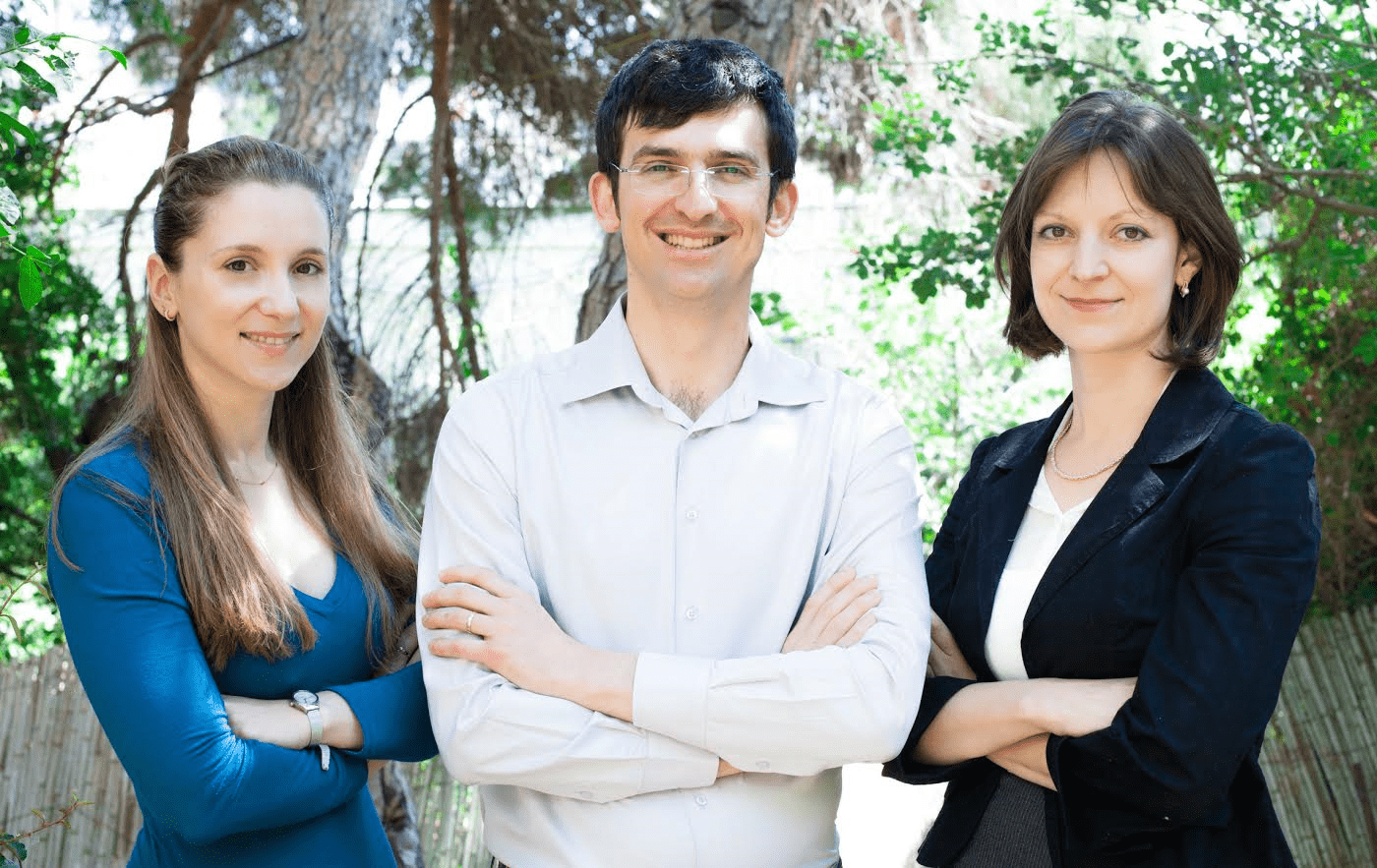
l-r: LabSuit co-founders Helen Rabinovitz, Alex Domeshek and Ira Blekhman
Managing laboratory supplies was one of the tasks Helen Rabinovichwas responsible for as part of her doctoral duties. Back then, she was pursuing her degree at the Technion’s Schulich Faculty of Chemistry. Overseeing the management of supplies – which included the ordering, storage, tracking and disposal of lab materials – consumed much of her time, which she would otherwise put into to her research.
Helen’s spouse, Alex Domeshek, who holds an engineering degree from Technion’s Faculty of Industrial Engineering and Management, came to her rescue by developing an innovative system for managing lab supplies – LabSuit. Rumor of the new system quickly spread throughout campus, with LabSuit being implemented in more and more chemistry laboratories as well as research facilities at other Technion faculties. Labsuit’s success at the Technion made Alex and Helen realize that they have a start-up in their hands.
The innovation sparked by Alex and Helen’s private love story transformed into a social network of labs nationwide within a few months. From a successful but small beginning amongst their peers at the Technion, over two hundred laboratories and a thousand researchers later, the numbers are growing fast.
“The Technion name opens up doors,” confides Alex, “and this is how I managed to find a job in the Silicon Valley that was looking for a Technion graduate right after graduation. Yet by then I had already ‘caught’ the ‘innovation bug’, and I knew, even before returning from the US, that the next thing for me would be a private venture rather than entering a corporate job. Innovative thinking is nurtured and promoted at Technion through entrepreneurial courses, competitions such as BizTEC and various accelerator programs run by the Bronica Entrepreneurship Center at Technion. We have been able to capture this spirit in LabSuit.”
LabSuit was founded at the end of 2013 by Helen and Alex; their mutual friend Ira Blekhman, an MBA student at the Open University, joined the venture shortly afterward. “LabSuit is a really awesome virtual community” relates Ira, “because it is built to serve various management levels, allowing individual researchers to use it according to their momentary needs. LabSuit’s first management level is inventory, effectively managing lab supplies and materials, replacing the excel sheets, sticky notes and disgruntled comments in the corridor. The second management level created a social network of laboratories cutting across various geographic regions and organizational affiliations to enable collective sharing of materials. Finally, the third level allows for search, exchange and ordering of materials from other laboratories as well as from commercial suppliers.”
There is an actual trade-in of materials between laboratories. “You have to understand that a laboratory stocks thousands of different materials, and actually requires much more than that. The service we offer prompts big savings for laboratories, as well as a dramatic reduction of waste sent to landfills for disposal. This is an innovative process that provides a real win-win-win for all parties: the laboratories save money and are managed in an organized manner, researchers save time and gain greater flexibility in their studies, and we enjoy seeing LabSuit grow and prosper.”
LabSuit is offered free to academic laboratories (except for delivery charges of supplies delivered directly from other institutions). At this point, in order to encourage maximum utilization of desired supplies, the delivery charges are fixed and do not vary according to the scope of the transaction, the price of supplies or quantity of materials delivered.
“When Alex had first presented his inventory system I was somewhat skeptic, but very quickly I saw how it put our lab into shape,” confides Ilana Parti, a PhD student from Technion’s Faculty of Biotechnology and Food Engineering. “This system enables us to contact labs all over the country, and really transformed our laboratory to a higher level of efficiency. In a lab like ours, which stocks large quantities of materials and has multiple users (which also change from time to time) keeping track of inventory is very difficult. With LabSuit I invested approximately one working day uploading all of our materials to the system, and now the search (of supplies) is fast and easy. When we run out of a particular item, we are able to find it within seconds at another Technion laboratory. Time savings are tremendous.”
Elvira Haimov, a doctoral student at the Schulich Faculty of Chemistry, is another satisfied LabSuit user. “Our lab has 17 researchers, each with their individual requirements and materials. Before using LabSuit we managed our entire inventory using Excel Spreadsheets. Every time we ran out of something, we had to start chasing down suppliers, which consisted of logging into their internet system to search for materials, comparing prices to quality and checking delivery service. This is a process that I would spend at least two hours a week on. Today, it takes me only ten minutes to do the same. Labsuit helped us get out of this vicious cycle, and brought a welcome change. Moreover, in some cases, when I’m not sure how to work with a new material, instead of buying even the smallest quantity – that’s still quite a bit – I search for it at other Technion laboratories and take a sample that I can test before ordering large quantities. This provides me with flexibility as well as precise logistic and financial control, and as previously mentioned – shortens the time I spend on inventory matters from two hours a week to a number of minutes.”
“Today, over a thousand researchers are using our inventory system in over 200 laboratories across Israel,” relates Alex, “and recently, we made it to the final round of the national BizTEC entrepreneurship competition. Our dream is to market LabSuit abroad, and to have all life sciences labs using our services. We would like to do for the lab supplies market what Airbnb did to the vacation rentals market. Our motto – ‘Science as a Service’ – is intended to connect laboratories and to serve not only as a platform for sharing supplies and materials but also as a jump for collaboration and knowledge exchange.”
Get the Technion LIVE Newsletter directly to your inbox. In this edition: Sleep for Stem Cell Transplant, Elephants & Cancer, Nano Bible in DC and much more!
Pioneering students from the Engineers without Borders (EwB) Technion Chapter joined up with a community in rural Ethiopia to design and build a safe drinking supply water system for a school.
Additional projects of the Technion Chapter include solar heating in Bedouin settlements in the Negev desert, wind turbines in East Jerusalem and bioreactors for cooking gas (from organic waste) in Nepal. The Chapter’s work is on display at a new exhibit at the Central Library on campus
A safe drinking supply water system was recently built in a school at Meskele Cristos, a village in northern Ethiopia. The water system collects rainwater from rooftops during the rainy season which is stored in a water reservoir made of dressed stone, which was built as part of the project. Thanks to this new water system, over 600 students in the local school have access to water during the school day.
The water system in Meskele Cristos is one of the largest projects ever completed by Technion’s Engineering without Borders (EwB) Chapter. The partnership with the village was initiated out of a request for assistance by World Families Australia (WFA), an NGO supporting this village school for the past several years, and Yossi and Sheila Shalhevet, volunteers from the “Save a Child’s Heart” organization.
In May 2013, representatives from Technion’s EwB Chapter visited the village for an initial assessment. Among the group members were students Yael Meyouhas and
Nimrod Polonsky. “We saw that the school does not have a reliable drinking water source for a school of over 600 students,” relates Polonsky. “To be able to drink water and wash their hands during the school day, students needed to walk to a water source far away and carry back the water in gerricans, a practice that was rarely done. Subsequently, we set ourselves a goal: to establish a safe drinking water system at the school for the benefit of students.”
The goal finally became a reality –nearly two years of hard work and determination. Some 15 Technion students participated in the project. Water is collected during the rainy season and stored in the large water reservoir, which serves the school community throughout the year. Construction of the system was completed in cooperation with the village community and a local NGO called SYHLA. The program was made possible through donations made to EwB-Technion and World Families Australia (WFA).
The partnership with the village has not ended with this project. The partnership will continue to thrive through operation and training support for the system, setup by the Chapter, and the initiation of new projects as defined by the community.
We set ourselves a goal: to establish a safe drinking water system at the school for the benefit of students.
Yael Meyouhas, who today runs the Center for Global Engineering on campus, through which the Technion’s EWB Chapter operates, completed her undergraduate degree in Civil and Environmental Engineering at the Technion. “I hoped to engage in activities focused on bridging between the environment, community and education, and thankfully that’s exactly the kind of work I do at the Center. The projects we are involved in are not “engineering for the purpose of engineering” but rather, “engineering for the people.” The solution applied to the water system in Ethiopia was developed in cooperation with the local community. At the end of the day, they will be the ones who will need to know how to operate it,” explains Meyouhas. She is currently studying a second undergraduate degree at the Faculty of Education in Science and Technology at the Technion, as part of the ‘Mabatim’ (‘Views’ in Hebrew) program.
The Center for Global Engineering at the Technion was founded by Prof. Mark Talesnick from the Faculty of Civil and Environmental Engineering, who also established the Technion’s EwB Chapter in 2007. The Center was created following the realization that student involvement in EwB activities requires conceptual and vocational training.
Orit Aviran, who is also studying at the Faculty of Education in Science and Technology at the Technion and co-manages the Center added that, “All these activities have one motto: Technology for the Benefit of the Community. In other words, advancing technological know-how for the benefit of mankind, based on the specific needs of a particular community. This can be seen in all our projects: Nepal – bioreactors to produce biogas for cooking; the Negev – solar heating for kindergartens; and East Jerusalem – wind turbines. All of these projects were carried out with the full cooperation of the community, from conception, through the development stage, culminating in implementation. This was also the way the water project in Ethiopia was carried out.”
In honor of the completion of the first stage of the cooperative project in Ethiopia, a new exhibit displaying the work of Technion’s EwB Chapter was recently opened to the public in the gallery of the Elyachar Central Library.
“I attended a lecture about the volunteer organization “Engineers without Borders” and the various projects undertaken by the Technion Chapter and I was moved by the desire and willingness of these young people to invest their knowledge and time into contributing to the improvement of the quality of life of other people,” explained Anat Har-Gil, the exhibition curator. “I was very impressed by their down-to-earth attitudes. The process does not begin with the construction of a device or machine, followed by a search for a developing community it may be useful for. The opposite is true. These volunteers first visit communities in need of their help, learn the local lifestyle, try to understand the needs and challenges, and together with members of the community, suggest ideas for improving the quality of life of the inhabitants. The ideas raised by these volunteers are such that the planning, implementation and operation are made in full cooperation with the local community so that even after the program ends and the volunteers have left, residents are able to continue to maintain their own proposed solution.
While planning the exhibit, I found historical documents in Technion’s archive revealing how Technion engineers contributed to the benefit of mankind, dating back from the time of its inception, in the days before the founding of the State. The technological developments and methods they used to improve the lives of the people of Israel, have also helped other new states facing similar challenges.”
Photo credits:Nimrod Polonsky, Matan Segman, Tal Dana – Technion’s Spokesperson’s Office
For the first time, Technion scientists have created a porous, single crystal of gold. The study was conducted in collaboration with the particle accelerator in Grenoble, France.
For the first time ever, Technion researchers managed to grow a porous single crystal of gold. The study, published on November 10 issue of the journal Nature Communications, was conducted by doctoral student Maria Koifman Khristosov, under the guidance of Prof. Boaz Pokroy of the Faculty of Science and Materials Engineering.
Crystalline material may be multi-crystal or single-crystal. A single crystal is a substance made up of atoms arranged in a long-term periodic arrangement, while a multi crystal is made up of single crystals. Multi crystals have different characteristics from those of single crystals – the difference arising from the different arrangement of atoms.
Single crystals are not a human invention; they exist in nature in various materials. A diamond, for example, is a single crystal of carbon. In nature there are organisms capable of creating single crystals that look non-crystalline, i.e. rounded in shape with no straight facets. Sometimes these crystals are porous. “In nature there are crystals with highly complex shapes and with no facets at all, and they are actually a single crystal,” says Prof. Pokroy. “For example, the spines of a sea urchin are single crystals. People who are not experts on the subject will find it hard to believe that these are single crystals.”
Artificial single crystals produced (grown) in the laboratory are generally characterized by a more ‘crystalline’ appearance, i.e. with clear facets. Up to now, rounded and porous crystals like those in nature have hardly ever been grown in the laboratory, because this production process is a highly complex scientific and engineering challenge. “Of course one can produce ‘crystalline’ single crystals in the laboratory and then process them until they reach the desired complex shape, but this is an expensive and prolonged process, and is actually impossible when we ultimately want to obtain a porous crystal. Therefore, considerable effort is being invested in developing methods for growing single crystals.”
Advantages include mechanical strength, high resistance to heat and enhanced conduction of electricity andheat.
The Technion researchers’ success in growing a porous crystal in the laboratory is based on an innovative process developed by Professor Pokroy and Maria Koifman Khristosov: thermal treatment of thin layers of gold and germanium. This treatment creates liquid droplets tens of microns in size. Cooling the droplets enables the gold to crystallize, creating a single nucleation point, and this is how a porous single crystal is formed. Thorough testing of the product, using advanced equipment at the Technion Electron Microscopy Center, reveals that these are single crystals containing channels tens of nanometers in diameter.
“Our motivation in developing the new technology is purely scientific,” explains Maria Koifman, “but these materials clearly have many potential applications. Single crystals have many advantages resulting from the absence of the nuclear boundaries characteristic of ‘normal’ crystals. These advantages include mechanical strength, high resistance to heat and enhanced conduction of electricity and heat.”
The study is being carried out with the support of the Technion’s Russell Berrie Nanotechnology Institute, funded by an ERC grant given to Prof. Pokroy by the European Union, and in cooperation with the accelerator (the European Synchrotron Radiation Facility) in Grenoble, France.
Prof. Pokroy earned three degrees at the Technion Faculty of Science and Materials Engineering, and returned to the Technion in 2009 after a post-doc at Harvard (under the guidance of Prof. Joanna Aizenberg) and Bell Labs. “My stay in the US was very interesting,” he says, “and I was happy to get a job here in Israel on my return. Two other significant incentives to return were the prestigious Allon Fellowship for Outstanding Young Researchers and the opportunity to be part of the Technion’s Russell Berrie Center.” He has only good things to say about the students at the Technion – “They are just as good as the students at Harvard.” The Pokroy team consists of nine graduate students.
Prof. Pokroy’s involvement with nature-inspired materials engineering began with his doctorate, under the guidance of Prof. Emil Zolotoyabko, “In many cases nature surpasses us, the engineers, in terms of the products that it produces. I focus on bio-mineralization – i.e. studying the mechanisms in which organisms form minerals. It is important to note that I am studying these processes not in order to imitate them, as is done in the field of biomimetics, but rather to gain inspiration for applied engineering processes. Therefore, I call it Bio-inspired engineering. One of my goals is practical, and it is to discover how to create surfaces and composites with enhanced characteristics inspired by nature.
Self-healing sensor brings ‘electronic skin’ closer to reality
Scientists at the Technion have used a new kind of synthetic polymer to develop a self-healing, flexible sensor that mimics the self-healing properties of human skin. Future applications could include the creation of self-healing ‘electronic skin’ and prosthetic limbs that allow wearers to ‘feel’ changes in their environments.
Flexible sensors have been developed for use in consumer electronics, robotics, health care, and space flight. Future possible applications could include the creation of ‘electronic skin’ and prosthetic limbs that allow wearers to ‘feel’ changes in their environments.
One problem with current flexible sensors, however, is that they can be easily scratched and otherwise damaged, potentially destroying their functionality. Researchers in the Department of Chemical Engineering at the Technion – Israel Institute of Technology in Haifa (Israel), who were inspired by the healing properties in human skin, have developed materials that can be integrated into flexible devices to “heal” incidental scratches or damaging cuts that might compromise device functionality. The advancement, using a new kind of synthetic polymer (a polymer is a large molecule composed of many repeated smaller molecules) has self-healing properties that mimic human skin, which means that e-skin “wounds” can quickly “heal” themselves in remarkably short time – less than a day.
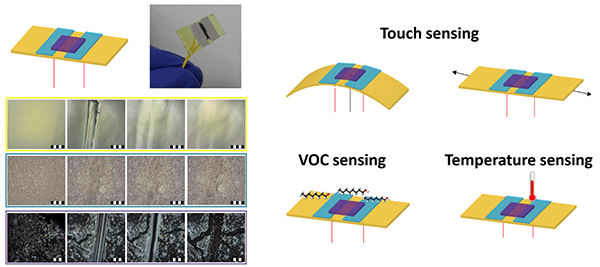
Top left: Schema and photograph of the self-healing chemiresistor consisting of a transparent (yellowish) self-healing substrate, jelly-like self-healing electrode, and pliable induced self-healing AuNP film. Bottom left: The ethoxyphenylcapped AuNP film coated on the sh-crl-PU substrate before and after cutting, and then during healing. Within 10 minutes, the seonsor begins to repair itself and return to normal. Right: Illustration characterizing the self-healing components of the chemiresistor
“The vulnerability of flexible sensors used in real-world applications calls for the development of self-healing properties similar to how human skins heals,” said self-healing sensor co-developer Prof. Hossam Haick. “Accordingly, we have developed a complete, self-healing device in the form of a bendable and stretchable chemiresistor where every part – no matter where the device is cut or scratched – is self-healing.”
The new sensor is comprised of a self-healing substrate, high conductivity electrodes, and molecularly modified gold nanoparticles. “The gold particles on top of the substrate and between the self-healing electrodes are able to “heal” cracks that could completely disconnect electrical connectivity,” said Prof. Haick.
Once healed, the polymer substrate of the self-healing sensor demonstrates sensitivity to volatile organic compounds (VOCs), with detection capability down to tens of parts per billion. It also demonstrates superior healability at the extreme temperatures of -20 degrees C to 40 degrees C. This property, said the researchers, can extend applications of the self-healing sensor to areas of the world with extreme climates. From sub-freezing cold to equatorial heat, the self-healing sensor is environment-stable.
Prof. Hossam Haick. Technion
The healing polymer works quickest, said the researchers, when the temperature is between 0 degrees C and 10 degrees C, when moisture condenses and is then absorbed by the substrate. Condensation makes the substrate swell, allowing the polymer chains to begin to flow freely and, in effect, begin “healing.” Once healed, the nonbiological, chemiresistor still has high sensitivity to touch, pressure and strain, which the researchers tested in demanding stretching and bending tests.
Another unique feature is that the electrode resistance increases after healing and can survive 20 times or more cutting/healing cycles than prior to healing. Essentially, healing makes the self-healing sensor even stronger. The researchers noted in their paper that “the healing efficiency of this chemiresistor is so high that the sensor survived several cuttings at random positions.”
The researchers are currently experimenting with carbon-based self-healing composites and self-healing transistors.
“The self-healing sensor raises expectations that flexible devices might someday be self-administered, which increases their reliability,” explained co-developer Dr. Tan-Phat Huynh, also of the Technion, whose work focuses on the development of self-healing electronic skin. “One day, the self-healing sensor could serve as a platform for biosensors that monitor human health using electronic skin.”
Close your eyes. Imagine the greatest natural landscapes in the world. What comes to mind? Most likely, you will picture looming mountains, raging seas, vast deserts, giant redwoods and other scenes of nature’s vast spaces, which artists have depicted throughout the ages.
Yet, there is also a mysterious and beautiful natural world – far smaller, much more unknown, but no less stunning – that lives under a microscope.
LABSCAPES brings this remarkable microscopic world to life, offering a rare chance to peek over the shoulder of some of the world’s most renowned researchers at the Technion – Israel’s leading institute of science and technology. The images on exhibit are taken with a range of microscopes used in the fields of exact sciences (chemistry and physics), life sciences, engineering, and medicine. The images are beautiful reminders that human perception is a feeble means by which to comprehend the large and layered world we inhabit.
Created and Curated by Anat Har-Gil, an artistically gifted member of the Technion’s Computing and Information Systems Department, LABSCAPES presents vivid images that at first glance might seem reminiscent of spectacular natural vistas. But look more closely, Ms. Har-Gil suggests, and you’ll discover the unexpected. Crystals, bacteria, human cells, and other entities invisible to the naked eye are revealed through the power of the modern microscope
As you admire these stunning panoramas, don’t lose sight of the bigger picture— the dedicated work of scientists seeking a better future for us all. This is a landscape that we can only begin to envision.
LABSCAPES: Views Through The Microscope Where Art Meets Science Images from the Technion-Israel Institute of Technology
On View September 8-December 16, 2015:
JCC Manhattan 334 Amsterdam Ave New York, NY 10023
“It is the moral duty of academia to harness its resources for the benefit of the community and the city.” So said Prof. Marc Schlossberg of the University of Oregon, who is currently a visiting professor at the Technion, at a lecture on sustainable urban development.
This week a lecture was given at the Technion by Prof. Marc Schlossberg of the University of Oregon, who specializes in sustainable city planning, public transport accessibility and promoting walking and cycling. Prof. Schlossberg arrived at the Technion this summer as part of the Fulbright Program – at US government program that promotes the sharing of academic, professional and cultural knowledge between countries and exchanges of outstanding students and academics.
Prof. Schlossberg and Team
Prof. Schlossberg is the co-founder (with Prof. Nico Larco of the University of Oregon) of the Sustainable City Year Program – a project in which the University operates in surrounding cities and aids in their development, using the knowledge and experience of its students and lecturers. This model has been adopted at the Technion under the name of The Urban Laboratory. Ruti Donag, director of the project at the Technion, explains that this is the first adoption of the project at an Israeli university, and that the laboratory has already operated in Kiryat Yam and Nesher and will operate this year in Akko, with lecturers from various faculties at the Technion and the University of Haifa.
In his lecture, Prof. Schlossberg described the project that he founded at the University of Oregon and its expansion to dozens of other universities in the United States. “The idea is to bring courses, students and faculty from diverse disciplines to carry out intensive work in a single city for an entire year. Working together with the city administration and residents creates a meaningful and mutually fruitful dynamic that enriches all those who participate. We, as a university, get a lot from the project: forging ties between academic units and promoting interdisciplinary research at the university; providing students with experience in the real world and in coping with political, economic and planning constraints; motivation that stems from a sense of mission; and increasing the relevance of academia as an institution that is involved in real life and contributes to society. To me it is our moral duty to harness our knowledge and that of our students for the benefit of society, and in this project we are ultimately making use of existing resources – namely our knowledge and experience.”
Prof. Schlossberg is in Israel with his wife and their two children. “Beyond the professional aspects, I wanted to give my children the opportunity to experience life in Israel, with different and diverse people. We have already toured Haifa, the surrounding communities and Tel Aviv and Jerusalem, and now I’m planning a trip to the Negev. We made some of the trips with families that we met at the Technion. These experiences and these contacts have eased the difficulties, which have so far included two sandstorms, a particularly hot summer and an increase in violence in the region.”
This is his first time at the Technion, but not in Israel. “Six years ago I was in England, also on a Fulbright fellowship, and at the end of the year we decided to stop in Israel on the way home. Our family spent three weeks here and got a taste of history, the sea, local food and other attractions. Since then I’ve often thought that it would be really interesting to spend a longer period in Israel, and now the Fulbright Scholarship has given me this opportunity. This is a very interesting country from an urban and planning perspective. It’s a young country in an ancient land, with a desert climate and other climates, intensive immigrant absorption, construction for a diverse population and an turbulent environment in terms of security.
This past Yom Kippur made a huge impression from the environmental aspect. “It was my first Yom Kippur in Israel, and the sight of hordes of children of all ages riding bikes was very impressive. This shows that when you provide the public with good conditions for cycling – especially convenience and safety – people will travel more by bike. Fortunately, at the University of Oregon the level of awareness of this issue is very high. In fact, half the people who study and work there arrive by bike or on foot.
During his stay at the Technion, Prof. Schlossberg is teaching courses as a visiting lecturer at the Faculty and is examining various possibilities for cooperation at the Technion and in Israel, including co-authoring a book with Prof. Karel Martens of the Technion Faculty of Architecture and Town Planning. “I chose the Technion for my Fulbright Scholarship because it is a world-renowned institution. It is especially important to me to help the Technion increase its cooperation with Haifa and other cities, in order to accelerate a positive change in the community and create better learning opportunities for students at the various faculties.”
This article, dedicated to the memory of the late Uzi Halevy, Honorary Fellow of the Technion, was published in the last issue of the Technion Magazine.
Chemical engineer Rafi Semiat and chemist Moris Eisen, both professors at the Technion, have developed an innovative water purification membrane. Technion graduate Uzi Halevy was enthusiastic – and promoted a $4.6 million investment in MemTech, the company that they founded. The result: MemTech’s first full scale commercial pilot plant is running in Israel and two others are to be built soon, one in the US and one in Canada.
Uzi Halevy
“The Technion is moving in the right direction – expanding the opportunities for commercialization of technological know-how developed there. It’s definitely going to provide attractive options for investment by businesses and individual investors. The Technion can only benefit from it – in all aspects.”
Technion graduate Uzi Halevy knows what he’s talking about. For decades, he has been contributing to the Technion and investing in Israel’s hi-tech industry, and he understands the importance of translating engineering concepts into commercial applications. This is the main reason why he and his wife founded The Uzi & Michal Halevy Fund for Innovative Applied Engineering Research, providing annual grants to Technion’s researchers , pursuing innovative applied engineering.
At the awards ceremony in 2013, a surprise awaited him. “When the winners were called to the stage, I saw that they were Professors Rafi Semiat and Moris Eisen, both of whom I have known well. The award was given to them for their development of a unique innovative membrane technology for seawater desalination pre filtering, for the treatment of gray water (‘used’ drinking water) and municipal wastewater. For me, this is a great example of the translation of an engineering concept into an actual product that helps the economy and society.”
The partnership between Professors Semiat and Eisen began some 10 years ago, when Professor Semiat headed the Technion’s Grand Water Research Institute. “In this partnership, we complement each other,” explains Professor Semiat. “Moris comes from organic chemistry and I’m from engineering. Thus we developed a new type of membranes that allow water to pass at higher flow rate-flux than is currently being experienced in the industry and filtering out a very wide range of large molecules – as well as six orders of magnitude of concentration of bacteria and four orders of magnitude of viruses.”
When they came on stage to accept the award, Semiat and Eisen told about their promising development, which by then did not succeed to gain commercial momentum due to budgetary constraints. “At that time, we had a faltering start-up,” says Semiat, “and when we told Uzi about it, he immediately became enthusiastic. After careful examination with the president of Mem-Tech , and after several meetings with water technology experts at Mekorot, which is a strategic partner in the company, he decided to invest his money and recruit additional investors. This incremental investment – $4.6 million – gave us a tremendous boost. That’s how we achieved a breakthrough in wastewater , drinking water treatment and whey water filtration.
As part of its municipal wastewater treatment activity, the company – MemTech – was awarded early this year, a contract for installing a full scale semi-industrial experimental pilot plant at Hagihon Company, the Jerusalem Municipality’s water corporation. “In this experiment, we examined the effectiveness of the new wastewater treatment membranes, by comparing the performance to commonly used industrial membranes with exceptional results , approaching 80% improvement.” In addition, the company, together with Mekorot, has been awarded contract for the installation of a pilot plant similar to the Gichon pilot plant to be installed in the city of Akron, Ohio in early 2016 ,as part as a joint $3.5 million water project between the Israeli government and the city of Akron. Mem-Tech was informed in early September of the intent to award another Gichon type pilot plant to be installed in Montreal Canada as part of the Joint Canadian Israeli research project.
The company recently signed another contract [with a dairy in Israel] for filtering whey – the residue created in the production of cheese. “In the process, in addition to cleaning through filtration the whey water ,prior to discharge to the sewer in full compliance with the environmental regulations , we also help in collecting the residual cream and protein from the waste water. For every 100 cubic meters per day of whey water – a capacity typical of small and medium size dairies – the dairy recovers substantial amount of valuable products-protein and cream with a nice profit.
Steadfast devotion to the Technion
Uzi Halevy was born in Israel to a veteran Jerusalemite family – I’m an 11th generation Jerusalemite.” His father was Dr. Asher Halevy, one of Israel’s first civil engineers. “He participated in the construction of British high Commissioner palace , the Rockefeller Museum and the multiple British Tigert police fortresses .He was appointed by David Ben Gurion to managed the construction of the government main office complex in Jerusalem, the old Knesset building and the new Knesset building. “I spent a lot of time with him at work,” says Halevy. “So it was natural for me to study civil engineering.” In 1956 he began studying Civil Engineering at the Technion, but a year later the Technion’s Department of Nuclear Engineering was founded – and he was transferred. After earning his degree (Mechanical Engineering and Nuclear Engineering), he worked at the United Steel Mills complex (Kiryat Haplada) in Acre and later at the newly built Israel Petrochemical Enterprises Ltd. At the end of design and construction the Ethylene plant he wanted to enrich his experience at this field at the USA , and at age of 28 he went to work for Litwin Engineering, in Wichita Kansas .In September 1964 he was instrumental in opening a an engineering consulting branch of Litwin for the oil refineries and petrochemical industry in Israel .In 1980 Halevy was appointed president of Litwin’s international engineering group, which employs more than 2,500 engineers and technicians through out the world. He still lives in Houston.
Twenty-five years ago, Halevy joined the ranks of the ATS (American Technion Society),and has been a member of the Board of Governors of the Technion for the past 12 years. In addition to the innovation award, which he founded with a $1 million investment, he has left the Technion over $1 million in his will, and encourages his children to follow in his footsteps. “The Technion is very important to me, so I have decided to donate my shares in MemTech to the Technion as well. I hope that other Technion alumni who have succeeded in their professional careers will follow my lead and support the Technion.”
Shani Elitzur of the Technion, who recently received a research grant from the Ministry of Science, won third place in the international Falling Walls Lab competition
Shani Elitzur, a doctoral student at the Technion Faculty of Aerospace Engineering, won third place in the finals of the international Falling Walls Lab competition, which took place this week in Berlin. Elitzur, one of the competition’s 100 finalists, presented innovative technology for the production of hydrogen energy that could reduce dependence on oil through the use of hydrogen-based propulsion.
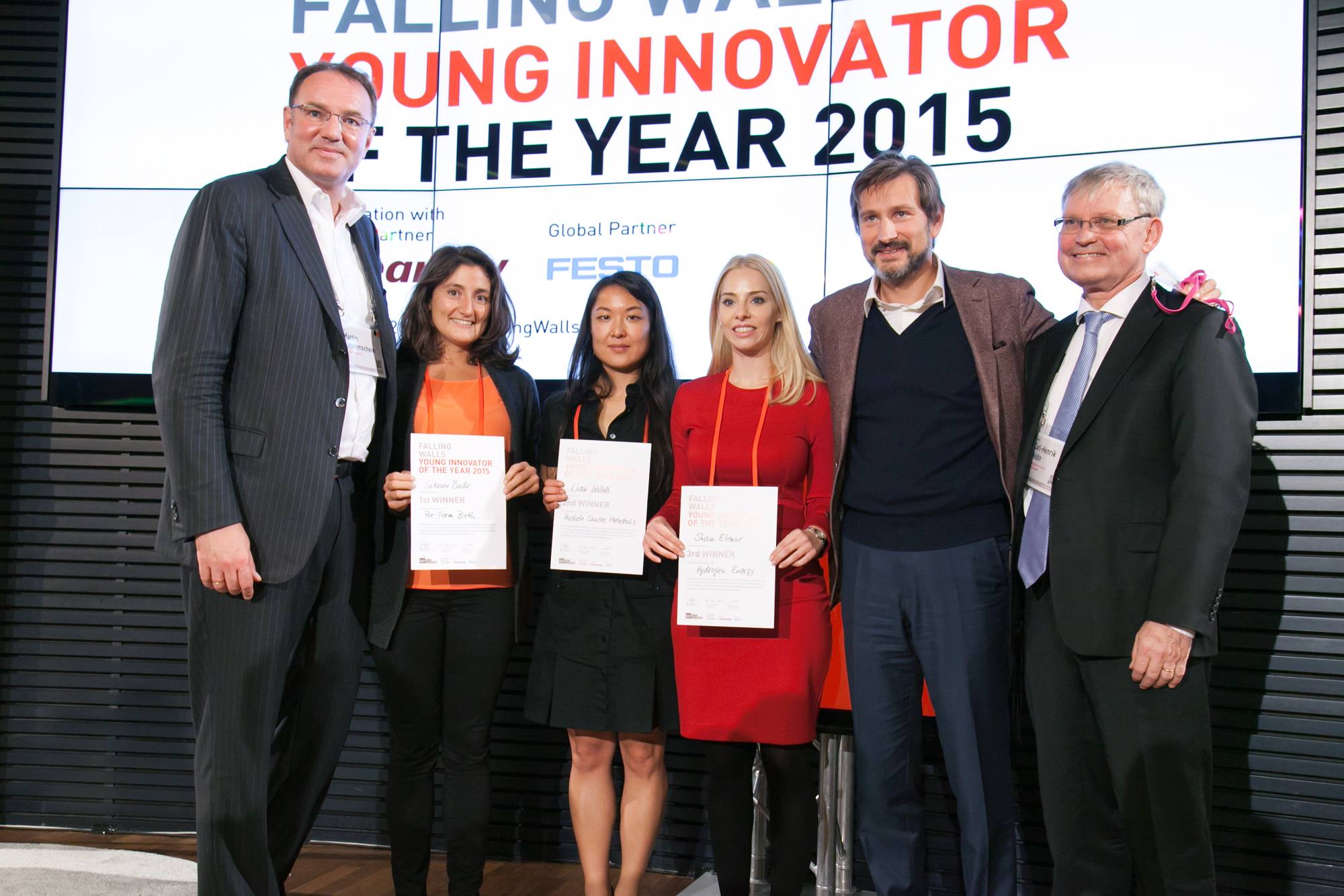
The three winners, together with the organizers of the competition
First place went to Sabrina Badir of the ETH Institute for Mechanical Systems in Zurich, for technology for the prevention of preterm birth, and second place went to Lian Willetts of the University of Alberta in Canada, for predicting prostate cancer metastasis on the basis of a single drop of blood.
Shani Elitzur recently received a grant from the Ministry of Science for developments in the field of alternative fuels for transportation – a NIS 300,000 grant that will enable her to continue her research. According to the Ministry of Science, Elitzur’s research program has demonstrated applied feasibility, which could soon lead to a development with commercial potential. Science Minister Ofir Akunis said in response to Elitzur’s win that “The ministry will continue to do much for the advancement of women in science and to support them on their way to a breakthrough. Elitzur’s win is not accidental – she is part of a growing number of women in Israel whose achievements in science, technology and innovation are a source of pride.”
Shani began her studies at the Technion as a member of the IDF Academic Reserve, and went on to earn a master’s degree and a doctorate. In her doctorate, under the guidance of Prof. Alon Gany and Dr. Valery Rosenband, she is developing an innovative technology for producing energy from hydrogen. According to Elitzur, “The idea of producing energy from hydrogen is not new, but since the density of hydrogen is low, its storage requires very intense compression or cooling to very low temperatures. These limitations, along with the safety aspects associated with the use of hydrogen, are the barriers currently preventing the extensive civil use of hydrogen energy.”
In light of this fact, the Technion Faculty of Aerospace Engineering has developed a ‘portable plant’ for the production of hydrogen onsite – i.e. inside the car – without the need for storing it. The method is based on the interaction between aluminum and water in the presence of a very low dosage of an activating substance (2.5%). The electrical energy generated by the aluminum-water technology is higher by an order of magnitude than the electrical energy obtainable with the existing storage technologies, including lithium batteries.”
Falling Walls Lab is an international competition with the participation of 35 countries, and has been held in Berlin since 2011. The competition is intended for students for all degrees and for young (up to age 35) industrialists, entrepreneurs and faculty members. It is an interdisciplinary format which gives contestants the opportunity to present ideas, developments and inventions within a timeframe of just three minutes. The name of the competition is a tribute to the fall of the Berlin Wall, and the basic idea is that contestants will present breakthroughs that constitute breaking down ideological, technological and other “walls”. Elitzur took part in the international finals this week after having won first place in the Falling Walls Lab Israel competition two months ago. Falling Walls Lab Israel was held at the Technion as a joint initiative of the Technion Computer Engineering Center, the Bronica Entrepreneurship Center at the Technion, and Hebrew University of Jerusalem.
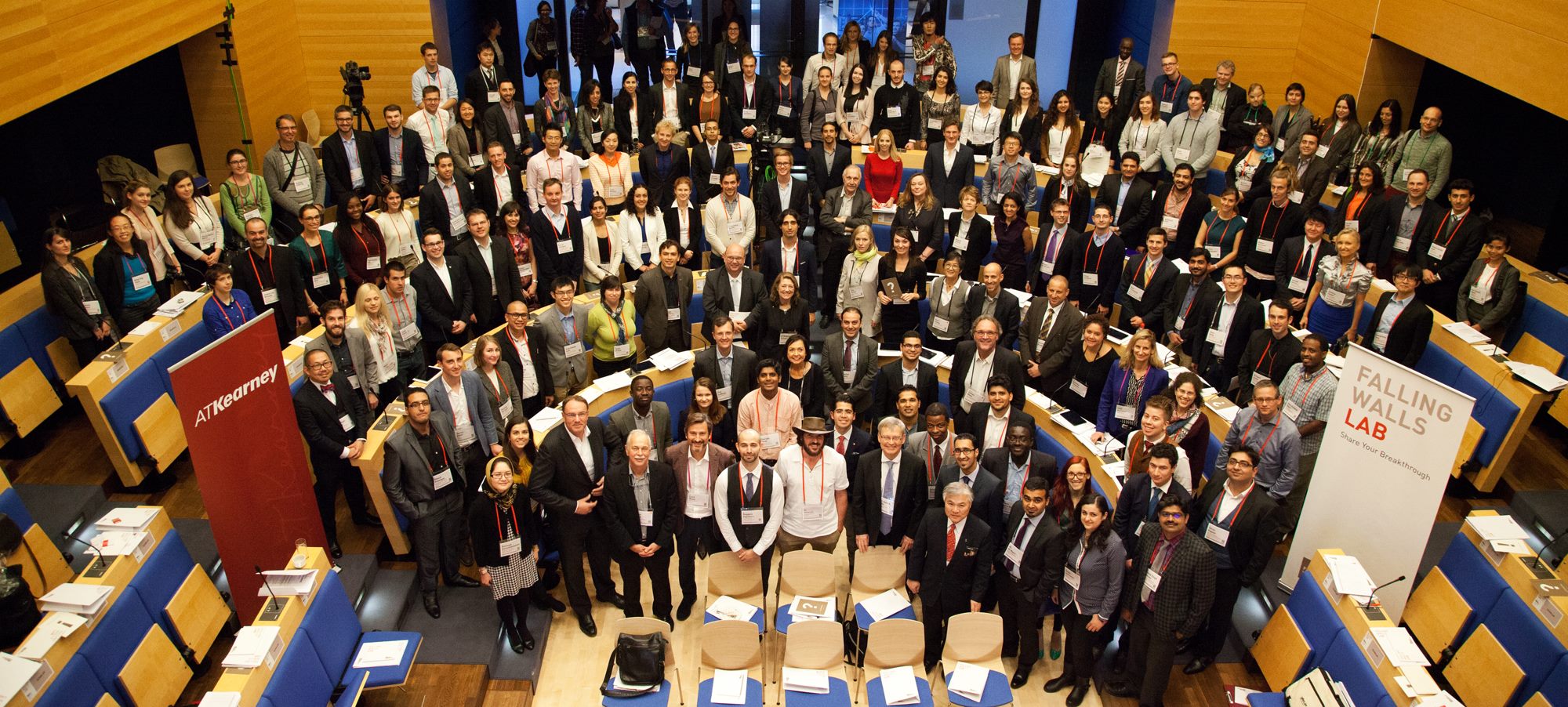
All 100 participants of Falling Walls Lab 2015 Photo credit: Falling Walls Foundation