

With a $1 Million Investment, the Technion Inaugurates a VLSI Laboratory for Chip Design
The laboratory, operating at the Viterbi Faculty of Electrical and Computer Engineering, was upgraded with the support of Apple, Intel, and NVIDIA
The Technion inaugurated the renovated VLSI Laboratory at the Andrew and Erna Viterbi Faculty of Electrical and Computer Engineering. The field of VLSI (Very Large-Scale Integration) – the creation of complex, multi-component integrated circuits—lies at the core of the development of advanced chips.
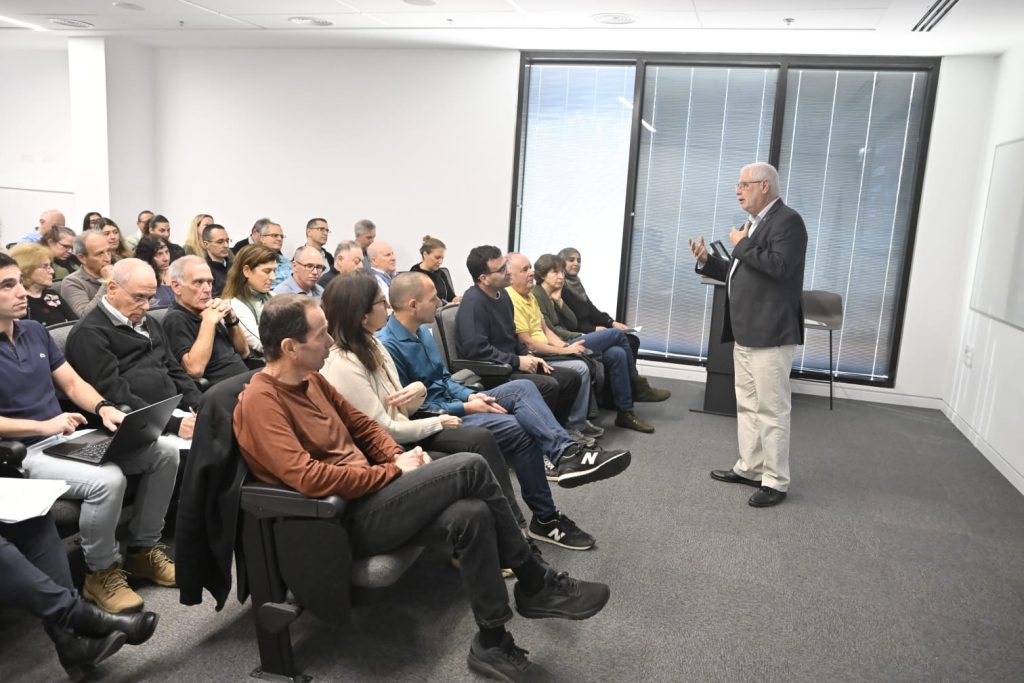
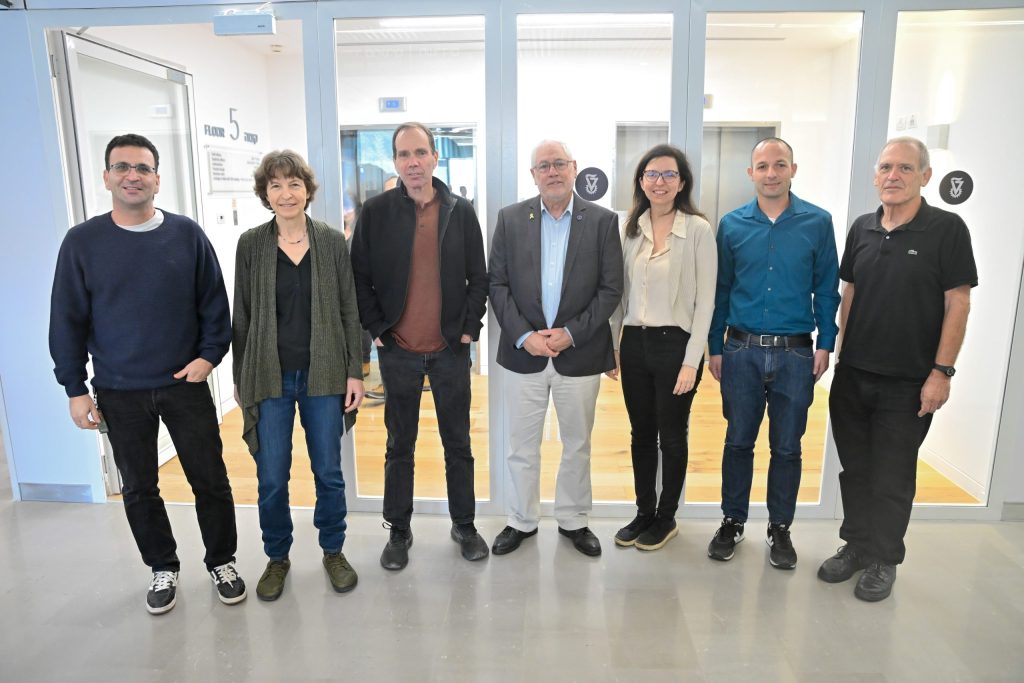
The laboratory was upgraded through an investment of approximately $1 million from Apple, Intel, and NVIDIA. The upgrade included renovation of the facilities, the addition of personnel, and the renewal of equipment. The inauguration ceremony was held in the presence of Technion President Prof. Uri Sivan, Faculty Dean Prof. Shahar Kvatinsky, the VLSI Laboratory’s Academic Director Prof. Ran Ginosar, and senior executives from the three companies – all Technion alumni: Tamir Azarzar, Senior Vice President of Chip Design at NVIDIA; Karin Eibschitz Segal, CEO of Intel Israel and Corporate Vice President at Intel; and Rony Friedman, GM of Apple Israel.
Over the years, the Viterbi Faculty of Electrical and Computer Engineering has trained the scientific and technological leadership that has made a decisive contribution to establishing Israel’s status as a “Startup Nation” and as a global center for chip development. The faculty’s researchers and alumni have played a leading role in the evolution of the semiconductor industry and continue to do so in the development of chips and computing architectures for the era of artificial intelligence. The combination of deep foundational knowledge, mathematical excellence, creativity, and engineering innovation gives the faculty’s graduates – who integrate into and lead Israel’s high-tech industry – a sustained competitive advantage at the forefront of global technology.
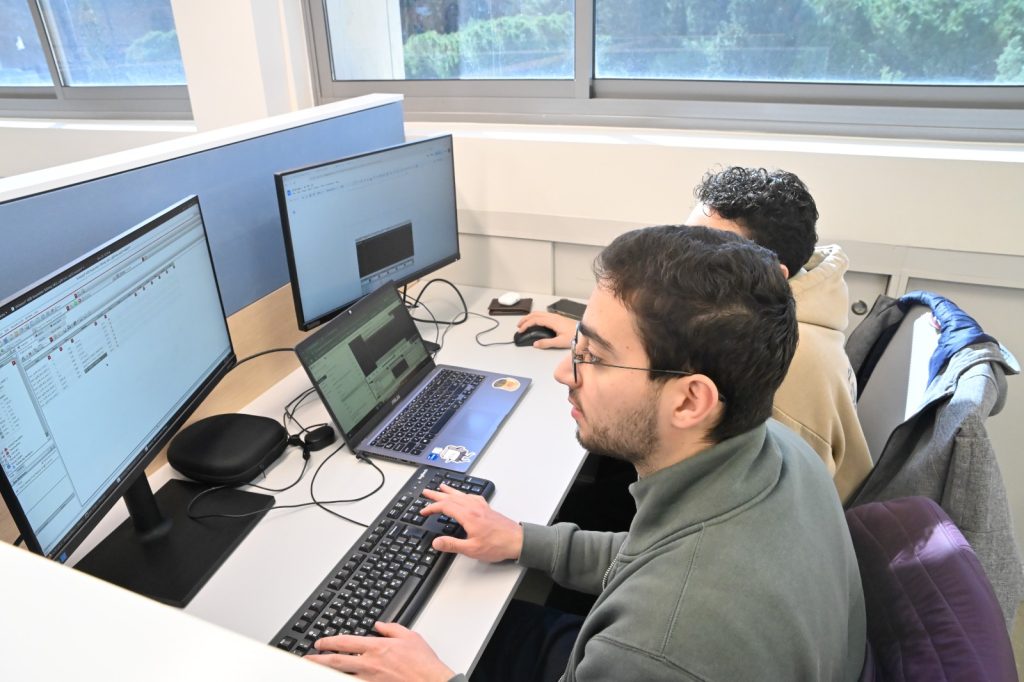
The VLSI Laboratory focuses on the development of advanced computing architectures and large-scale integrated systems, including in-memory computing, hardware acceleration of artificial intelligence, hardware security, and highly energy-efficient systems. The companies’ investment in the laboratory reflects a deep commitment to training the next generation of VLSI engineers in Israel. This partnership between academia and industry is designed to provide students with practical knowledge at the cutting edge of technology and to ensure a strong pipeline of engineers who will lead chip development in the years ahead.
The inauguration of the laboratory marks a strategic step in deepening the connection between advanced academic research, education, and Israeli and global industry, and in strengthening the Technion’s position as a leading force in shaping the fields of microelectronics and computational hardware in Israel and worldwide.