


“We Managed to Image the Unknown”
Astrophysicist Sheperd Doeleman, who led the first-ever imaging of a black hole, told Technion students that one of the next missions is to produce a video of a black hole
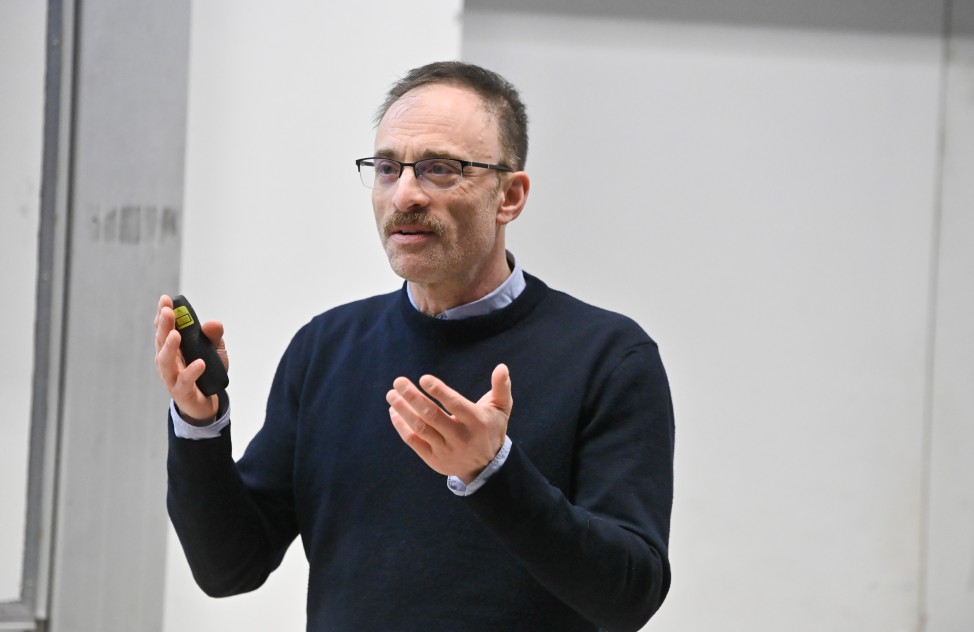
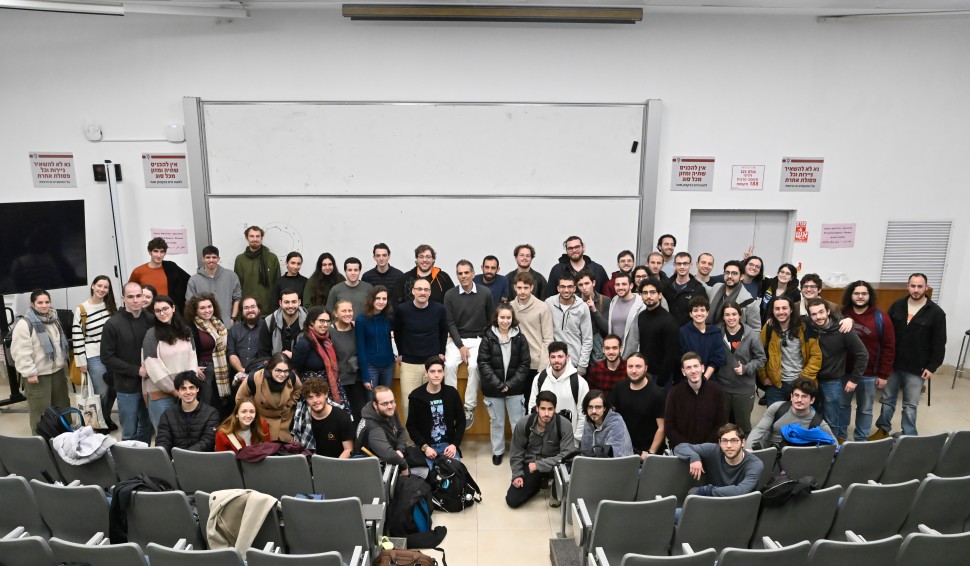
At the end of January, astrophysicist Sheperd Doeleman, an inventor, founder, and director of the Event Horizon Telescope (EHT), and the researcher who led the first imaging of a black hole, visited the Technion as a distinguished lecturer of the Lewiner Institute of Theoretical Physics, and delivered a lecture to students in the Faculty of Physics.
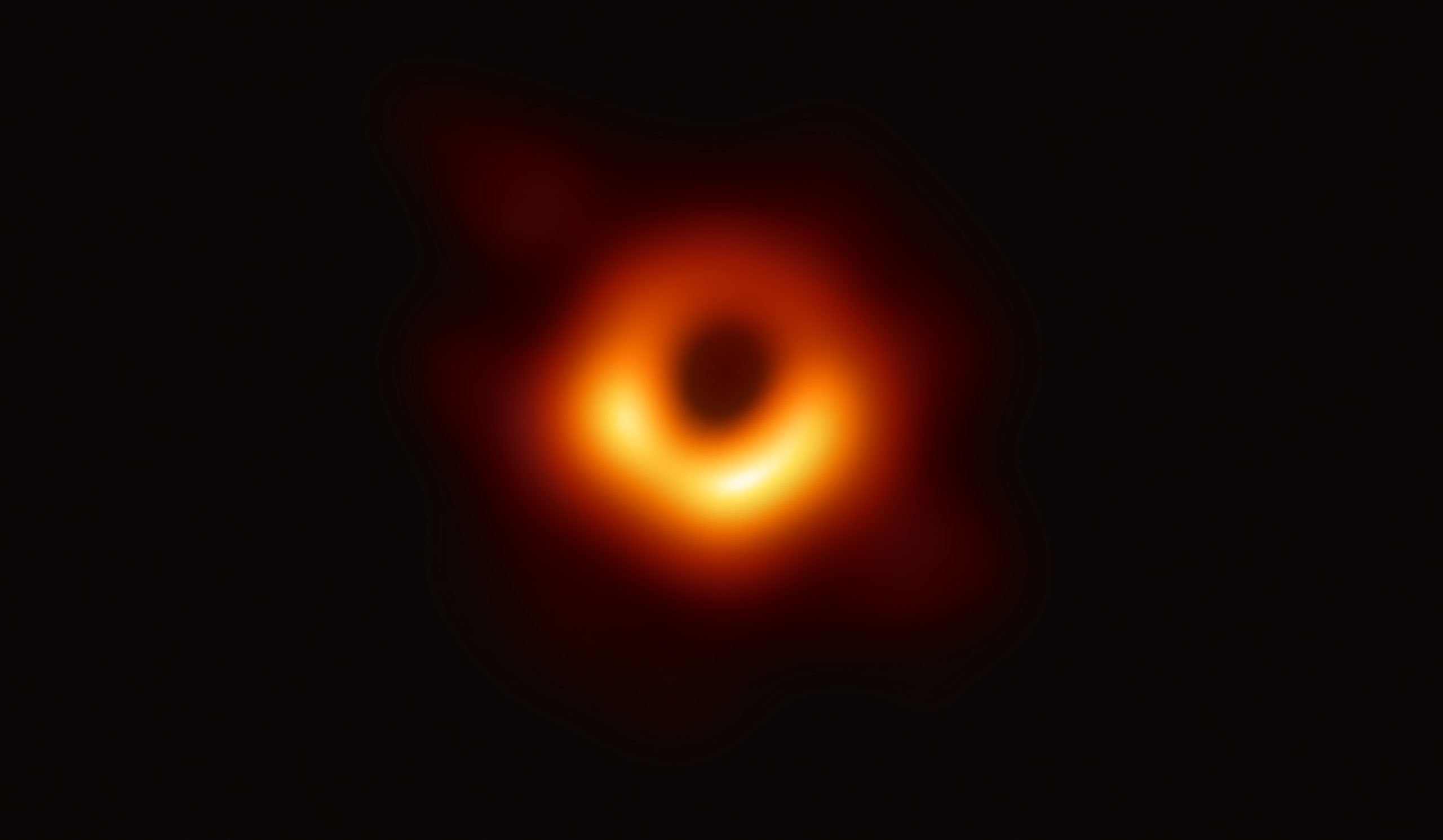
Doeleman, a senior research fellow at Harvard University, is the founder and director of the Event Horizon Telescope project, which in April 2019 published the first image of a black hole. This was not a photograph in the conventional sense, but an image created by combining signals collected in 2017 by dozens of radio telescopes and processed over two years on supercomputers into a single image. The historic image documents the black hole at the center of the galaxy M87, located about 55 million light-years from Earth, and later also the black hole at the center of the Milky Way. Although the black hole in M87 is roughly a thousand times larger and more massive than the one at the center of our galaxy, their apparent angular size in the sky is similar. The achievement led to six papers published in a special issue of The Astrophysical Journal Letters.
The existence of black holes was inferred from the general theory of relativity published by Prof. Albert Einstein in 1915. Based on this theory, Einstein predicted that sufficiently strong gravity would not only affect massive objects but would also curve space itself, so that even light rays would be influenced, deflected from their straight paths. Solutions to the equations of general relativity by the German physicist Karl Schwarzschild in 1917 predicted extremely gravity-intense objects that close space-time around themselves to the extent that they confine light. These objects later became known as “black holes.”
In his lecture at the Technion, Doeleman explained that the idea of imaging a black hole was conceived about twenty years ago. “When we began thinking about how to realize this idea, we understood that ‘ordinary’ telescopes – that is, optical ones – are very limited in angular resolution. We therefore needed to harness radio telescopes from all over the globe, which can detect radio and millimeter waves emitted from the environment around a black hole. In this way, we created an array that collects data from dozens of telescope facilities around the world, using atomic clocks to ensure simultaneous observations at the different sites. The data arriving from these centers are synchronized and processed using supercomputers to reconstruct the observed objects.”
Over the years, the international research group has grown and, according to Doeleman, is now “a multidisciplinary, cross-border group, driven by a belief in the importance of our scientific vision. Fortunately, our findings resonated widely in the media, and I believe there are several reasons for this. One is that black holes represent the unknown, and we managed to image that unknown. Another reason is that the imaging of the black hole was carried out from all over the Earth, which is a great source of pride for everyone who lives on this planet.”
The process of image reconstruction from dozens of telescopes is far from trivial. Since the researchers had no prior knowledge of what the image would look like, and to avoid groupthink, the international image-processing team was divided into four completely independent groups that did not communicate with one another during the project. “We didn’t want someone who heard from someone else, ‘I saw such and such,’ to automatically think they saw the same thing. To strengthen the reliability of the results, we wanted to be sure that our findings emerged from teams working independently. Moreover, we repeated our observations over several consecutive days to ensure that what we were seeing was indeed what we thought we were seeing.”
The first viewing of the black hole images, Doeleman recounts, was a true celebration. “We saw the black hole exactly as predicted by relativity, with a shadow at the center, since no light can escape from the black hole itself, and a bright ring in the ‘correct’ location. We are now working on new missions, including imaging additional black holes, and on the major task of producing a video of a black hole. I believe and hope that within five years we will be able to present to the public, for the first time, a video of a black hole.”