


The Reality Is Virtual, the Engineering Is Real
Two new VR labs provide Technion students with an effective learning experience
Equations, diagrams, and virtual reality: the Technion’s Wolfson Faculty of Chemical Engineering is developing new ways to teach and illustrate complex scientific processes.
Two teaching labs, one using virtual reality (VR) and the other augmented reality (AR), are already integrated into the curriculum. Building on this advanced infrastructure, the lab teams are developing research projects on molecular transition states and, in collaboration with the Technion’s Department of Humanities and Arts, creating an environment for practicing public speaking in English before a virtual audience.
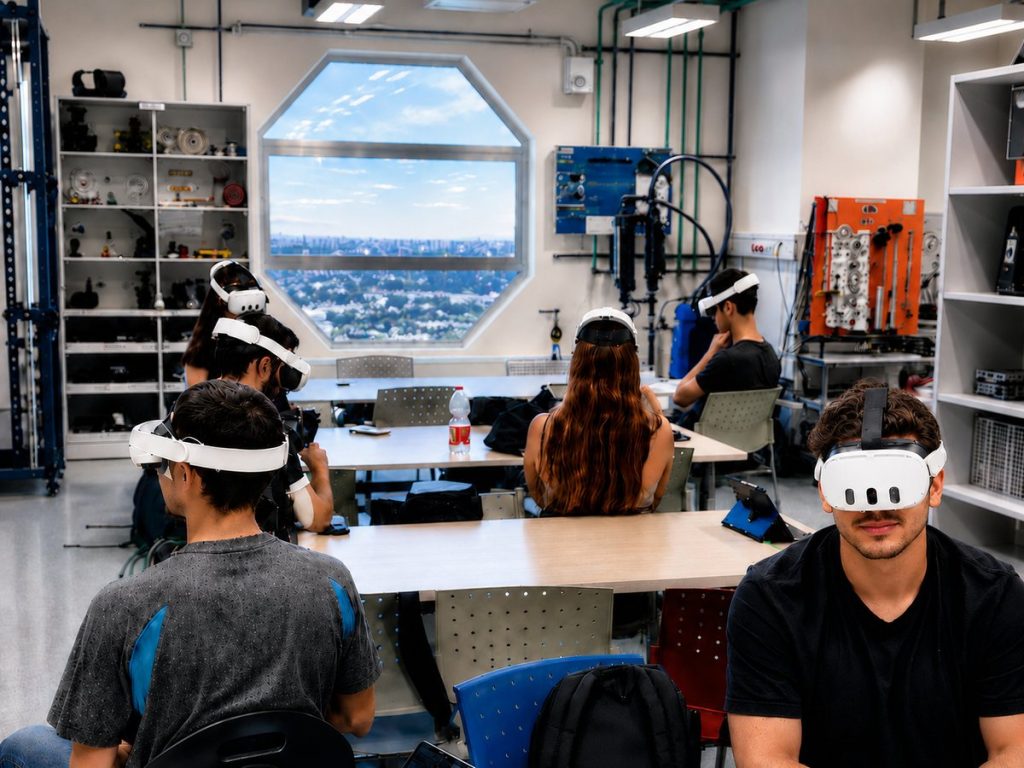
The initiative is led by Associate Professor Alon Grinberg Dana, with Yulia Pavlov leading project development. To integrate the technology into teaching, a classroom equipped with 12 VR headsets has been established, allowing students to experience the new learning environments as part of their chemical engineering training.


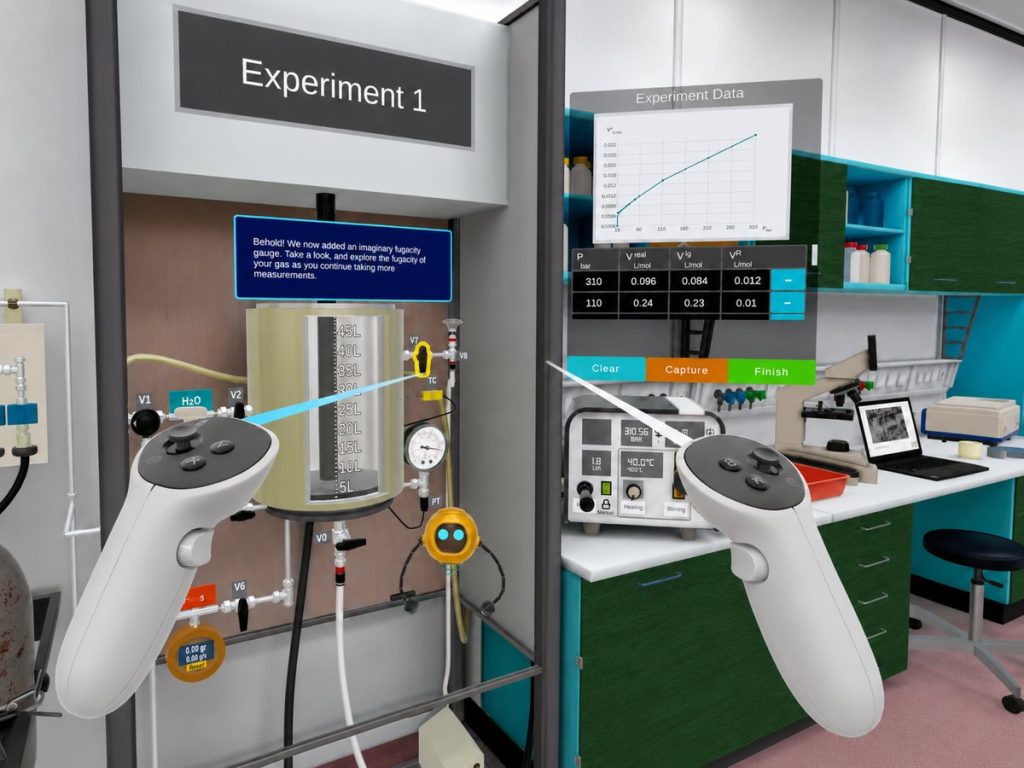
In Prof. Grinberg Dana’s Thermodynamics II course, students take part in a fully virtual laboratory. The technology adds a visual and spatial dimension to learning and expands the ways course material can be presented, with particular emphasis on abstract concepts, enriching the classroom experience.
The second project, based on augmented reality, operates in the Faculty’s enzymatic reactor laboratory. Displaying three-dimensional models within the real world helps students learn about the enzymatic activity of proteins and understand physical phenomena such as polarized light and its interaction with chemicals. Bringing science to life through interactive, immersive experiences helps students gain a deeper understanding of complex concepts through active learning. Alongside developing and operating these environments, the lab teams are assessing the technology’s contribution to student achievement, evaluating VR’s effectiveness as a teaching tool.From teaching to research, the team is also developing innovative approaches to chemical research in an augmented reality environment. At first glance, this seems contradictory: how can researchers discover something new about nature within an artificial environment that shows them only what it was programmed to display?
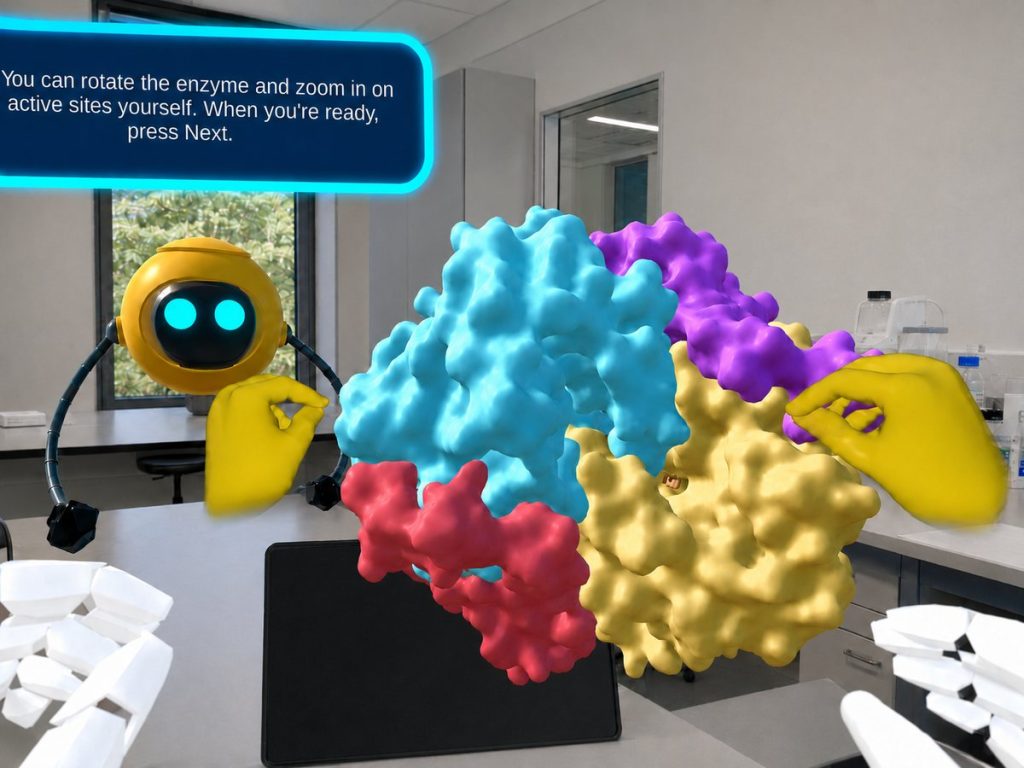
The team uses neural networks trained on numerous chemical species and on different spatial orientations of the species involved in the chemical reaction under investigation. Once the network has been trained, researchers can immediately manipulate the reacting molecules in three-dimensional space. This allows them to explore complex reactions interactively and intuitively, and to identify transition states to understand how reactions occur and at what rate. The project, currently under development, will extend the use of virtual reality from learning environments to the investigation of molecular processes.
The new teaching laboratories were established in collaboration with Boeing, the Sussman Family Foundation, the Stewart and Lynda Resnick Sustainability Center for Catalysis, and the Office of the Technion’s Senior Executive Vice President.
To watch a video showing the lab’s activities (no audio), click here.


