


Technion Researchers Win Prestigious EU "Proof of Concept" Grants
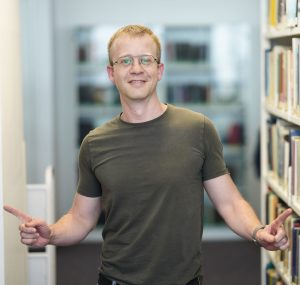
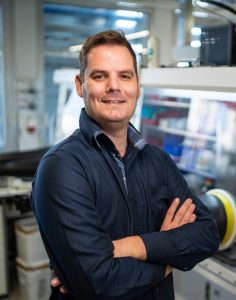
Technion researchers Prof. Moran Bercovici, Prof. Graham de Ruiter, and Prof. Michael Krueger have been awarded ERC Proof of Concept (ERCPoC) grants by the European Research Council (ERC). These prestigious grants support the translation of frontier research into practical applications and commercial opportunities, including the creation of startup companies. The grants are awarded exclusively to researchers who have previously received ERC funding.
Prof. Moran Bercovici from the Faculty of Mechanical Engineering received the grant for developing a Progressive Lens Generator, a compact device for the rapid and automated production of high-quality progressive eyeglass lenses. The technology builds on an ERC-funded concept for creating precise optical surfaces without molds, grinding, or polishing. The project will enable customized premium lenses to be produced with minimal infrastructure, low energy consumption, and no material waste. If successful, the technology could enable decentralized lens manufacturing and transform one of the most valuable segments of the ophthalmic lens market.
Prof. Graham de Ruiter from the Schulich Faculty of Chemistry received the grant for IRONMED, a project aimed at replacing palladium, a rare and costly metal widely used in pharmaceutical manufacturing, with iron, an abundant and sustainable alternative. Building on discoveries from his ERC Consolidator Grant FENOMETAL, the project will adapt a family of iron catalysts to drug-relevant chemical reactions and benchmark their performance against current palladium-based methods. Working with the Technion Technology Transfer Office (T³) and industrial partners, the team will evaluate scalability and commercial potential. The goal is to advance fundamental breakthroughs in earth-abundant metal catalysis toward practical technologies that could lower manufacturing costs, reduce environmental impact, and improve access to advanced medicines.
Prof. Michael Krueger from the Faculty of Physics and the Solid State Institute received the grant for developing a novel semiconductor diagnostic platform based on electron microscopy. The project, called SEMI-PULSER, combines pulsed scanning electron microscopy with active semiconductor device operation, enabling the direct observation of nanoscale electronic dynamics in functioning circuits in real time. This unique approach could provide unprecedented insight into the processes that determine chip performance and reliability, supporting faster failure analysis, more efficient manufacturing, and the development of next-generation semiconductor technologies. The platform has the potential to become a valuable tool for both academic research and the semiconductor industry.

In this ERC funding round, the European Commission will award Proof of Concept grants to selected projects across Europe, helping researchers bridge the gap between scientific discovery and real-world impact. Each grant provides funding to explore the commercial and societal potential of results generated through previous ERC-supported research.
