


Technion Researcher Develops Innovative Metamaterials Model – Now Wins Partnership in a $7.5 Million Grant for Its Application
The discovery has potential applications in a wide range of fields, including acoustic cloaking and detection, medical imaging, and underwater communications
Prof. Gal Shmuel from the Technion’s Faculty of Mechanical Engineering is part of a research team that recently won a $7.5 million grant from the U.S. Department of Defense (DoD), led by Prof. Andrea Alù of the City University of New York.
The Multidisciplinary University Research Initiative (MURI) program is a highly competitive DoD grant program designed to support interdisciplinary teams from multiple universities in conducting groundbreaking basic research that contributes to U.S. national security.
The grant will fund the development of a theoretical discovery made by Prof. Shmuel in 2020, in collaboration with Dr. Pernas-Salomón, who was then a postdoctoral fellow under his supervision. This research, supported by the Israel Science Foundation (ISF), was published in the leading mechanics journal Journal of the Mechanics and Physics of Solids, and marked a breakthrough in the field of metamaterials – engineered materials with properties not found in nature.
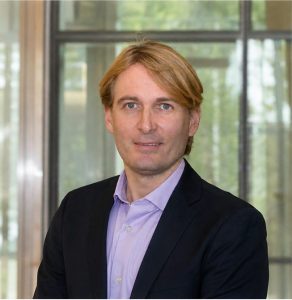
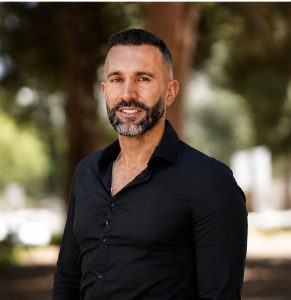
In their paper, the two developed a theory for determining the effective dynamic behavior of electromechanical composite materials – mixtures of materials whose mechanical and electrical responses are coupled, meaning each depends on the other. According to their theory, by designing such materials in a specific way, the momentum of the composite can be made dependent on the electric field – a dependency expressed in a unique property that Prof. Shmuel termed the electro-momentum coupling.
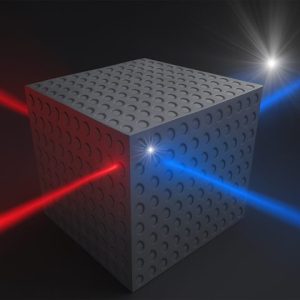
The significance of this coupling stems from its role in the balance of momentum in time and space, which is the fundamental physical principle governing the motion of a body and the flow of energy. The electro-momentum coupling designed by the researchers thus offers a controllable degree of freedom for guiding, sensing, and manipulating energy. The coupling has potential applications in a wide range of fields, including acoustic cloaking and detection, medical imaging, and underwater communications.
Following Prof. Shmuel’s theoretical breakthrough, the DoD issued a 2024 call for research aimed at actually creating materials with electro-momentum coupling –
capable of sensing and controlling elastic and acoustic waves via an external electric field.
Prof. Andrea Alù – one of the world’s leading researchers in metamaterials – contacted Prof. Shmuel to jointly draft a research proposal, bringing together five additional researchers from the U.S. and another from Switzerland. The Department of Defense has now announced that the winning proposal is the one submitted by this team, which includes Prof. Shmuel as an international collaborator. In addition, Prof. Shmuel has received a direct grant from the U.S. Army Research Office to support the theoretical and computational component he leads within the broader collaboration.

