

Safe Wax Instead of Pesticides
A pioneering technology for coating plants with a thin wax layer is expected to dramatically reduce the agricultural use of pesticides
According to UN reports, plant diseases destroy about one-third of the world’s agricultural yield, causing an estimated annual economic loss exceeding USD 70 billion. Findings recently published in Small present SafeWax – a new technology developed at the Technion – Israel Institute of Technology. Funded by an EU EIC Pathfinder grant, SafeWax could reduce crop disease impact and lower pesticide use by more than 50%.
Coordinated by Prof. Boaz Pokroy from the Faculty of Materials Science and Engineering, the SafeWax project collaborated with another Technion laboratory led by Prof. Ester Segal from the Faculty of Biotechnology and Food Engineering, along with four international partner organizations – BASF (Germany), the University of Bologna (Italy), the French Wine and Vine Institute (France), and Eurofins (France).
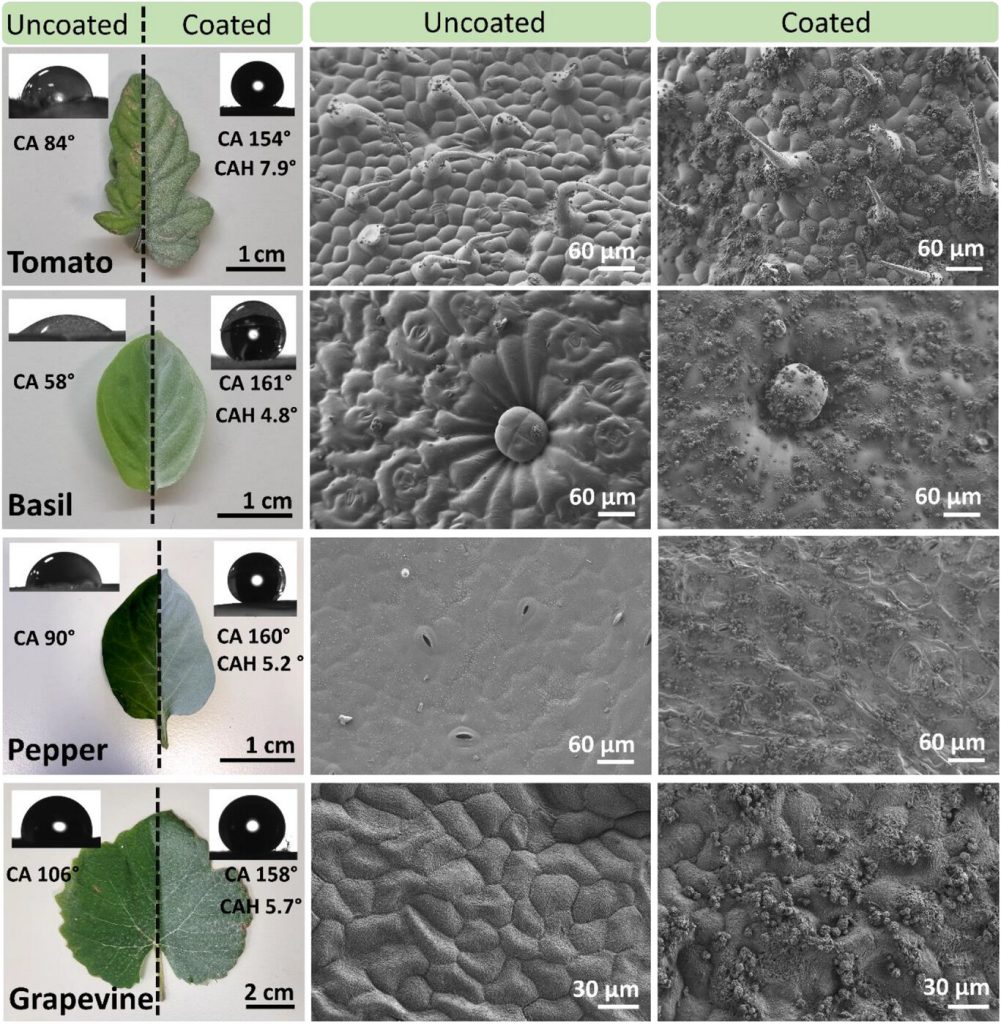
Traditional methods of combating plant diseases rely heavily on chemical pesticides, which seep into the soil and endanger both the environment and human health. Moreover, many pesticides have lost their effectiveness due to bacterial resistance. The SafeWax technology offers a promising, sustainable alternative to pesticide use. Through a simple spray application, it creates a thin, uniform, biodegradable layer on the plant surface of superhydrophobic (water-repellent) material that passively prevents fungal spores from germinating, thereby inhibiting disease development. The inspiration for this innovative technology is the cuticle – a natural waxy layer that covers plants such as lotus leaves and broccoli, enabling them to self-clean by repelling bacteria and other contaminants.
In the experiments described in the article published in Small, first authored by Dr. Iryna Polishchuk from the Department of Materials Science and Engineering, the new technology was tested on tomatoes, peppers, grapevines, and bamboo plants, and proved both feasible and effective in protecting these plants without affecting essential physiological processes such as photosynthesis. Furthermore, the unique coating filters intense UV radiation that damages crops, shielding the plant from heat and UV exposure while slowing dehydration. Moreover, the coating is transparent to visible light necessary for photosynthesis. The coating material is based on biodegradable fatty acids that can be derived from food waste, thus also helping to reduce global food waste.
The researchers estimate that the SafeWax technology could reduce the use of chemical pesticides by at least 50%. According to Prof. Pokroy, “This is an ecological, efficient, and multifunctional alternative for crop protection, especially in view of challenges that climate change poses to modern agriculture. Beyond providing passive defense against diseases, it enhances the environmental resilience of plants and reduces the ecological footprint of crop cultivation.”
Read the full article – here