


Medicine Without Drugs: An Israeli Breakthrough in Nanomedicine
A research team from the Technion’s Wolfson Faculty of Chemical Engineering has developed an original technology for treating cancer using nanoparticles that carry no drugs at all, and has demonstrated its effectiveness against particularly dangerous and stubborn tumors
An innovative technology developed by researchers at the Technion-Israel Institute of Technology could lead to a fundamental shift in the cancer treatment paradigm. They created advanced nanoparticles that successfully halt aggressive triple-negative breast cancer tumors – without releasing a single drug molecule. The particles operate through a sophisticated interaction with the immune system, changing the rules of the game by delivering a biological message to the tumor microenvironment and to immune system cells.
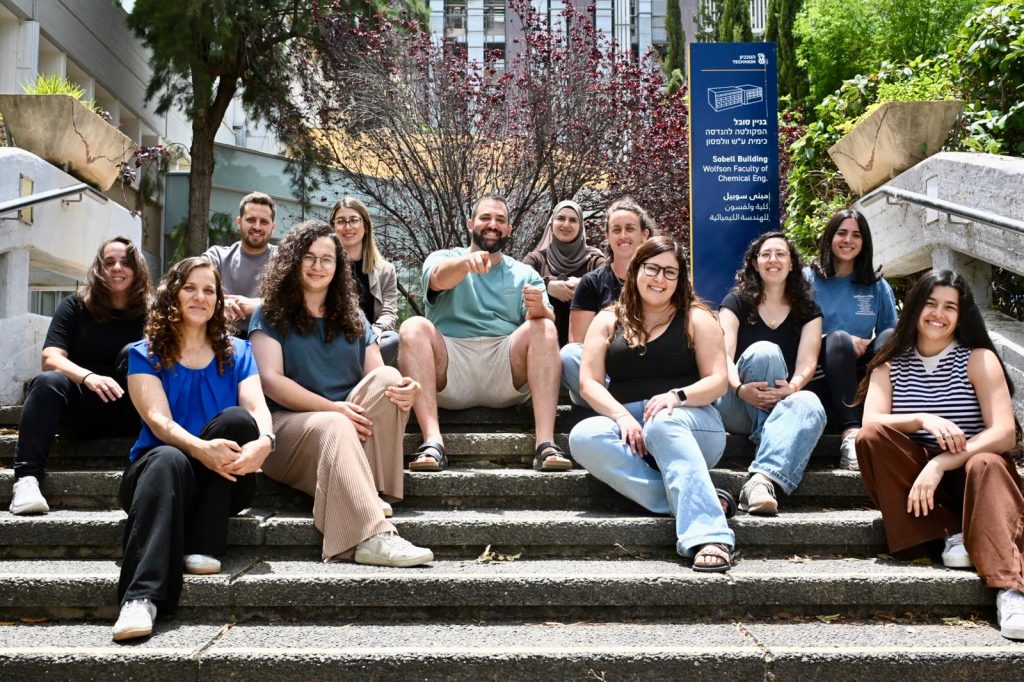
Published in ACS Nano, the study was led by Ph.D. candidate Ofri Vizenblit, with the assistance of Ph.D. candidate Rawan Mhajne, under the supervision of Assistant Professor Assaf Zinger, head of the Bioinspired Nano Engineering and Translational Therapeutics Laboratory in the Wolfson Faculty of Chemical Engineering (www.TheZingerLab.com).

Triple-negative breast cancer is considered one of the most aggressive and difficult cancers to treat. It is characterized by rapid progression and high resistance to conventional therapies. The new paradigm change presented by Technion researchers is based on a revolutionary approach: instead of attacking the cancer cells themselves, it targets the environment in which they exist and develop.
Cancer cells employ a range of “strategies” to evade the immune system, which is supposed to identify and destroy them. One of the central strategies is recruiting immune cells to their side. In such cases, white blood cells known as macrophages –whose role is to protect the body – are “hijacked” by the tumor, support its growth, and prevent the immune system from attacking it effectively.
The nanoparticles developed by the Technion researchers, called MPsomes, act as a biological decoy. They compete with immune cells for binding sites in the tumor microenvironment and block the access of harmful cells to the tumor. The particles were tested in cell cultures and in preclinical mouse models of triple-negative breast cancer. The experimental results showed that the particles accumulate in exceptionally high concentrations around the tumor and inhibit its growth with effectiveness comparable to that of existing treatments.
An additional advantage highlighted by the researchers is manufacturability: the process developed at the Technion enables the production of approximately 20 ml of nanoparticles per minute (about 1.2 liters per hour). Moreover, the particle base is composed largely of materials that are recognized by the FDA as Generally Recognized as Safe (GRAS), a factor that may facilitate the transition to clinical trials and ultimately to medical use.
The results were particularly surprising: in pre-clinical experiments, the particles not only accumulated in the tumor but also inhibited its growth like the effects of advanced immunotherapies currently approved for clinical use, all without drugs, without chemotherapy, and without antibodies.
“This is a conceptual shift,” the researchers explained. “The therapeutic efficacy does not stem from the release of an active substance, but from the biological information encoded on the surface of the nanoparticle.” In other words, it is the interaction with the immune system itself that triggers the therapeutic effect.
Beyond inhibiting tumor growth, the researchers showed that the particles alter the composition of immune cells in the tumor environment: fewer cells that promote tumor development and more cells that attack it. In addition, no signs of toxicity were observed in vital organs.
The research is still at the preclinical stage and has so far been tested only in mouse models. Nevertheless, the researchers hope that in the future it will be possible to advance to clinical trials in humans and perhaps open the door to a new generation of cancer therapies, ones that do not rely on drugs at all.
Assistant Professor Assaf Zinger earned his bachelor’s degree from the Technion Faculty of Biomedical Engineering and his Ph.D. from the Wolfson Faculty of Chemical Engineering. He returned to the Wolfson Faculty as a faculty member in October 2021 after completing a postdoctoral fellowship at Houston Methodist Hospital in Texas. Ofri Vizenblit, also a graduate of the Technion Faculty of Biomedical Engineering, joined Zinger’s laboratory immediately after completing her bachelor’s degree, and the current paper is part of her doctoral research. “Although we focused here on a specific type of cancer,” concluded Dr. Zinger, “this is a paradigmatic breakthrough that can lead to the development of new therapeutic platforms that are more effective and safer. I sincerely hope we will find the path to bring this invention to the clinic.”
The research was supported by the Israel Cancer Research Fund (ICRF), the Israel Science Foundation (ISF), the European Union (ERC Starting Grant), the Ministry of Innovation, Science and Technology (MOST), the Israel Cancer Association, the Russell Berrie Nanotechnology Institute at the Technion, and the Alon and Seiden Fellowships in nanotechnology and optoelectronics.
Link to the article: https://pubs.acs.org/doi/10.1021/acsnano.5c18774Bottom of Form

