

Heat Waves? Cold Waves!
An innovative technology developed by Assistant Professor Ofer Berman of the Technion and researchers at Cornell Tech offers passive air cooling without electricity and without pollution
Asst. Prof. Ofer Berman, a new faculty member in the Faculty of Architecture and Town Planning at the Technion-Israel Institute of Technology, recently presented a research paper at the SCF ’25 conference, a “new old” approach to cooling and air conditioning, evaporative cooling, along with the manufacturing process required for its large-scale implementation.
Cooling and air-conditioning systems have become increasingly essential in the face of climate change and intensifying heat waves. Yet their operation places a heavy burden on power grids and contributes to air pollution. Moreover, while these systems cool homes, factories, and other enclosed spaces, they release hot air back into the environment.

Asst. Prof. Berman is a graduate of the Industrial Design program in the Faculty of Architecture and Town Planning at the Technion. After completing his PhD, he pursued a postdoctoral fellowship at the Joan and Irwin Jacobs Technion–Cornell Institute at Cornell Tech in the Matter of Tech Lab, headed by Dr. Thijs Roumen. He recently returned to the Technion as a faculty member in the Industrial Design program, where he completed his doctorate under the supervision of the program head, Prof. Ezri Tarazi.
During his postdoctoral research, Asst. Prof. Berman was advised by Dr. Thijs Roumen, assistant professor at Cornell Tech and director of the Matter of Tech Lab, to develop CeraPiper, an innovative method for the rapid and low-cost production of porous ceramic pipes that cool their surroundings through the evaporation of water within them. The team also included Ethan Seiz, a Bowers Undergraduate Research Experience intern, who developed the computer-aided manufacturing software behind the system. The manufacturing process offers a high degree of control over ceramic thickness, pore size, and pore distribution.

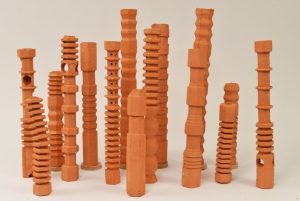
CeraPiper is a fully integrated manufacturing process in which ceramic pipes are produced using dedicated software developed by the research team and a smart extrusion machine. The method enables the creation of pipes in a wide range of sizes and shapes within seconds. It combines high production speed, unattainable with 3D printing, with the flexibility and modularity of form and scale that conventional mold-based mass production cannot provide.
The porous ceramic structure allows water inside the pipes to evaporate and efficiently cool the surrounding environment, creating what can be described as passive air conditioning. The pipes can be bent and further shaped immediately after exiting the extrusion machine, while they are still soft and flexible. Since the raw material is ceramic, it can be reintroduced into the machine and reshaped in the event of a production error or material wear.
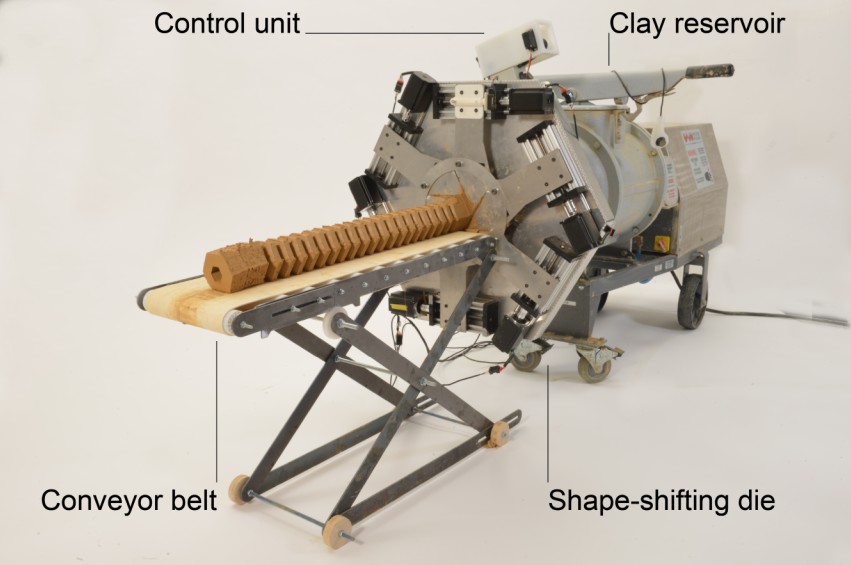
The CeraPiper process was recently presented at the SCF ’25 conference of the ACM (Association for Computing Machinery).
About Cornell Tech
Cornell Tech is Cornell University’s state-of-the-art campus in New York City that develops leaders and technologies for the AI era through foundational and applied research, graduate education, and new ventures. Located on Roosevelt Island, the growing campus was founded in partnership with the Technion-Israel Institute of Technology and in close collaboration with the NYC Economic Development Corporation after Cornell won a worldwide competition initiated by Mayor Michael R. Bloomberg’s administration to create an applied sciences campus in New York City. More than 1,000 Cornell students are now educated annually on the campus, including 700 in Cornell Tech programs. Since opening in 2012, over 134 new companies have spun out from startup programs at Cornell Tech, and 95 percent of them are based in New York City. Cornell Tech continues to have a transformative economic impact on the region’s tech sector.
The research was supported by the Bowers Undergraduate Research Experience, AOL, and the Cornell University Foundation. Asst. Prof. Berman’s postdoctoral fellowship was supported by the Sidney and Vivian Konigsberg Foundation and the Joan and Irwin Jacobs Technion–Cornell Institute.
To read the full article, click here