


A Vote of Confidence in Scientific Excellence
Technion Researchers Dr. Nir Hananya and Dr. Haggai Maron Awarded ERC Starting Grants
Two Technion faculty members, Dr. Nir Hananya and Dr. Haggai Maron, have been awarded prestigious European Research Council (ERC) Starting Grants. The ERC Starting Grant supports outstanding early-career researchers who are establishing their own independent research teams or programs. The scheme operates on a strictly bottom-up basis, funding ambitious, high-risk/high-gain frontier research across all fields of science, engineering, medicine, and the humanities, with scientific excellence as the sole evaluation criterion.
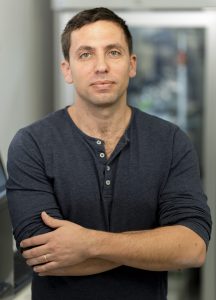
Dr. Nir Hananya, of the Schulich Faculty of Chemistry, received the grant for his research in chromatin biology- the study of how DNA is packaged within cells and how this packaging influences gene activity and cell identity. Genes are switched on or off through chemical modifications added to the proteins around which DNA is wrapped. However, our understanding of how these modifications regulate gene activity remains limited. Dr. Hananya’s project will introduce “designer chromatin” – laboratory-produced chromatin carrying precisely defined chemical modifications – directly into living cells. This approach will create a controlled starting point for studying the effects of these modifications in their natural cellular environment. Using this system, his laboratory will investigate how chemical modifications to chromatin proteins shape gene activity and how these modifications are faithfully maintained as cells divide. The findings are expected to reveal fundamental principles of gene regulation, with important implications for understanding diseases such as cancer, in which these regulatory mechanisms are often disrupted.
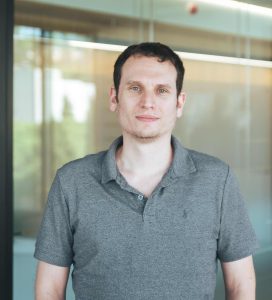
Dr. Haggai Maron, of the Andrew and Erna Viterbi Faculty of Electrical and Computer Engineering, received the grant for his research in deep learning, specifically the emerging field of weight-space learning. Today, neural networks form the foundation of most artificial intelligence systems and are typically viewed as tools for processing data such as images, text, or speech. Dr. Maron’s project takes a different perspective by treating trained neural networks themselves- their weights, parameters, and other outputs they produce (known as neural artifacts)—as a new type of data that can be analyzed, edited, and learned from.
The project will develop both theoretical foundations and practical models capable of “reading” other neural networks, analyzing what they have learned, improving and adapting them efficiently, and even generating entirely new networks. His laboratory will investigate how to process weight space while respecting the unique structure and symmetries of neural networks. The research is expected to establish fundamental principles for this emerging field, with practical implications for making AI models more accessible, improving and controlling them more effectively, and deepening our understanding of how they operate.
To view the photos, click here

