


New Technion Record: 325 New PhD Graduates
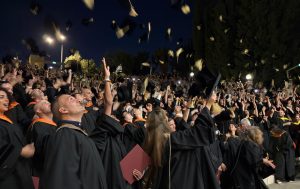
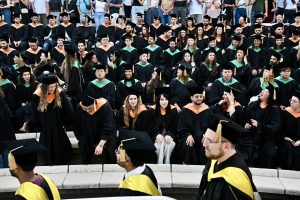
At a festive ceremony held last Wednesday, 325 graduates who completed their doctoral studies at the Technion were awarded Doctor of Philosophy (PhD) degrees – a record number in the institution’s history. Women comprise 44% of the new PhD graduates, while 20% are international students. The youngest graduate is 28 years old, and the oldest is 77.
The ceremony was attended by family members, faculty members, and advisors who accompanied the graduates throughout their years of research, as well as deans and members of the Technion administration. Degrees were awarded to graduates from a broad range of research fields, reflecting the breadth of scientific and technological activity at the Technion: from artificial intelligence, data science and quantum physics, through tissue engineering, cancer and heart disease, to energy, transportation, climate and architecture. Research topics pursued by some of the graduates who participated in the ceremony included cultivated meat, manufacturing lenses in space, the effects of intermittent fasting, robotic knitting, the climate resilience of transportation systems, and the development of new materials and energy technologies.
The ceremony, held in the presence of Technion President Prof. Uri Sivan and Dean of the Irwin and Joan Jacobs Graduate School Prof. Uri Peskin, was hosted by Prof. Alon Grinberg Dana of the Wolfson Faculty of Chemical Engineering.
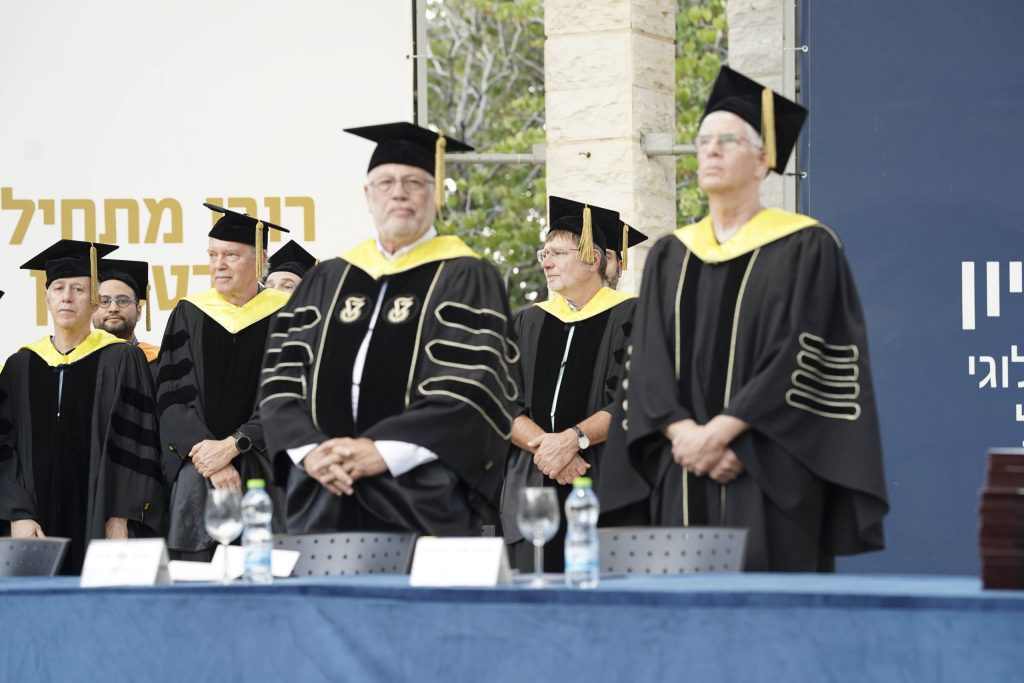
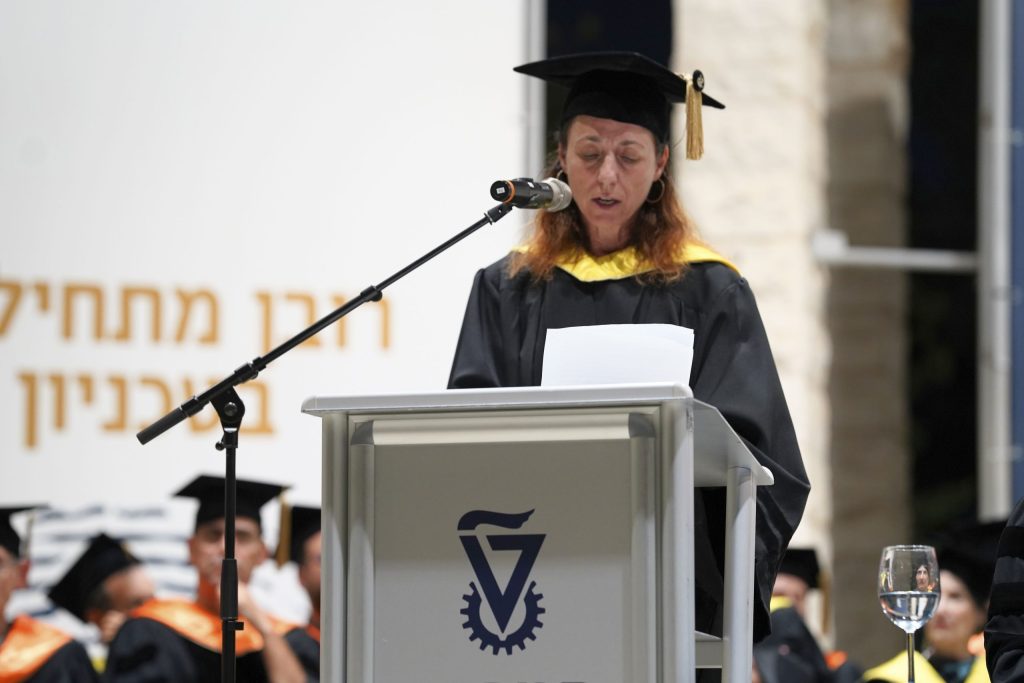
“A doctoral degree is not merely an academic achievement,” said Technion President Prof. Uri Sivan at the ceremony. “It is also a testament to the ability to cope with uncertainty, to ask questions that no one has yet been able to answer, and to keep going even when the path ahead is unclear. In a world where technology is advancing at a dizzying pace, our greatest challenge is to cultivate human intelligence – the intelligence that enables us to use knowledge and technology responsibly and for the benefit of society.”
Dean of the Graduate School Prof. Uri Peskin told the new PhD graduates: “The journey toward a doctorate is inherently filled with tension and surprises, and it is long and winding. For you, the graduates of 2025–2026, that journey was especially grueling. It seemed that nothing was predictable or could be taken for granted. Some were directly and tangibly affected by the war, some were called up for reserve duty, some remained at home to care for their families, and some struggled to function. But you did not give up. And we did not lower our expectations of you, but neither did we give up on you. I believe that with the training you have received, together with the enthusiasm and curiosity inherent in every one of you, you will be able to lead and shape the developments to come.”
Speaking on behalf of the graduates was Dr. Yael Erez, currently a lecturer at the Henry and Marilyn Taub Faculty of Computer Science and a faculty member at Braude College of Engineering. She completed all of her degrees at the Technion: bachelor’s and master’s degrees in Electrical and Computer Engineering, an MBA, and a PhD at the Faculty of Education in Science and Technology under the supervision of Prof. Orit Hazzan.
“As part of our research, we studied and carried out a genuine revolution in the largest course at the Technion, Introduction to Computer Science, which is taken by more than a thousand students each year,” she said. “To make changes and lead revolutions, belief alone is not enough. You need a place that makes them possible. The Technion, where innovation, excellence and leadership are core values, is undoubtedly the place to lead revolutions.”
Dr. Yael Rosenblum, who also completed all of her degrees at the Technion, earned her PhD at the Faculty of Education in Science and Technology under the supervision of Prof. Ayelet Baram-Tsabari.
“My doctoral research examines whether and how science education helps adults engage thoughtfully with science in everyday life,” she said. “A significant part of this journey took place while I was simultaneously serving in the reserves as a platoon commander in a transport company. I made the revisions to my first paper, which examines the relationship between science education and scientific knowledge and the ability to deal with scientific misinformation when making decisions, during reserve duty, using pen and paper. I wrote my second paper, which examines the relationship between science education, epistemic dependence and decision-making on scientific issues in everyday life, during a period of reserve duty in Lebanon.
“I don’t think I would have been able to complete this journey without the support of the Technion, the faculty and my advisor. The embrace, understanding, flexibility, patience, trust, and the feeling that there were people who saw both the research and the complex reality faced by reservists enabled me to keep going, even during periods when combining a PhD with reserve duty felt almost impossible.”
Photo credit: Rami Shlush, Technion Spokesperson’s Office
For a video from the conclusion of the ceremony, in which the new PhD graduates throw their mortarboards in the air, click here.

