

Laying the Groundwork for the AI Era Ahead
As artificial intelligence rapidly transforms the world, it poses a slew of new challenges. The Technion is meeting this seismic change head-on, reimagining pedagogic and research frameworks while investing in advanced computing infrastructure.
The impact of the current AI revolution is profound and affects every aspect of our lives. For Israel in general, and the Technion in particular, to remain at the forefront of global scientific and technological innovation, it is crucial to integrate and apply AI in the most efficient, suitable, and judicious manner possible. Recognizing that we are at a pivotal point in history, the Technion is immersed in preparations for a future dominated by AI.
Pedagogical Challenges
In an era where the answer to every question can be obtained instantly, and traditional human roles are being replaced by technology, universities must contend with profound challenges: which skills will be required by their graduates in the future? How and what should students learn? How can the benefits of AI be harnessed while mitigating its inherent risks?
Led by Prof. Danny Raz, Senior Vice President of the Technion and former Dean of the Henry and Marilyn Taub Faculty of Computer Science, the Technion is fully engaged in a proactive effort to address the many challenges posed by the AI revolution.
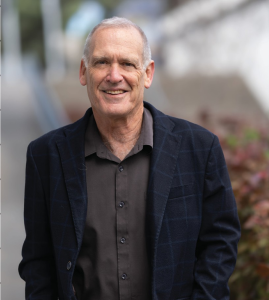
“We need to rethink the way we teach and how we evaluate assignments and tests. The idea is not to forbid the use of AI but, rather, to use it wisely. It’s like a candy drawer: it’s tempting to eat more than one candy, which is why it’s important to set guidelines,” says Prof. Raz. The Technion recently organized a seminar for all faculty deans, during which they discussed ways to address the AI challenge in the classroom. Moreover, a steering committee is being established to develop a long-term strategy for guiding lecturers on the integration and use of AI in academic courses. The Technion is also taking steps to facilitate access to advanced AI tools so that all members of the Technion community will be able to use sophisticated AI platforms that will upgrade the quality of their teaching and learning.
Prof. Raz stresses that the Technion must learn to be more agile and adapt to the dynamic tech environment through much faster decision-making and implementation. Indeed, new policies are being fast-tracked. In the upcoming academic year, the Technion will introduce mandatory AI literacy mini courses for all students, after testing pilot programs this past year. Introducing new standards of AI literacy reflects the understanding that this is a critical skill for all students, both during their studies and beyond. A pan-Technion AI literacy cluster is also being established, which will enable students to take additional courses and further refine their knowledge of AI applications. A special focus will be placed on using AI tools in an ethical manner.
The Technion’s Center for the Promotion of Learning and Teaching is leading efforts to develop new pedagogical approaches and academic guidelines for the use of AI on campus while training the university’s faculty accordingly.
Bolstering Research
Although the Technion is consistently ranked the #1 university in Israel and #1 in Europe in AI research according to the prestigious CSRanking, it isn’t resting on its laurels. In fact, the Technion is investing substantial resources to maintain its position as a global leader in this field. In addition to its leadership in researching and developing core AI technologies, an increasing share of the Technion’s overall research community is turning to AI tools to enhance and accelerate their work.
In practical terms, the growing reliance on AI for research across all disciplines means that the computing infrastructure must be capable of handling modern AI workloads, especially deep learning. Specifically, researchers need access to sufficient GPU (Graphics Processing Unit) servers, which can perform several orders of magnitude faster than traditional CPU (Central Processing Unit) servers.
Most cutting-edge AI research depends on GPU-based servers because of their extremely high throughput for parallel operations and their very high memory bandwidth. Prof. Mark Silberstein of the Viterbi Faculty of Electrical and Computer Engineering, who serves as Deputy Vice President for Computing and Information Systems at the Technion, points out that “the ‘big bang’ occurred in 2012 when it became clear that GPUs were very efficient for training neuron neural networks. By 2025, they became a necessity for training and using LLMs (Large Language Models).”
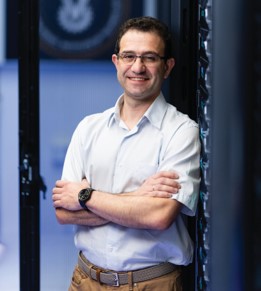
Since GPU servers have much higher compute density than CPUs and pack dramatically more compute capacity, fewer servers are needed. However, they demand a very different, more capable peripheral infrastructure, including electricity and cooling systems.
The Technion’s current high-performance computing capabilities are insufficient to meet the long-term needs of its research community. There are already more than 1,000 GPUs on the campus, but only a handful of them are provided by the Technion computing center as a public resource. Instead, the vast majority of these GPUs are purchased by researchers individually, leading to suboptimal utilization. There are ongoing efforts to ensure more efficient utilization, such as a shared 400-GPU cluster managed by the Faculty of Computer Science, but much more must be done by the Technion at the infrastructure level.
New Computing Infrastructure
Much of the solution lies in the new Martin and Grace Druan Rosman Performance Computer Data Center. Thanks to a generous donation by the Rosman family, the new building will house a state-of-the-art data center with advanced GPU servers, thereby enabling the university to substantially upgrade the scope and depth of AI-related research across all faculties on campus. Silberstein explains that since the building was originally designed prior to the AI era, the original plans only included CPU servers and, therefore, had to be modified to accommodate GPU servers. “This field is developing so fast – its growth is exponential! We must make decisions quickly and pragmatically, and constantly adapt to a changing world,” notes Prof. Silberstein.
One of the most significant challenges the Technion is facing in this context is the need for a highly skilled staff capable of running the Rosman Data Center in a manner that optimizes access and provides excellent service to the entire Technion community—students as well as faculty.
Additionally, the Technion also benefits from Israel’s National AI Program—a large-scale project spearheaded by the Israel Innovation Authority, with a budget of approximately NIS 1 billion over five years to foster long-term leadership in AI. The Initiative contributed 5,000 GPUs specifically for academic research, with subsidized access. Prof. Silberstein notes that the Technion is also considering various other options for increasing access to GPU-accelerated servers, including ‘outsourcing’ Technion servers to external data centers.
“The idea is to substantially increase access to GPU servers through a variety of solutions: a cluster in the new Rosman Center, clusters in individual faculties, through the National AI Initiative and also external data centers,” notes Prof. Silberstein.
Nobody can predict how the AI revolution will develop even five years from now. The Technion is poised to adapt to this new world and continue to lead the way both nationally and globally.
This article originally appeared in the Technion President’s Report 2026. The full report is available here.