


Beyond the Hype: Science, Technology and Innovation in Sustainable Protein Research
Technion conference brings together leading researchers and industry experts to advance sustainable food solutions for the future of people, health, and the planet
On June 18, 2026, the Technion hosted “Beyond the Hype: Science, Technology and Innovation in Sustainable Protein Research,” a conference focused on the scientific and technological challenges of developing sustainable proteins. Topics included food production in an era of increasing shortages of land, water, and energy; edible bioinks for 3D printing of cultured meat; improving crops; microorganism-based nutrition; and dairy alternatives, with emphasis on the challenges of taste, cost, and large-scale production.
Prof. Noam Adir, Technion executive vice president for research, said, “Beyond the Hype is an excellent title for this conference because it reminds us, as scientists, of our responsibility to bridge the gap between initial enthusiasm and our ability to translate research into practical technologies. We must develop real solutions that will benefit a growing global population, expected to reach 10 billion by 2050, and one of the greatest challenges is, of course, food. I’m especially pleased to see so many young students here who will undoubtedly lead future breakthroughs. My advice to them is: don’t believe us older scientists when we tell you that your ideas are impossible.”
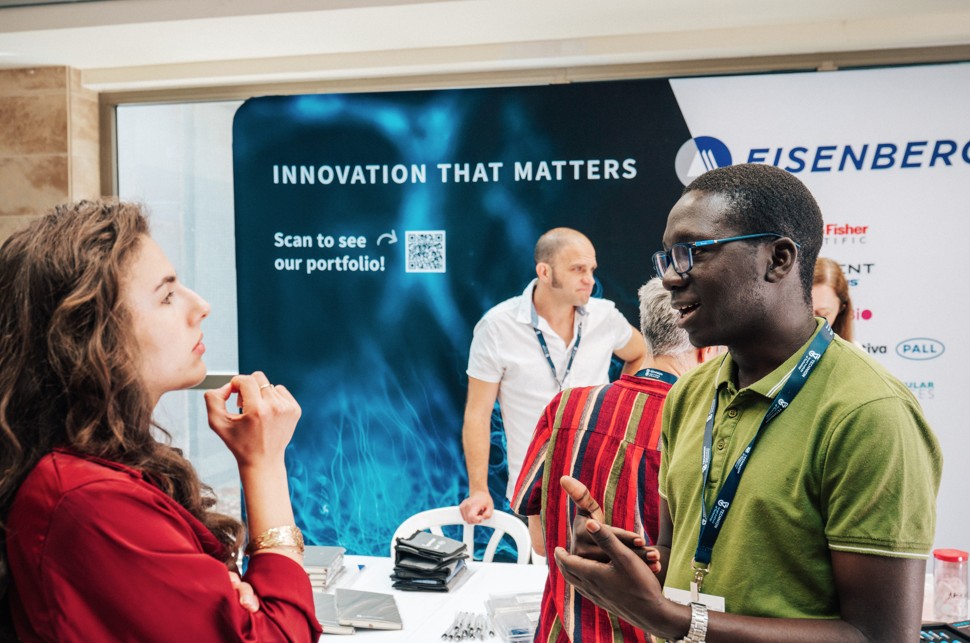
The conference was held at the Faculty of Biotechnology and Food Engineering. It was organized by the Esther and Herbert Hecht Sustainable Protein Research Center (HSPRC) and the Carasso FoodTech Innovation Center. The HSPRC, headed by Prof. Yoav D. Livney, was established to promote basic and applied science, multidisciplinary collaboration, excellent talent, a vibrant research community, and state-of-the-art infrastructure, to address the global need for resilient food systems, and to establish the Technion as a world leader in sustainable protein research. The Carasso FoodTech Innovation Center in the Faculty of Biotechnology and Food Engineering is a research facility led by Prof. Avi Shpigelman. It aims to provide the conditions, equipment, and support staff to facilitate FoodTech research and innovation for both the Technion research community and the food industry.
Prof. Livney explained the rationale behind the conference title: “We chose the name because we realized that the tremendous excitement surrounding alternative proteins has encountered the reality that solutions to major challenges take longer to materialize than many investors are willing to wait. Nevertheless, we remain committed to the research and innovation needed to address these global food challenges for the benefit of future generations and the future of this planet.”
Dean of the Faculty of Biotechnology and Food Engineering, Prof. Esty Segal, welcomed the participants, saying: “It is a great honor to host you at our faculty, which has always operated at the intersections of life sciences and engineering, food and health, fundamental research and real-world applications. Sustainable protein research requires deep scientific knowledge, engineering expertise, food science, advanced technological infrastructure, and collaboration with industry. I wish us all a productive and inspiring day in which we will not only discuss the future of food but actively shape it.”
The keynote lecture, “Beyond Photosynthesis,” was delivered online by Prof. Ellen Stechel of the University of Arizona after her flight was canceled because of the war with Iran. Opening her presentation, she noted that she had visited Israel many times. She said, “I admire the resilience of the Israeli people and their ability to advance education, science, and innovation under extremely challenging circumstances. Unfortunately, I could not join you in person this time.”
Her lecture focused on the limitations of natural photosynthesis, its relatively low energy efficiency, and the potential for artificial photocatalytic processes that could utilize solar energy far more efficiently for carbon fixation. The resulting organic molecules could be used as nutrients for fungi, potentially enabling food production for the world’s population while dramatically reducing land and water requirements compared with conventional agriculture.
The conference’s first session, “Cellular Agriculture and Bioengineering,” featured Prof. Oded Shoseyov of the Hebrew University on plant-based proteins for a sustainable future; Prof. Shulamit Levenberg of the Technion Faculty of Biomedical Engineering on engineering bioinks for 3D printing cultured steaks; and Prof. Dvir Harris of the Technion’s Schulich Faculty of Chemistry on harnessing microbial photosynthesis to improve agricultural yields.
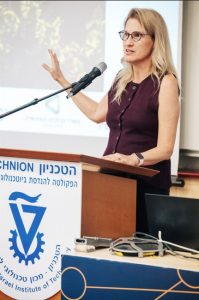
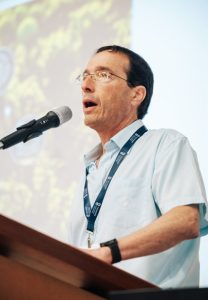
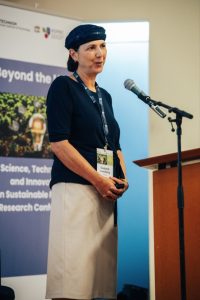
The second session, “Materials, Processing, and Food Structure,” included presentations by Prof. Eyal Zussman of the Technion Faculty of Mechanical Engineering on overcoming rheological and structural challenges in manufacturing protein scaffolds; Prof. Maya Davidovich-Pinhas of the Faculty of Biotechnology and Food Engineering on designing innovative biphasic soft materials for alternative food applications; and Prof. Luai Khoury of the Faculty of Materials Science and Engineering on protein-based materials for food and health applications.
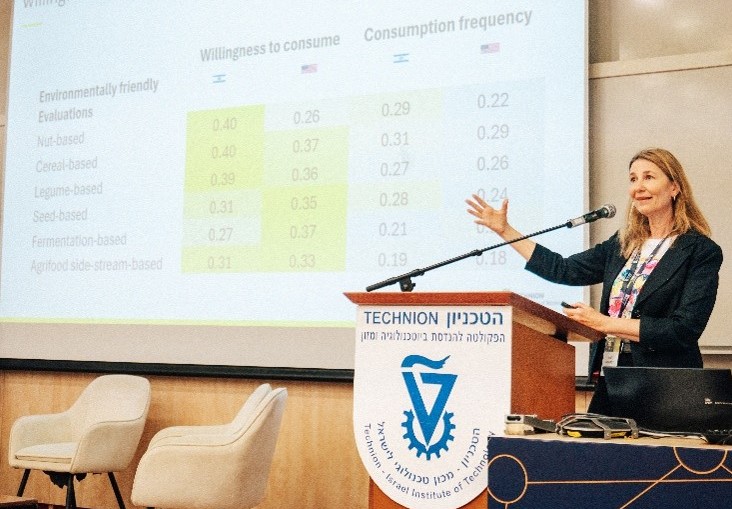
The third session, “Food Systems, Nutrition, and Sustainability,” featured Prof. Ron Milo of the Weizmann Institute of Science on transforming food production for sustainability by feeding bacteria with carbon dioxide and using those bacteria as food; Prof. Nurit Argov-Argaman of the Hebrew University Faculty of Agriculture on fats as functional ingredients inspired by bovine milk; and Prof. Liat Levontin of the Technion Faculty of Data and Decision Sciences on consumer attitudes, habits, and preferences regarding dairy alternatives.
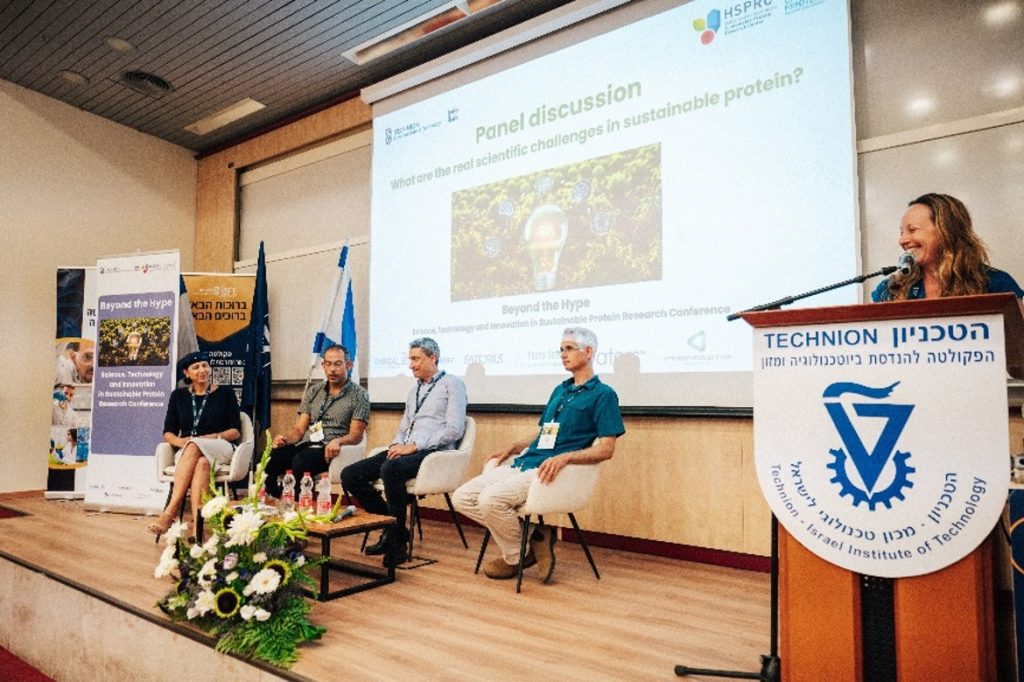
In the afternoon, a panel discussion on the scientific challenges facing alternative proteins was moderated by Prof. Ayelet Baram-Tsabari of the Technion Faculty of Education in Science and Technology.
Prof. Levenberg emphasized that substantial investment is essential to transform research into commercial products and that investors often hesitate when it comes to novel food technologies. “In my laboratory and at Aleph Farms, we are developing cultured steak, and our goal is to create a product that is even better than conventional meat.”
Prof. Shpigelman stressed that, alongside scientific breakthroughs, consumer acceptance is equally important. “Price is a critical factor,” he said. “We need to develop products that are competitive in the marketplace.”
Prof. Zvi Hayouka of the Hebrew University agreed that introducing new products to consumers remains a major challenge. “The term ‘alternative food’ is not ideal,” he said. “I hope that within a few years we will simply call these products ‘food.'”
Prof. Milo addressed the economic paradox surrounding innovative food technologies: “The people who shape development are generally affluent consumers who already have enough to eat, while the populations that stand to benefit the most from these innovations are largely absent from the process.”
The conference also featured a student poster competition. Emil Eshaya received first prize, while Valeria Weiss and Shai Moguiliansky shared second prize.
Closing the event, Prof. Shpigelman and Prof. Livney thanked everyone who contributed to the conference’s success, with special recognition for Dr. Rachel Toaff-Rosenstein, Transformation Catalyst at the Esther and Herbert Hecht Sustainable Protein Research Center.
Prof. Shpigelman concluded: “Today has made it clear that talking about proteins is not enough. We must translate these conversations into actions that have a real impact on humanity. That is our challenge: connecting food science and technology with people.”


