


A Breakthrough Toward Affordable Green Energy: Hydrogen Fuel Cells Built from Low-Cost Materials and Operating with Ambient Air
Researchers from the Technion - Israel Institute of Technology and Tianjin University, China, unveil a new approach to affordable, durable, and high-performance hydrogen fuel cells
Anion-exchange membrane fuel cells (AEMFCs) generate clean electricity through the reaction between hydrogen and oxygen. Their major advantage over conventional fuel cell technologies is the ability to use lower-cost and more abundant materials, significantly reducing system costs. AEMFCs hold great promise for a wide range of applications, including transportation, aviation, aerospace, drones, distributed energy systems, backup power, and electricity generation in remote areas.
The main technological challenges in developing AEMFCs are increasing power output and energy efficiency while improving performance and durability. These challenges are the focus of a breakthrough article published in the Nature Energy by Prof. Dario Dekel, Prof. Michael Guiver, Dr. Karam Yassin, and Dr. Sapir Willdorf-Cohen. Prof. Dekel is a faculty member in the Wolfson Faculty of Chemical Engineering at the Technion and Director of the Nancy & Stephen Grand Technion Energy Program (GTEP). Prof. Guiver is a world-renowned expert in polymer membranes for energy applications at Tianjin University, China. Dr. Karam Yassin is a researcher and the Manager of the Central Hydrogen Technologies Laboratory, and Dr. Sapir Willdorf-Cohen is a researcher at Prof. Dekel’s group in the Wolfson Faculty of Chemical Engineering.




Until now, carbon dioxide present in ambient air has largely been viewed as a harmful contaminant that reduces fuel cell performance and shortens device durability. The researchers introduce a new concept, “CO2 management”, arguing that carbon dioxide should not be regarded solely as an obstacle, but also as a factor that can be managed and potentially leveraged to improve fuel cell durability.
“For years, carbon dioxide has been considered one of the main challenges facing AEM fuel cells,” said Prof. Dekel. “Our work shows that the picture is more nuanced. Under certain conditions, carbon dioxide may contribute to the long-term stability of fuel cell materials. By learning how to manage CO2 rather than simply eliminate it, we can pave the way toward affordable, durable, and high-performance fuel cells capable of operating directly with ambient air.”
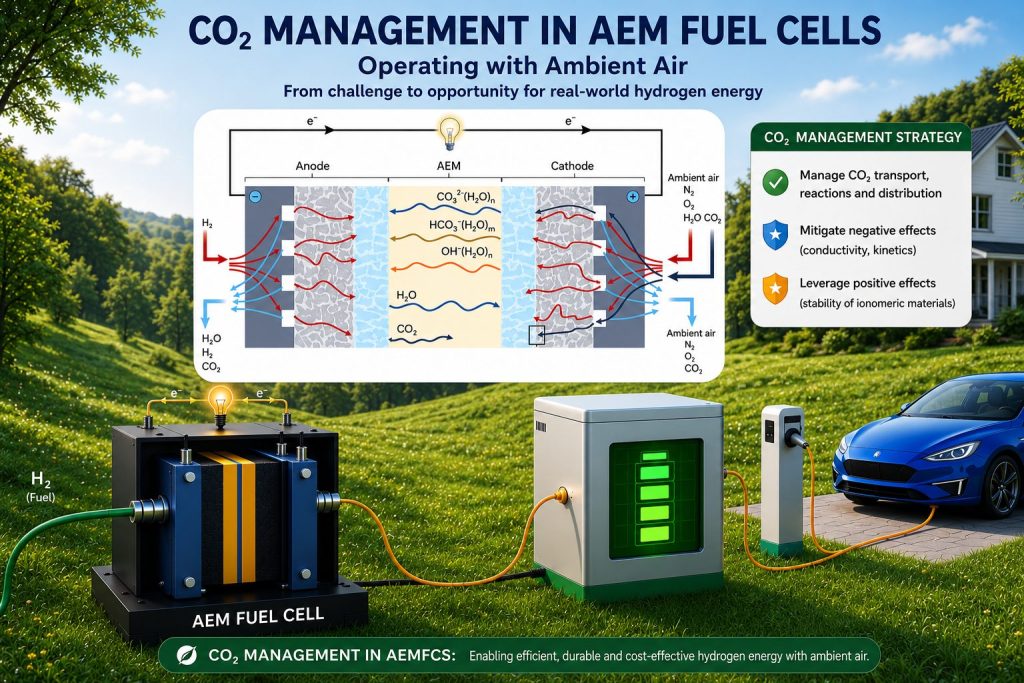
The findings could have broad technological implications, helping to accelerate the adoption of hydrogen fuel cells in transportation applications ranging from passenger vehicles and trains to drones and marine vessels, as well as in distributed energy systems and autonomous power technologies.
The research was supported by the Nancy & Stephen Grand Technion Energy Program (GTEP), the Israel Science Foundation (ISF), the Israeli Council for Higher Education, and additional funding partners.
To read the full article, click here


