Materials from the Future

Who hasn’t sometimes wished for an invisibility cloak? When looking at an object covered by an invisibility cloak, one would see the things behind it, as if light were passing through it, rather than hitting it and bouncing back to the viewer’s eye. The object would thus be rendered invisible. Acoustic cloaking is similar, except that it aims to hide an object from sound waves. Sound goes around the object rather than colliding it and bouncing off it. An acoustic cloak can have multiple applications, from military to oceanography and medical imaging.

Researchers in the Faculty of Mechanical Engineering at the Technion have developed a new physical model that manipulates the propagation of acoustic waves and elastic waves – thus bringing us closer to acoustic cloaking by controlling the waves created by hidden objects. This model that may potentially impact additional applications, including enhanced sensing and energy focusing. The development, which was published in Wave Motion, was headed by Professor Gal Shmuel and postdoctoral fellow Dr. René Pernas-Salomón, in collaboration with Rutgers University Professor Andrew Norris and Professor Michael Haberman of Texas A&M University.
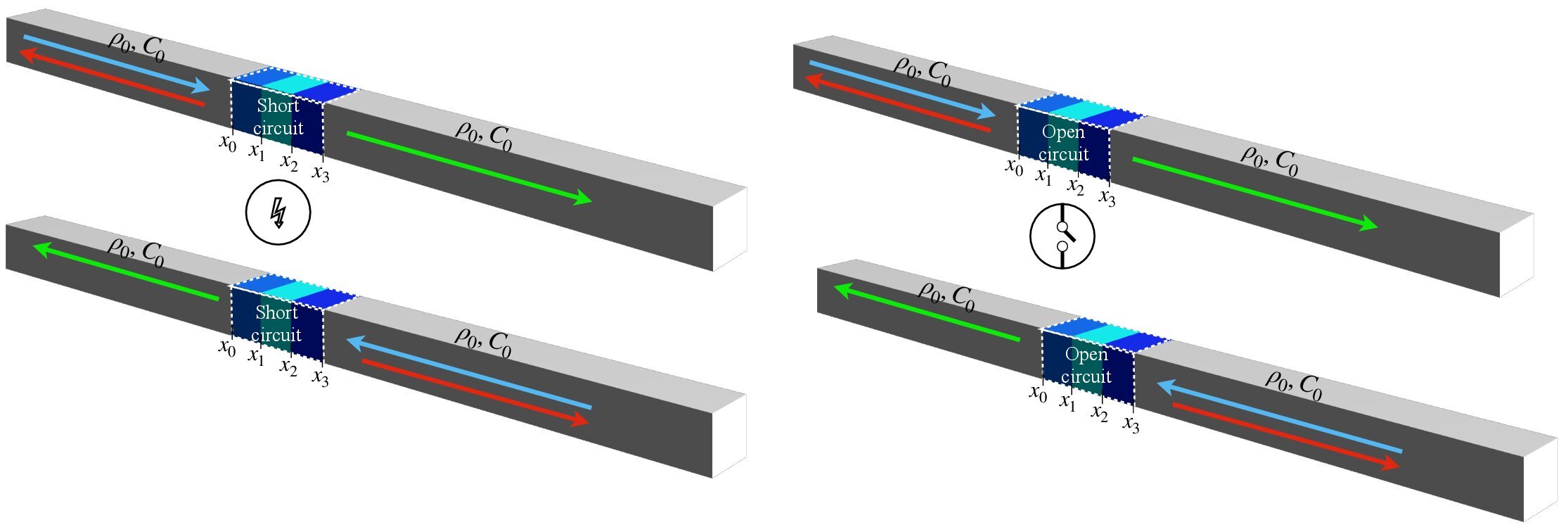
איור סכמטי של מערכת המציגה את אפקט האלקטרומומנטום. כאשר אלמנט פיאזואלקטרי אסימטרי נתון לגלים נכנסים (חץ כחול באיור) הוא מעביר חלק מהגל (חץ ירוק) ומחזיר חלק אחר (חץ אדום). באמצעות השדה החשמלי המופעל עליו (מעגל פתוח, צד ימין; מעגל סגור, צד שמאל) אפשר לשלוט בפאזה של הגל המוחזר, ושליטה זו שונה להחזרות מימין ולהחזרות משמאל.
 A schematic drawing of the system, presenting the electromomentum effect. When an asymmetric engineered element is subjected to incoming waves (blue arrow in the figure), it transmits part of the wave (green arrow) and reflects another part (red arrow). By controlling the electric boundary conditions (open circuit on the right; closed circuit on the left), we control over the phase of the reflected waves, in a way that is different for rightward- and leftward incoming waves.

As part of their research, the Technion team developed a new class of metamaterials – artificially engineered materials that exhibit properties not found in natural materials. Metamaterials derive their properties from their engineered microstructure. One example of a metamaterial property is a negative effective mass, which models materials moving in the opposite direction to the force applied to them.
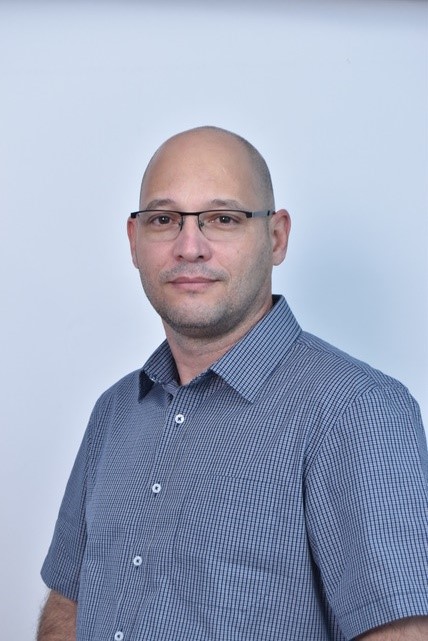
René Pernas-Salomón

The Technion team’s metamaterials possess a new metamaterial property, which they term electromomentum. In these metamaterials, momentum is coupled to applied electric fields, differently than what occur in natural materials: the metamaterial’s momentum alters when an electric field is applied, as described by the electromomentum property. Since the momentum balance of a body determines how elastic and sound waves flow through it, the electromomentum property offers a new knob to electrically control these waves by controlling momentum.
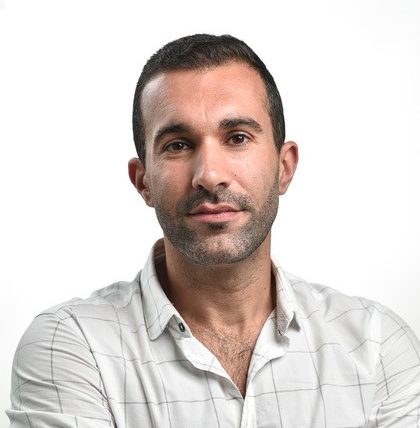
פרופ' גל שמואל
Prof. Gal Shmuel

The research was sponsored by the Israel Science Foundation, the Israel Academy of Science and Humanities, the U.S. – Israel Binational Science Foundation (BSF), and the Ministry of Science and Technology.


Groundbreaking AI Research

Technion researchers are harnessing the power of artificial intelligence (AI) to tackle the world’s most-pressing challenges. Their extensive work in the field has positioned the Technion among the world’s leaders in AI research and development. CSRankings, the leading metrics-based ranking of top computer science institutions around the world, has ranked the Technion No. 1 in the field of artificial intelligence in Europe, and 15th worldwide.

In the subfield of machine learning, the Technion is ranked 11th worldwide. Over the years, the Technion has carried out outstanding research in the field of AI – much of which has developed into trailblazing commercial products. Collaborations with manufacturers, the high-tech industry, government agencies, R&D centers, healthcare providers and academic institutions, have all contributed to the Technion’s excellence in the field, and many alumni and researchers have gone on to found companies across the AI spectrum.

Technion AI Brochure – Fall 2021 Edition

During the coronavirus pandemic, Technion researchers and alumni have used a host of AI technologies, from detection to diagnostics, including testing for pre-symptomatic COVID-19 carriers; predicting the spread of COVID-19 around the globe; and analyzing the data of thousands of patients to show the effectiveness of the COVID-19 vaccine.

To learn about the Technion’s trailblazing AI research and technologies, click to read our Fall  2021 AI Brochure.

Subscribe to our newsletter


Technion among world’s top 100 universities

The Technion is 94th on a list of the world’s top 100 universities, according to a report published yesterday by Shanghai Ranking, the world’s leading index for higher education. The Technion – Israel Institute of Technology is also on the top 50 list in two fields: aerospace engineering (16th place) and automation & control (46th place). In chemistry, the Technion ranks among the top 50-75 universities in the world. The Technion has consistently made the top 100 list of the Shanghai Ranking since 2012 (with one exception in 2020).

“The Technion is one of the world’s leading universities, and we will continue to invest efforts and resources to maintain this position for years to come,” said Technion President Prof. Uri Sivan. “The Technion’s strength lies in its excellent human capital, which leads to numerous achievements and breakthroughs in research and teaching. This is the result of hard work and dedication by Technion faculty, deans, administrative staff, and management.”

Prof. Sivan added that the Technion’s listing on the Shanghai Ranking and other indices “is not a purpose on its own. Global academic competition is rapidly intensifying, and while many governments around the world are steadily increasing their investments in academia and research, Israeli universities rely almost entirely on donations, which are becoming increasingly difficult to get.”

Prof. Uri Sivan, President of the Technion

According to Prof. Sivan, “in order for Israel to preserve its standing at the forefront of global research, and to ensure the nation’s security, as well as its academic and economic future, the government should significantly increase investment in research and teaching, as well as adopt a welcoming stance toward the absorption of foreign faculty and students.”

While Prof. Sivan is “pleased that the Technion is among the three Israeli academic institutions on the top 100 list, we must remember that without government support and globalization of our research institutions, it will be harder for us to maintain this position.”

The Shanghai Ranking, first published in 2003, categorizes academic institutions according to objective criteria, such as the number of Nobel Prize laureates and other prestigious awards; the number of scientific articles published in the leading journals Nature and Science; the number of times scientific articles published by university researchers have been quoted; and researchers who’ve been frequently quoted in academic journals, relative to their peers in the field.

The index looks at 1,800 universities, from which the top 1,000 are selected. Leading the list are Harvard University, Stanford University, University of Cambridge, MIT and UC Berkeley. For the full ranking, click here.


Get our newsletter